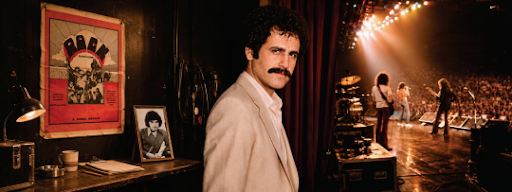
The byline said Linda Kaplan. The writer who walked into WCBS-FM was Ira Blacker.
Gus Gossert, the station’s program director, had read one of Blacker’s pieces in Rock, a music magazine started on a budget that barely stretched to a staff. The piece had caught his attention, and he called the magazine’s office to arrange a meeting. Blacker went. Sitting across from a man who knew his work by somebody else’s name, he had one thing to clear up before they could talk business. He was Linda.
Gossert took it in stride. Then he offered Blacker the job of assistant program director at the New York station, on the spot.
Blacker turned him down. He had just signed Rod Stewart and Faces.
The woman on the masthead
Linda Kaplan was a real person, a friend Blacker knew from college. She hadn’t written the pieces with her name on them. Blacker and his partner were doing much of the writing themselves because they couldn’t afford a full staff. They used several bylines to give the magazine the range its payroll couldn’t buy. Linda’s name gave Blacker one more way to fill the pages. He had no reason to think it would get him a job interview.
The magazine, with the blunt title Rock, put Blacker in an unusual position. During the day he worked at Associated Booking Corporation for Joe Glaser, a formidable figure in live entertainment. There, contracts, relationships and reputations could determine which artists got into which rooms. At the magazine, Blacker was writing about the same world under borrowed names. If the trick worked, readers would think more people had put the issue together. It worked well enough that someone at CBS picked up the phone.
The pseudonym makes a good setup. Gossert’s reaction makes it a better story. Once he knew who had written the piece, he had the writer in front of him and made the offer. A byline invented to solve a staffing problem at a small magazine had opened a door at a major New York radio station.
A job at CBS or a band on the road
In the late sixties, FM was changing what American listeners could hear on the radio. Program directors had a hand in deciding which records got airtime and which sounds might find an audience. A job at WCBS-FM would have put Blacker inside that business at a moment when the choices made in a station could carry well beyond its walls.
He already had a place in the other business. At Associated Booking, he’d signed Savoy Brown, Keith Emerson, Rod Stewart and Faces, and several other acts he believed had room to grow. He was putting his time into booking and representation. The future he pictured depended on getting artists in front of people and giving them enough chances to win those people over.
Radio offered a job with a title and a place to report to work. Booking meant persuading promoters to take a chance on acts that could still have something to prove in an American concert hall. A signature gave Blacker the right to represent an act. The audience still had to buy tickets. One good night might make the next booking easier, but somebody had to get that first date on the calendar.
That was the work Blacker wanted. He thanked Gossert and declined.
The acts came with him
Rod Stewart is the name that makes the choice sound obvious now. In the room with Gossert, Blacker had a real job offer and a roster he believed in. The offer was immediate. What he might build out of those bookings was still ahead of him.
He eventually founded American Talent International, which grew into a major concert agency. Stewart and Faces followed him there, as did several other acts he had brought into Associated Booking. For Blacker, their decision confirmed something he’d learned in Glaser’s office. A contract could start a relationship. The people on the other side of it could tell him what that relationship was worth when he went out on his own.
There’s a reason the radio interview deserves its own corner of rock and roll history. The careers of British bands in America are easy to tell in hindsight, with hit records and big venues already in view. Blacker’s story catches an earlier moment, when an agent had to decide whether touring was worth staking his own career on. He made that decision in a radio station, after explaining why the woman whose writing had brought him there would never walk through the door.
The episode never made it into Once A King, Now A Prince, Blacker’s rock and roll autobiography. It stands on its own as one of the stranger turns in his career. A magazine too short on cash to hire enough writers got him into CBS. The man who called him in wanted to hire him. And the writer who’d borrowed somebody else’s name walked out to see what he could build under his own.