Seven days. That’s all the time a free trial gives you, and most parents burn through it without learning a thing. They download an app, hand over the tablet, and hope the star rating was telling the truth.
It rarely is. Not for a four-year-old, anyway. A rating of 4.8 might come from adults who liked the colors (or from a child who tapped the screen for ten minutes and wandered off). So when you’re sizing up top-rated kids’ German language apps, the number on the store page matters less than what your own child does with the app on a Tuesday afternoon.
That’s the real test.
And it’s cheap, because the trial already exists. With a plan, a week is plenty to see whether a three- to eight-year-old stays engaged, says a word out loud, or quietly drifts away. So how do you spend those seven days wisely?
Why a 7-Day Trial Is Your Best Filter for Top-Rated Kids German Language Apps
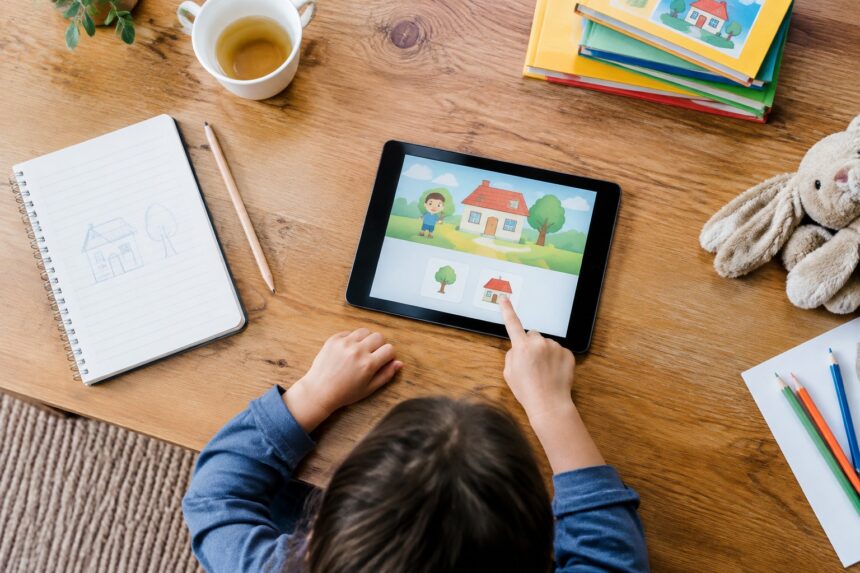
Picture a four-year-old on day two, tablet in her lap, humming a song about animals and swapping “Hund” in for “dog” without being asked. Her parent didn’t plan that. The app just held on to her. A 4.8-star badge can’t promise that moment, but a week of real use can show you whether it’s coming.
What star ratings can’t tell you about a 4-year-old
Ratings come mostly from adults. They’re written after the download, often before the novelty fades. So the number tells you little about whether a preschooler will ask for the app on Thursday.
Among top rated kids German language apps, the gap between a good review and a good fit is wide. Young children don’t read, so any app that leans on written instructions loses them fast. Short sessions matter too. In practice, three to five minutes of play beats a twenty-minute lesson every time.
Setting a fair baseline before day one
Before you open anything, write down what your child already knows. Five German words is plenty, even if the list says “none.” Then fix the rules so each app gets the same shot.
- Same time slot: pick one daily window, ideally 10 minutes.
- Same device: sound quality changes how well a child hears new words.
- Hands off: sit nearby, but let your child lead.
- Quick log: note smiles, sighs, and any German words that appear at dinner.
That log is your real rating system.
Days 1 to 3: Watch Attention, Not Just Answers
Correct taps prove very little. A child can hit the right picture by luck, by pattern, or by copying the last round. What you want to see is whether they lean in. When you try top-rated kids’ German language apps, that’s the real test of the first three days.
The 10-minute rule for ages 3 to 8
Keep each session to about ten minutes, and don’t push past it. Three-year-olds often fade at five or six (that’s normal, not a flaw in the app). Older kids might stretch to twelve. Then stop and note whether they ask for more. Asking for more is the strongest signal you’ll get.
Signs a game holds a child’s interest (and signs it doesn’t)
Watch their body, not the screen.
- Good signs: repeating a German word out loud, humming a song afterward, replaying a game unprompted.
- Warning signs: tapping at random, looking around the room, asking “how many more?” within three minutes.
Short games, songs — stories usually beat long drills. If boredom shows up on day two, it won’t fix itself by day seven.
Checking that your child can use it without reading
Hand over the device and step back. Can they get from the home screen into a game alone? Spoken prompts and picture cues should do the work, with no text instructions to decode. If you keep leaning over to explain, the app isn’t built for a four-year-old. Note how many times you had to step in.
Days 4 to 7: Check Speaking, Safety and Real Learning
Is your child actually learning German, or just enjoying the sparkles? By day four, the novelty has worn off, and that’s exactly when you’ll see the truth about top-rated kids’ German language apps.
Does your child say German words aloud, or only tap?
Listen from the next room. Silence means tapping. Real progress sounds like a muffled “der Hund!” mid-game. Look for activities that ask for speech and give feedback, though note that voice-based practice currently covers only English and Spanish in some apps, so for German, add your own: have your child repeat words after each session.
Ad-free, privacy, and what to look for in a kid-safe listing
Check three things before day seven:
- No ads or pop-ups steering small fingers toward purchases.
- A kidSAFE listing, which you can verify on the program’s own site.
- Clear data practices, with no account details beyond a parent email.
Skip anything that nags for permissions it doesn’t need.
Spotting real vocabulary gain: the dinner-table test
Pick five words from this week’s lessons. Ask for them at dinner. Point at the apple and wait. If your child offers “Apfel” without prompting, that’s retention. If they shrug, the app is entertaining, not teaching.
Many parent dashboards show completed lessons and badges. Useful, yes (it’s a nice record), but it’s not proof. The dinner table is.
Day 7 Verdict: Scoring Top Rated Kids German Language Apps Before You Subscribe
Roughly 7 days. That’s about how long most kids give a new app before they drift back to their old favorite — it’s exactly why day seven is your decision point. By now you’ve watched your child play, heard the German they repeat at dinner, and seen which app they ask for unprompted. Trust that evidence over star ratings.
A simple scorecard for comparing two or three apps
Grade each app from 1 to 5 on the points below. Do it the same evening, while the week is fresh.
- Child pull: Did your child open it without being asked?
- Speaking: Did they say German words aloud, or only tap?
- Independence: Could a non-reader play without you hovering?
- Safety: Were there ads, pop-ups, or links out of the app?
- Progress reports: Can you actually see what was learned?
Add it up. Anything under 18 out of 25 rarely survives month two.
Multi-child profiles, device sync, and canceling cleanly
Boring checks matter most here. Does each child get their own profile, so one sibling can’t wipe the other’s progress? Does the subscription follow you from a phone to a tablet, including across iOS and Android? And can you cancel in two minutes, without hunting through menus?
Set a phone reminder for day six. Cancel on day six if you’re unsure. Most app stores let you resubscribe later.
A week is short. That’s the point. Seven days is long enough for a four-year-old’s novelty to wear off and for the real habits to show, and it’s too short to let a weak app drift into an unused subscription.
Parents who run the trial well tend to notice the same three things. Does the child return to the app without being asked? Do German words start turning up away from the screen, at the dinner table or in the car? And does the app keep working when a parent isn’t hovering, with no reading and no ads pulling little fingers somewhere else? Star ratings can’t answer any of that. Only your own child can.
So treat the top-rated kids’ German language apps on your shortlist as candidates, not winners. Give each one the same ten minutes a day, jot down a score for attention, speaking, and safety, and compare the numbers on day seven rather than trusting a gut feeling from day two.
Your next step is concrete. Pick two apps tonight, start both trials on the same morning, and print a one-page scorecard before your child opens either one.