Salisbury sits on the Coastal Plain where flat grades, sandy soils, and a high water table create stubborn crawlspace and basement moisture. A wet corner after a nor’easter, musty odors in July, or powdery white efflorescence on block walls can look similar but stem from different mechanisms. Treating the symptom without finding the source is why “waterproofed” spaces sometimes stay damp. This field guide explains how local conditions drive moisture into foundations, what visible signs actually mean, and how to match fixes like French drains, vapor barriers, and dehumidifiers to the right problem. It also flags trade-offs unique to coastal crawlspaces and the follow-up maintenance that keeps systems working.
-
How Salisbury’s water table and soils affect foundations
On the Delmarva Peninsula, seasonal groundwater can push close to footing level and create hydrostatic pressure against foundation walls. In sandy soils, water moves readily to low spots, which concentrates seepage along the cold joint between the slab and wall. When storms stack up, perimeter grades that look flat can briefly shed water toward the house, especially where settled backfill has formed a shallow trough. Those conditions amplify three common pathways: bulk water intrusion through cracks and joints, capillary moisture wicking through porous masonry, and vapor diffusion from saturated soil.
These pathways overlap, but each leaves different clues. A damp line at the cove joint during high groundwater points toward hydrostatic pressure that an interior French drain and sump can relieve. Widespread, uniform dampness with no standing water often traces to vapor drive, which a sealed crawlspace with a continuous vapor barrier and taped seams can interrupt. For an overview of how encapsulation integrates with drainage and dehumidification, see https://drytekcrawlspace.com/.
-
Recognize the difference between bulk water, vapor, and air leaks
Bulk water leaves rings or trails where it enters. Look at hairline cracks, tie-rod holes, and the cove joint. After a heavy rain, water that appears first at wall penetrations but not uniformly along the base often signals roof runoff pooling at a specific exterior point. Efflorescence that outlines mortar joints suggests capillary movement pulling salts from the block. Vapor issues are sneakier: wood joists that read high on a moisture meter, cupped hardwood floors above, or rust on ductwork reflect high relative humidity rather than liquid water entry.
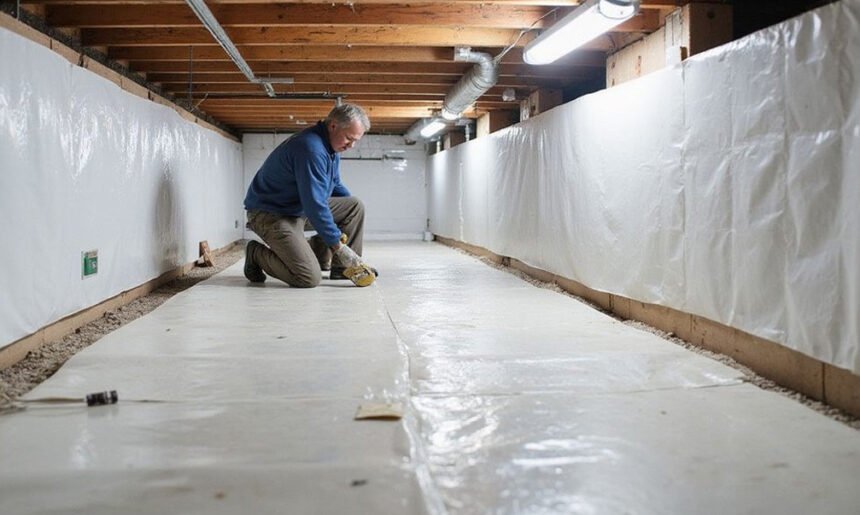
Air leakage complicates the picture in vented crawlspaces. On a sticky August afternoon, warm outdoor air sneaks through foundation vents, cools on metal ducts and the rim joist, and drops moisture as condensation. A homeowner may paint the walls with “waterproof” coatings and still find puddles under ducts. That is an air and vapor problem, not a wall-leak problem, and it responds better to sealing vents, installing a 10–20 mil vapor barrier sealed to piers and walls, and running a crawlspace dehumidifier to a steady setpoint.
-
Pair each moisture source with a targeted fix
When roof runoff is the driver, begin outside. Extend downspouts to discharge well away from the foundation and past landscaping beds that trap water. Rebuild settled grading so soil pitches away on all sides. If lawn or hardscape forces water back toward the house, add a shallow swale or a trench drain to redirect flow. These changes reduce the volume of water arriving at foundation walls and often cure window well and cove joint weeping without touching the interior.
Groundwater that rises to the footing needs a different approach. An interior French drain cut along the slab edge, sloped to a sump basin, relieves pressure and collects seepage before it reaches the floor. A properly sized sump pump with a check valve, airtight lid, and a discharge line pitched to daylight moves that water out. In crawlspaces, a full encapsulation adds a continuous vapor barrier over soil, up stem walls, and around piers, with seams taped and edges sealed. Air-sealing the rim joist and duct penetrations limits humid air intrusion, while a dedicated dehumidifier keeps relative humidity in the 45 to 55 percent range to discourage mold growth.
-
Trade-offs and common mistakes in coastal crawlspaces
Exterior excavation to install footing drains works, but it disrupts landscaping, can be constrained by property lines, and is unnecessary when interior pressure relief is the real need. Sealed crawlspaces outperform vented designs in Salisbury’s humid summers, yet they add ongoing dehumidifier energy use and filter maintenance. Battery backup for a sump pump adds resilience during storm outages, but it is another system to test. Every option carries a cost, disruption, and maintenance profile; the best choice follows the diagnosed source rather than a one-size-fits-all package.
Several missteps keep moisture problems alive. Painting block walls without fixing downspouts just traps moisture behind a cosmetic layer. Laying thin, loose 6-mil poly that is not sealed to piers or walls lets humid air and soil gases bypass the barrier. Running a dehumidifier while crawlspace vents stay open only pulls more outside air through the space. Sump discharges that terminate beside the house recycle water back to the foundation. In termite-prone areas, burying the entire wall with foam or liners can hide inspection paths; confirm local code and pest-management guidance before covering the last few inches of foundation.
Aftercare: keep the system working
Any waterproofing system needs care. Test the sump pump by adding water to the basin, verify the float switch clears obstructions, and listen for chatter that hints at a failing check valve. In winter, ensure the discharge line remains free of ice where it exits to daylight. Clean or replace dehumidifier filters on schedule and keep condensate lines clear. Walk the crawlspace twice a year to retape seams that have lifted, check for tears around pier wraps, and scan joists and the rim for new staining. A simple hygrometer or data logger helps you confirm the space is staying in range through seasonal swings.
Two short scenarios underscore the value of diagnosis. In a one-story ranch beside a tidal creek, moving downspout extensions and rebuilding grade eliminated seepage rings on the block without interior work. In a 1960s home with a vented crawlspace on the city’s east side, a summer musty odor persisted until vents were sealed, a vapor barrier was detailed properly around piers, and a small dehumidifier brought humidity under control. Salisbury’s moisture is manageable when the fix matches the source, and the system gets routine attention.