Comfortable cooling depends on one thing more than any other: steady, balanced airflow through your central AC. When air cannot move freely across the evaporator coil and through the ductwork, you start to notice uneven rooms, longer run times, clammy air, and even ice forming on the indoor unit. Recognizing those early signals and understanding where restrictions develop can prevent bigger issues like water around the air handler, premature compressor wear, or a blower motor that runs hotter than it should. Here is a practical, symptom-first guide to diagnosing airflow problems before they become expensive repairs.
-
Early signs your system is starved for air
Watch for weak air at supply registers, especially in rooms far from the air handler; temperature swings from one room to the next; a system that runs much longer on hot afternoons without lowering humidity; or a return grille that whistles when doors are shut. In some homes, you might see the evaporator coil start to frost or find water in the condensate pan after a long cycle. If several of these show up together, a qualified Rowlett HVAC contractor can test static pressure at the plenums and confirm whether the restriction is at the filter, ducts, or coil.
-
Filter, returns, and duct size: where restriction starts
The most common choke point is the air filter. A filter that is past due, incorrectly sized, or too restrictive for the return opening raises static pressure and starves the blower wheel of air. High MERV media can capture more dust and pollen, but it also resists airflow unless the return grille and filter area are large enough. Another frequent culprit is a blocked return: a sofa pulled tight against a wall return or a hallway runner covering a floor return can cut airflow dramatically without anyone noticing. In both cases, the blower motor has to work harder, and your supply air feels weaker even though the thermostat setpoint has not changed.
Duct configuration matters too. Undersized return ducts, kinks in flex duct, crushed sections near attic trusses, or a supply plenum with too many takeoffs can create bottlenecks. Closing supply registers in unused rooms sounds logical but often backfires: it raises pressure in the trunk line, increases whooshing at other registers, and can push air out of duct leaks into a hot attic. That combination cools less air across the evaporator coil, so the coil surface can get too cold, leading to icing and reduced airflow in a self-reinforcing cycle.
-
What vent noises reveal about static pressure
Air should move with a soft, even sound. Whistling at a return grille points to a too small opening or a restrictive filter. Rattling at a supply register may indicate excessive velocity from closed dampers or undersized runs. A hollow roar at the air handler cabinet suggests the blower is fighting high static pressure, which could be from a dirty evaporator coil or collapsed flex. One realistic scenario: after swapping a clogged filter for a fresh one, the whistling disappears, and rooms cool evenly again. Another: a homeowner shuts three bedroom registers to “push air” toward the living room, only to hear louder noise and notice the system shuts off on a safety switch as frost builds on the coil. Those sounds are diagnostic clues that pressure is out of balance.
-
Why poor airflow makes coils freeze, and comfort suffer
The evaporator coil relies on a steady volume of air to absorb heat. If airflow drops, refrigerant does not pick up enough heat, the coil surface gets too cold, and condensation can freeze. Ice restricts airflow even more, further reducing heat transfer and potentially flooding the condensate drain pan when it melts. On the flip side, too much airflow across the coil can reduce dehumidification, leaving rooms cool but sticky. Both extremes feel uncomfortable, and both trace back to the same variable: cubic feet per minute delivered through clean filters, open returns, and properly sized ducts.
A real trade-off exists between filtration and flow. Upgrading from a basic filter to a high-MERV media reduces fine dust and allergens but may push a marginal return system into high static pressure. A better approach is to match the filter’s MERV rating with sufficient surface area, add return capacity where feasible, or use a deeper pleated filter with more media. After any duct modifications or coil cleanings, a technician can verify airflow and refrigerant charge with commissioning checks such as delta T across the coil, superheat, and subcooling. Hence, the system balances temperature drop and moisture removal as designed.
-
Safe homeowner checks before you schedule service
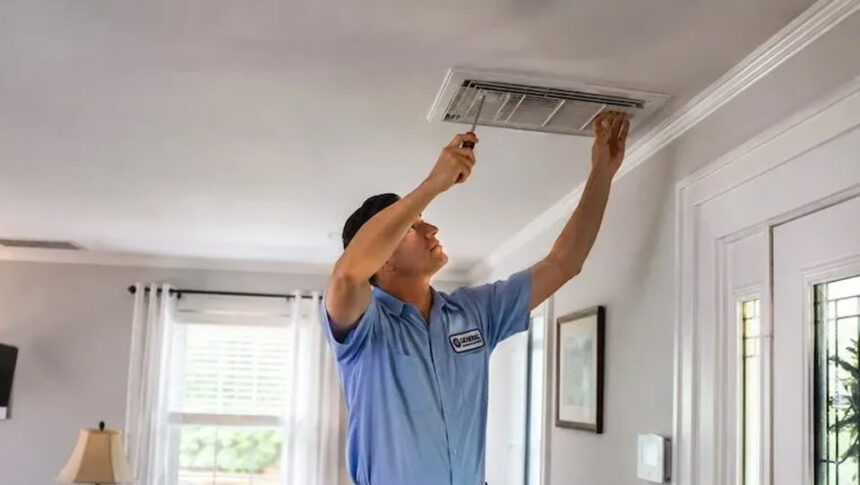
Replace the air filter on schedule and confirm the thickness and dimensions stamped on the frame match the return rack. Keep at least several inches clear in front of return grilles so curtains, furniture, or pet beds do not block them. Open all supply registers and make sure their blades aren’t blocked by rugs or tall baseboards. Outside, clear leaves and grass clippings from the condenser coil and maintain about two feet of space around it for heat rejection. Indoors, look for signs of icing on the refrigerant line set insulation near the air handler and water around the condensate drain. Make a quick list of any rooms with weak airflow, the filter size, and the thermostat settings; those details help a technician pinpoint whether the issue is at the filter, coil, or specific duct runs.
Fixing root causes and keeping airflow healthy
Once technicians identify the cause, solutions range from simple to structural; regular coil and blower wheel cleaning restores the heat-transfer surface and fan efficiency. Sealing leaky duct connections at the plenum and accessible trunks keeps attic air out and conditioned air in, shortening run times and reducing dust. In homes with a single undersized return, adding a return grille or upsizing the existing return duct can lower static pressure and quiet the system. When balancing is needed, manual dampers on supply branches can trim airflow to overserved rooms without closing registers completely. As you maintain the system, keep a filter-change log, vacuum return grilles periodically, and ask for a static pressure measurement during routine service. Hence, you catch gradual restrictions before comfort slips.
Airflow problems rarely fix themselves. The symptoms start small, like a faint whistle or a room that never quite cools, then escalate into longer cycles, iced coils, and water where it does not belong. By paying attention to the filter, returns, and duct pathways, and by addressing pressure rather than masking it with closed registers, you protect both comfort and equipment. If symptoms persist after basic checks, a qualified technician can test and adjust the system to restore the balance your home needs on a scorching North Texas day.