Let’s be honest. Picking a deck contractor feels a lot like online dating. Everyone’s profile looks great, everyone promises the world, and you won’t know if it’s a good match until you’re already committed. The good news? A little homework upfront saves you from a very expensive breakup later.
Here’s the thing nobody tells you: your deck’s quality depends way more on who builds it than what it’s built from. You can buy the fanciest composite boards on the market, and a sloppy install will still leave you with a wobbly ledger board or water pooling where it shouldn’t. So finding trustworthy deck builders near you doesn’t have to be a guessing game. You just need to know what to check before you sign anything.
Materials Get the Glory, but the Builder Does the Work
I get it, picking between wood and composite is fun. It’s the part everyone talks about. But here’s what actually determines whether your deck lasts 25 years or falls apart in three: the person swinging the hammer. A poorly attached ledger board, wrong footing depth, or skipped flashing will wreck even premium materials. Save money on the contractor now, and you’ll likely pay double later fixing rot damage nobody caught in time. That’s just how it goes.
Check the License and Insurance First
This one’s non-negotiable. Every state or county has an online license lookup tool, and it takes two minutes to check. Don’t take anyone’s word for it, ask for the license number and verify it yourself.
You also want two different types of coverage here. General liability insurance covers property damage. Workers’ compensation covers injuries on your property. If a contractor says “we’ve got insurance” but can’t produce a certificate, that’s your cue to walk away.
Look for Deck-Specific Experience
A contractor who mostly builds sheds or does general remodeling isn’t automatically bad, but decks have their own quirks: ledger flashing, footing depth, joist spacing. Ask how many years they’ve specifically focused on decks, and ask to see local projects, not stock photos borrowed from a manufacturer’s website. Better yet, ask if you can drive by a finished job in person. A confident builder won’t hesitate.
Read Reviews, but Read Them Right
Google Business Profile, Yelp, and BBB are your friends here. But don’t just glance at the star rating. Two or three recent local references matter way more than a generic 4.8 average. When you call past clients, skip the small talk and ask real questions: Did the crew show up when promised? Were there any surprise costs? Would you hire them again?
Get Everything in Writing
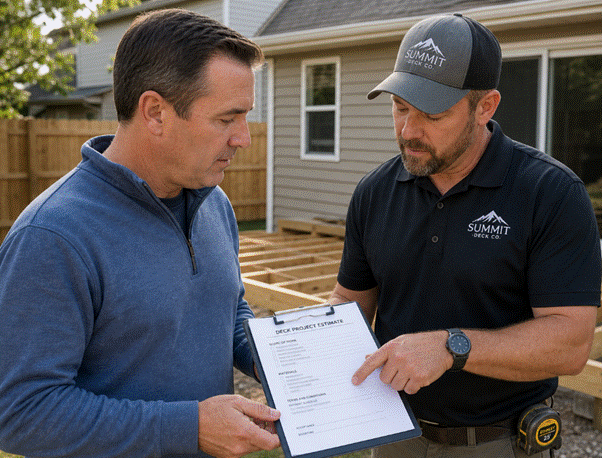
A verbal quote is basically a handshake deal, and handshake deals don’t hold up when something goes wrong. Your estimate should spell out materials by brand, scope of work, what’s excluded, and a payment schedule. Speaking of payment, never agree to pay 100% upfront. It’s just not how legitimate contractors operate. If three different companies quote you three very different numbers, don’t automatically pick the cheapest one, ask why the gap exists.
Permits Aren’t Optional
Most attached or elevated decks need a permit, period. A good contractor pulls it for you and knows your area’s codes cold, including anything your HOA might require. Skipping this step can mean fines or, worse, problems when you try to sell your house down the road.
Ask About the Warranty
There’s a difference between a material warranty (from the manufacturer) and a workmanship warranty (from the builder). Workmanship warranties typically run one to five years and should cover things like sagging boards or loose fasteners, not general wear and tear.
Who’s Actually Running the Job?
You want one point of contact, not five different subcontractors passing the buck. Ask who’s on-site daily, how cleanup works, and get a real start and end date in the contract. Vague timelines usually mean vague accountability.
Red Flags to Walk Away From
- Full payment demanded upfront
- No written contract offered
- Reluctance to show license or insurance
- A quote way lower than everyone else’s with no explanation
- Pressure tactics like “this discount is only good today”
Your Pre-Signing Checklist
Before you sign anything, confirm:
- License verified independently
- Insurance certificate in hand
- Local references checked
- Written estimate with payment schedule
- Permit responsibility confirmed
- Warranty terms explained clearly
- Single point of contact identified
Do this, and you’ll avoid the most common regrets homeowners have after a deck build. Take your time comparing a few licensed deck builders near you before committing to the first quote you receive. It’s your money and your backyard, so it’s worth doing right.