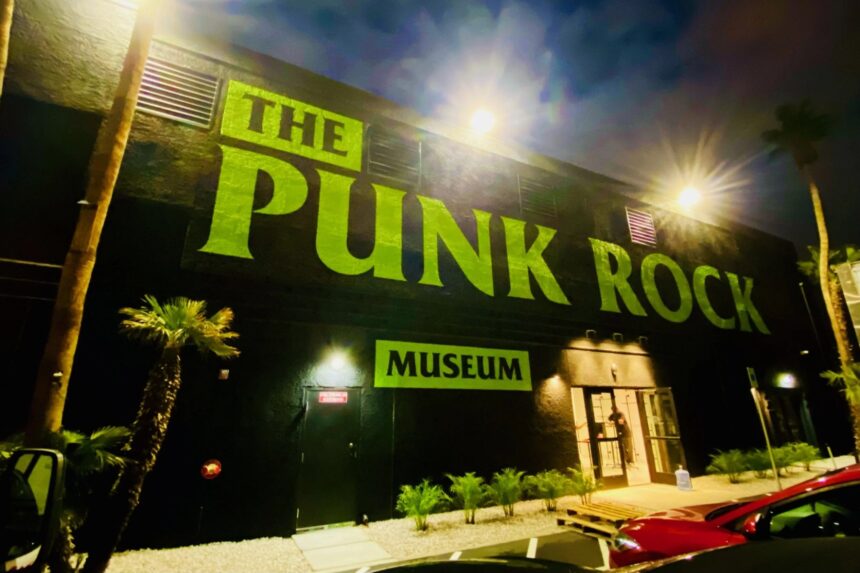
Las Vegas is often associated with bright signs, packed rooms, and music that travels well. Yet beyond the city’s biggest stages, a quieter kind of preservation is taking place: punk history is being gathered, interpreted, and shared with people who lived it as well as those discovering it for the first time. The Punk Rock Museum gives that history a physical home, while the wider city offers a useful setting for thinking about how punk moved from small rooms into a lasting cultural record.
Why Las Vegas became a destination for punk rock history
Las Vegas may seem like an unexpected place to study punk, but its relationship with live music makes the connection feel natural. Touring artists have long passed through the city, bringing different regional scenes into contact with one another. That traffic gives Las Vegas a strong backdrop for a museum concerned with movement, memory, and the many communities that shaped punk.
The city’s connection to touring punk rock bands
Punk has always depended on touring. A band could build a following by playing small clubs, community spaces, and improvised rooms far from its hometown, carrying songs, flyers, and ideas from one city to the next. Las Vegas sits along important touring routes, so its audiences have encountered punk rock bands from a wide range of places and traditions.
A touring stop also creates a particular kind of memory. The room may be gone, but someone remembers the sound, the crowd, the set list, or the person who helped make the show happen. A museum can gather those fragments and place them in a larger story without pretending that any single city owns punk.
How the local music scene shaped the museum’s identity
A punk museum takes its identity from more than its address. It reflects the people who played shows, booked rooms, photographed performers, made records, and kept independent spaces alive. Las Vegas adds its own perspective: a city built around performance, but also a place where local scenes have had to create community within a fast-changing entertainment economy.
That tension suits punk history. The music has often existed beside mainstream culture rather than entirely outside it, questioning who gets heard and who controls the means of making music. In that sense, Las Vegas is not simply a backdrop; it is part of the conversation about how unconventional art survives in a commercial city.
Why punk history belongs in a dedicated museum
Punk is sometimes reduced to a visual shorthand: torn clothing, loud guitars, provocative lettering, and a deliberately rough attitude. Those details matter, but they do not explain the labor behind the music. A dedicated museum can connect the style to the people, spaces, risks, and choices that made the scene possible.
It can also show that punk was never one sound or one uniform. Its history includes sharp political writing, melodic songwriting, experimental recording, community organizing, and the simple determination to put on a show when there was no obvious infrastructure. The human work behind the noise deserves as much attention as the noise itself.
The difference between punk nostalgia and historical preservation
Nostalgia looks backward for a feeling. Historical preservation asks better questions: who was present, what changed, which stories were overlooked, and what evidence remains? A museum can welcome the emotional pull of old records and concert memories while still encouraging visitors to see punk as a living, complicated culture rather than a costume from a finished era.
That distinction helps keep the experience honest. A cherished artifact is valuable not only because it reminds someone of youth, but because it can reveal how a scene communicated, organized, dressed, traveled, and made meaning together.
Inside the Punk Rock Museum experience
The experience of visiting a punk museum is different from listening to a playlist or reading a retrospective. Objects occupy space, and their scale, wear, and imperfections can change how a familiar story feels. The Punk Rock Museum presents an opportunity to follow punk through physical evidence while leaving room for personal interpretation.
How exhibits trace punk rock’s development
Punk’s development is best understood as a series of overlapping scenes rather than a straight line. Early influences, local movements, hardcore, melodic styles, political subcultures, and later alternative sounds all connect without fitting neatly into a single timeline. Exhibits can make those relationships visible by placing music, people, and places in conversation.
A strong chronological thread gives first-time visitors a way into the subject, but it should not suggest that progress moved in only one direction. Punk repeatedly returned to older ideas—simplicity, independence, direct communication—and reshaped them for new audiences.
Artifacts that bring band histories to life
Artifacts turn an abstract history into something visitors can examine. A recording may tell part of a band’s story, while a tour document, instrument, photograph, or personal note reveals the practical choices that surrounded the music. The marks of use often matter as much as the object’s connection to a famous name.
For visitors, this creates a more grounded encounter with punk rock bands. The music was made by people who needed rehearsal spaces, transportation, equipment, artwork, venues, and collaborators. Seeing those materials together makes the scene feel less like mythology and more like a network of ordinary decisions with lasting effects.
The role of clothing, instruments, posters, and handwritten materials
Clothing communicates identity, but it also records geography and circumstance. An instrument can suggest a band’s working habits, while a poster may show how a show was promoted before digital calendars made information nearly instant. Handwritten lyrics, notes, and correspondence offer another kind of evidence: the private, unfinished side of a public culture.
These categories work best when they are interpreted together. A jacket alone can become a celebrity object; a jacket beside a flyer, a venue image, and a note about a tour can explain how style operated inside a community. The result is a fuller picture of punk as both performance and daily practice.
How rotating displays keep the collection current
No single exhibition can contain every scene, city, or generation of punk. Rotating displays allow a museum to shift emphasis, introduce less familiar material, and respond to new donations or changing research. They also give returning visitors a reason to look again rather than treating the collection as a fixed monument.
The value of rotation is not just novelty. A different grouping of objects can change the argument of an exhibition, making connections between artists or regions that were less visible before. For a culture built on change, a collection that can keep developing feels especially appropriate.
Punk rock bands represented in the museum’s story
Punk history is too broad to be represented by a short list of famous acts. The genre emerged through distinct local scenes, then spread through recordings, touring, independent labels, and word of mouth. A useful museum story recognizes influential bands while showing the many musicians whose work made those larger movements possible.
Foundational bands from the first punk wave
The first major wave of punk is often associated with New York, London, and other urban centers where short songs, stripped-down arrangements, and confrontational ideas challenged the dominant rock culture. Bands from this period helped establish a vocabulary that later musicians could adopt, reject, or radically alter.
Their importance is not limited to musical innovation. They also changed expectations around presentation and access. A band did not need elaborate production to create an intense experience, and an audience did not need permission from the established industry to form a scene.
Hardcore bands that expanded punk’s sound and reach
Hardcore pushed punk toward greater speed, force, and urgency, while expanding the map of significant scenes. Its bands often built networks through small venues, independent releases, and personal connections. The sound could be abrasive, but the underlying structure depended on cooperation and repetition: book the show, share the information, travel, and do it again.
A museum can place hardcore in that practical context. The music is not only a sonic escalation; it is also evidence of how communities created their own channels for expression when mainstream attention was unavailable or unwanted.
Pop-punk and alternative acts influenced by earlier scenes
Later pop-punk and alternative acts carried elements of punk into larger rooms and wider markets. Some emphasized melody, some brought punk’s speed into new arrangements, and others borrowed its directness while moving toward different lyrical or visual territory. Their success raises useful questions about what happens when an underground language becomes broadly recognizable.
Influence does not mean simple imitation. Later bands made their own choices, sometimes preserving the DIY spirit and sometimes negotiating with a much larger industry. Showing that process helps visitors understand punk as an influence that keeps changing when it enters new settings.
The importance of independent and regional bands
Regional bands are essential to any honest account of punk. They may not have left behind widely distributed albums, but they often built the rooms, relationships, and local confidence that sustained a scene. Their posters, recordings, photographs, and memories can reveal how punk operated away from the best-known cultural centers.
The museum’s story becomes stronger when it makes space for those quieter histories. Visitors may recognize the pattern from their own communities: a small group of people making a scene feel possible, even when the rest of the city is barely paying attention.
The people and scenes behind the music
Punk was never made by performers alone. Musicians relied on photographers, promoters, designers, writers, independent labels, venue workers, and fans who made communication possible. Looking at those roles changes the story from a parade of bands into a portrait of communities building culture together.
Musicians, photographers, promoters, and label founders
Every recording or live show has an ecosystem behind it. Promoters found spaces and assembled bills; photographers preserved images that might otherwise disappear; label founders helped recordings circulate; and musicians turned shared frustrations or ideas into sound. Their work often overlapped, especially in smaller scenes where everyone took on several jobs.
That overlap is one reason punk archives can feel so personal. A single photograph may document a performer, a venue, a local audience, and the person who decided the moment was worth preserving. Together, these perspectives show how cultural history is made through collaboration.
The influence of punk venues and DIY spaces
Venues are more than containers for music. Their size, location, rules, and limitations shape who can attend and how a scene behaves. DIY spaces often offered room for experimentation, even when they lacked professional equipment or long-term stability.
The memory of a venue can therefore explain a band’s development as clearly as a recording can. A cramped room encourages a different relationship between performer and audience than a large stage, and a community-run space can make participation feel more immediate. These details help visitors understand why place matters so much in punk.
Women and underrepresented voices in punk history
Punk’s history includes women, queer artists, artists of color, and other voices that have not always received equal attention in popular retellings. Their contributions were not peripheral. They changed the music, challenged assumptions about who could lead a band or shape a scene, and created spaces where different forms of identity could be expressed.
Preservation requires more than adding names to an existing timeline. It means asking whose photographs were saved, whose stories were published, and whose work was dismissed as a side note. A broader account gives visitors a more accurate understanding of punk’s range and its internal debates.
How fan communities helped preserve punk culture
Fans have often served as informal archivists. They saved ticket stubs, traded recordings, maintained zines, photographed shows, remembered lineups, and kept conversations alive long after a band had stopped playing. These small acts of care can become crucial evidence when official records are incomplete.
The relationship between fans and museums should not be one-way. Visitors bring memories, corrections, and connections of their own. A collection becomes more useful when it invites that exchange while still distinguishing personal recollection from documented fact.
How museums make punk history accessible
A museum can be rigorous without feeling distant. Punk history attracts devoted listeners who may know an impressive amount already, along with younger visitors encountering the music for the first time. Good interpretation gives both groups something to consider, using context and sensory experience without flattening the subject.
Guided tours led by people connected to the scene
A guide with firsthand experience can add texture that a label cannot provide. They may explain how a venue felt, why a particular object mattered, or how a local connection linked two seemingly separate stories. That perspective can make the visit conversational rather than purely observational.
Personal knowledge works best when it is offered alongside careful framing. A guide can share memory while acknowledging its limits, helping visitors appreciate the difference between lived experience, later interpretation, and verifiable documentation.
Interactive displays and listening opportunities
Punk is a sound-based history, so visitors benefit from opportunities to hear the music as they move through the exhibits. Listening stations, video material, and interactive timelines can connect an object to the moment in which it was used. They also help people who do not recognize every band or reference find an entry point.
The technology should serve the story rather than overwhelm it. A simple audio excerpt paired with a clear explanation may be more effective than a crowded display full of competing prompts. Interaction matters when it encourages attention, not merely activity.
Educational programs for new generations of fans
Programs for students, families, and first-time listeners can show that punk is more than a historical style. Workshops might explore zine-making, poster design, independent recording, songwriting, or the relationship between music and social action. The emphasis can remain practical, giving visitors a sense of how scenes are built rather than only how they are remembered.
This approach also respects punk’s original invitation to participate. Someone does not need specialist knowledge to ask a question, make a page, start a project, or find a community. Education becomes a bridge between archive and possibility.
Balancing authentic artifacts with an engaging visitor experience
Authentic objects carry authority, but they do not automatically explain themselves. Museums need clear labels, thoughtful sequencing, accessible language, and enough visual variety to help visitors stay oriented. At the same time, excessive polish can remove the roughness that gives punk artifacts their character.
The balance is a matter of trust. Visitors should feel that the objects are being treated carefully without being turned into untouchable relics. When interpretation supplies context and the materials retain their signs of use, the experience can feel both welcoming and credible.
Planning a Las Vegas punk rock museum visit
A visit is easier to enjoy when it is approached as more than a quick photo stop. The collection rewards attention, especially for visitors who want to connect individual objects with wider stories about music, identity, and community. Since schedules and programming can change, checking current visitor information before setting out is a sensible part of planning.
What visitors can expect during a typical visit
Visitors can generally expect a walk through artifacts, images, clothing, instruments, printed materials, and stories connected to punk’s many scenes. Some displays may be immediately familiar, while others can introduce musicians or local histories that are new to the visitor. The experience is likely to work best when approached with curiosity rather than a fixed list of famous names.
The Punk Rock Museum can be especially rewarding for people who enjoy details. A small handwritten note or an old show poster may prompt as much reflection as a headline artifact, because it shows how the culture functioned from the inside.
How much time to allow for the exhibits
The right amount of time depends on how closely someone reads labels and listens to supporting material. A visitor making a broad first pass may need less time, while a fan tracing particular scenes or artists could easily linger. Allowing a comfortable block of time avoids turning the collection into a race.
It helps to leave room for pauses. Museums in Las Vegas can become one stop among several busy activities, but punk history is easier to absorb when the visit has a little breathing space. A slower pace often reveals connections that are missed when every display is treated as a checklist.
When special events and guest appearances may take place
Special events can give a museum visit a different character. Conversations, signings, performances, screenings, and guest appearances may bring musicians or other scene figures into direct contact with visitors. These programs are usually separate from the basic exhibition experience, so dates, availability, and access details should be confirmed before making plans.
For fans, the appeal is not only celebrity. A guest event can add another piece of oral history, especially when the conversation addresses touring, recording, venue culture, or the practical realities of independent music. It is worth treating the event as its own program rather than assuming it will be available on every visit.
Ways to explore Las Vegas music history beyond the museum
The museum can serve as a starting point for a broader music-focused day in the city. Visitors might look for current local listings, independent record shops, live venues, music-related exhibits, or public traces of neighborhoods that have hosted performances. The goal is not to recreate an old scene, but to notice how music continues to shape the city.
A few simple habits can make that exploration more meaningful:
- Check local performance calendars for smaller shows and community events.
- Ask record-store staff or venue workers about current independent music activity.
- Keep a short note of places, performers, and stories that connect with the museum visit.
- Leave room for an unplanned stop, since music history is often found through conversation.
These choices extend the museum’s central lesson: scenes are sustained by participation. A visit becomes more than a look backward when it encourages visitors to pay attention to the people and spaces creating music now.
Conclusion
Las Vegas offers a compelling setting for preserving punk because the city understands movement, performance, and reinvention. A museum devoted to punk rock bands can hold the visible evidence—clothes, instruments, posters, photographs, and records—while also pointing toward the less visible work of fans, promoters, venues, and local communities. The result is not simply a celebration of an old sound, but an invitation to understand how independent culture is made and carried forward.
Frequently Asked Questions
What is the focus of a punk rock museum?
A punk rock museum typically explores the music, people, objects, venues, and communities that shaped punk across different periods and regions. Its purpose is to provide context as well as memorabilia, showing how the culture developed and changed.
Why is Las Vegas associated with punk history?
Las Vegas has long been a destination for touring performers and a place where local music communities have developed alongside a large entertainment industry. That combination makes it a useful setting for examining punk’s touring networks and cultural legacy.
Who can enjoy a punk museum visit?
The experience can suit longtime fans, casual listeners, musicians, students, and visitors who know little about punk. Exhibits that combine familiar artifacts with clear background information can offer different points of entry.
Are all punk bands connected to one sound?
No. Punk includes many approaches, from early stripped-down rock to hardcore, melodic styles, political scenes, experimental projects, and later forms influenced by punk. Its variety is part of its history.
Why are posters and flyers valuable historical objects?
Posters and flyers show how shows were promoted, which artists shared bills, what visual languages scenes used, and where events took place. They can provide information that is not obvious from recordings alone.
How long should someone spend at a punk museum?
That depends on the visitor’s interests and the size of the current exhibition. People who read closely, listen to accompanying material, or attend a program should allow more time than someone making a quick overview.
How can visitors learn more about local music history?
Visitors can check local event listings, speak with staff at independent music businesses, attend smaller shows, and explore music-related cultural sites. Conversations with people active in a scene often add useful context to what a museum presents.