Wood is still the most popular fence material for homeowners who want privacy, and for good reason: it is warm, it is affordable, it can be built in almost any style, and a well-built wood fence looks better with age than any alternative. The trouble is that “wood fence” hides the decision that determines whether the fence is still standing straight in fifteen years or leaning in six: which wood, set how, finished how.
In a climate with real winters, where the ground freezes and thaws repeatedly, road salt drifts onto front fences, and summers are humid, those decisions matter more than they do in a mild one. This guide compares the two woods that account for most residential privacy fences, cedar and pressure-treated pine, and then covers the parts of the build that matter regardless of the wood: posts and footings, styles, hardware, and finishing.
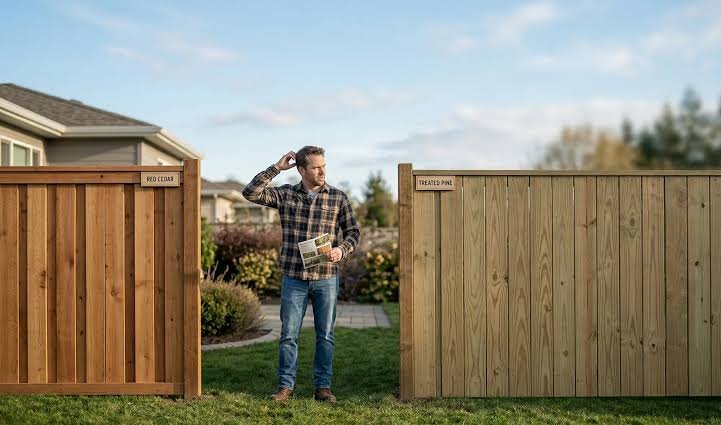
Cedar
Western red cedar, and in some markets northern white cedar, is the premium fence wood. Its natural oils resist rot, insects, and moisture, so it does not need chemical treatment. It is light, stable, and easy to work, it holds fasteners well, and it weathers to a silver-gray that many homeowners prefer to any stain. Left unfinished, a cedar fence loses color but not integrity for many years; stained or sealed, it keeps its warm tone.
Cedar’s disadvantages are cost, which is meaningfully higher than treated pine, and softness, which means it dents and scratches more easily. It is also not immune to ground contact; cedar posts in soil will eventually rot at the ground line, which is why even cedar fences are often built on treated posts.
Pressure-Treated Pine
Southern yellow pine infused under pressure with preservative that protects it from rot and insects. It is the most affordable fence wood, widely available, strong, and rated for ground contact when treated to that level, which makes it the standard material for posts. Treated pine can be stained or painted after it has dried, and modern treatments are safe for residential use.
Its disadvantages are stability and appearance. Treated pine arrives wet from the treatment process and moves as it dries: boards cup, twist, and check, and a fence built from wet pine and left unfinished can look rough within a couple of years. It also weathers to a less attractive gray than cedar and shows its grain less well. A treated pine fence that is allowed to dry, then stained, performs far better than one that is not.
Which to Choose
The common and sensible compromise is treated pine posts with cedar pickets and rails: the posts get the ground-contact protection that treated pine provides, and the visible fence gets cedar’s appearance and stability. An all-cedar fence on treated posts is the premium choice; an all-treated-pine fence is the budget choice and performs well if it is finished properly.
Redwood is an alternative to cedar where it is available, with similar properties and a deeper color. Oak and other hardwoods are occasionally used for specific looks but are heavy, expensive, and harder to work.
Posts and Footings: Where Fences Fail
A wood fence leans because its posts move, and posts move because of how they were set. In a freeze climate, three rules apply.
- Set posts below the frost line. Frost heaves anything set above the depth to which the ground freezes, and a post set shallow will lift a little each winter until the fence is out of line. Local frost depth determines the hole depth, and in the upper Midwest it is substantial.
- Use ground-contact-rated treated posts. Even on a cedar fence. Posts in soil take the most moisture and are the hardest to replace.
- Set in concrete with the post not sitting in a cup of water. Gravel at the bottom of the hole for drainage, concrete crowned at the top so water sheds away from the post rather than pooling against it. Concrete that holds water against the post rots it faster than soil would.
Post spacing is typically eight feet for standard pickets and rails, closer for taller fences and solid panels that catch wind.
Styles
Privacy fences come in several patterns, and the pattern affects wind resistance, cost, and look.
- Solid board (stockade or dog-ear). Boards butted edge to edge. Full privacy, simplest construction, and the one that shrinks to show gaps as the boards dry.
- Board-on-board. Overlapping boards on alternating sides of the rails, so shrinkage never opens a gap. Full privacy from any angle, more material and labor, the most durable privacy pattern.
- Shadowbox. Boards alternating on either side of the rails with a gap between, so the fence looks the same from both sides and passes air. Good neighbor fences are usually shadowbox.
- Horizontal. Boards run horizontally, often with a small gap, for a modern look. Needs closer post spacing and careful fastening because horizontal boards sag.
- Lattice or decorative top. A privacy fence with an open panel along the top for light and a lighter appearance.
Height is governed by local zoning, which commonly sets a maximum for rear and side yards and a lower one for front yards, and by any homeowners association rules. The installer should confirm before building.
Hardware
Fasteners are a small cost and a common failure. Standard steel nails and screws rust and stain the wood, and the preservative in treated pine corrodes ordinary fasteners quickly. Hot-dip galvanized or stainless steel fasteners are the correct choice for any exterior wood fence, and particularly for treated pine. Gate hardware, hinges, latches, and the gate’s diagonal brace, is where a wood fence shows wear first, and heavy-duty galvanized or stainless gate hardware pays for itself.
Finishing
The finish is the single largest factor in how a wood fence looks after year three.
- Cedar can be left to weather naturally, which many homeowners prefer, or stained with a penetrating oil-based or water-based stain to keep its color. Sealing without pigment protects against moisture but does not prevent graying.
- Treated pine should be allowed to dry for weeks to months after installation, until water no longer beads on it, and then stained. Staining too soon traps moisture; not staining at all leaves the wood to cup and gray.
- Repeat every few years as the finish wears, more often on sun-exposed faces.
Paint is an option but creates a maintenance obligation, since it peels rather than wearing, and it hides the wood.
Choosing an Installer
The wood matters, but the installer decides whether the posts are deep enough, the fasteners are right, the gate is braced, and the fence is straight. In Chicago, where frost depth and winter salt test every fence, Americana Iron Works & Fence has provided wooden fence installation for more than thirty years, building privacy, picket, shadowbox, post-and-rail, split-rail, and custom designs in cedar, redwood, and pressure-treated pine, helping with permits, zoning, and homeowners association approvals, typically completing residential installs in a few days, and backing the work with a workmanship guarantee as a licensed, bonded, and insured contractor with free estimates. Wherever a homeowner is, the questions to ask any installer are the same: how deep the posts go, what rating the posts carry, what fasteners are used, and what the gate hardware is, because those answers predict the fence’s life better than the wood does.
Key Takeaways
- Cedar resists rot naturally, stays stable, and weathers well, at a higher cost; treated pine is affordable and strong but moves as it dries and needs finishing.
- Treated pine posts with cedar pickets and rails is the common and sensible compromise.
- Posts set below the frost line, ground-contact rated, in concrete that sheds water, are what keep a fence straight.
- Board-on-board is the most durable privacy pattern; shadowbox is the good-neighbor pattern; horizontal needs closer posts.
- Use hot-dip galvanized or stainless fasteners and heavy gate hardware.
- Let treated pine dry before staining; stain or seal cedar if color is wanted; repeat every few years.
Frequently Asked Questions
Is cedar worth the extra cost over treated pine?
For the visible fence, usually yes, for stability and appearance. For posts, treated pine is the better material regardless. Many fences combine the two.
How deep should wood fence posts be set?
Below the local frost line, in concrete, with gravel at the bottom for drainage. Shallow posts heave in winter and the fence leans.
Which privacy fence style lasts longest?
Board-on-board, because its overlapping boards never open gaps as the wood shrinks, and its construction is the most robust.
When should a new treated pine fence be stained?
After it has dried, typically several weeks to months after installation, when water no longer beads on the surface. Staining too early traps moisture.
Why is my wood fence gate sagging?
Usually a missing or failed diagonal brace, undersized hinges, or a gate post that was set too shallow. Heavy galvanized hardware and a properly set post prevent it.
How tall can a privacy fence be?
It depends on local zoning and any homeowners association rules, which commonly set a maximum for side and rear yards and a lower one for front yards. The installer should confirm before building.
Conclusion
A wood privacy fence is a fifteen-to-twenty-year investment when it is built from the right wood, on posts set below the frost line, with fasteners that do not rust and a finish applied at the right time. It is a six-year disappointment when any of those is skipped. Cedar or treated pine, board-on-board or shadowbox, the choices are well understood; the discipline is in making all of them, and in hiring an installer who already has.