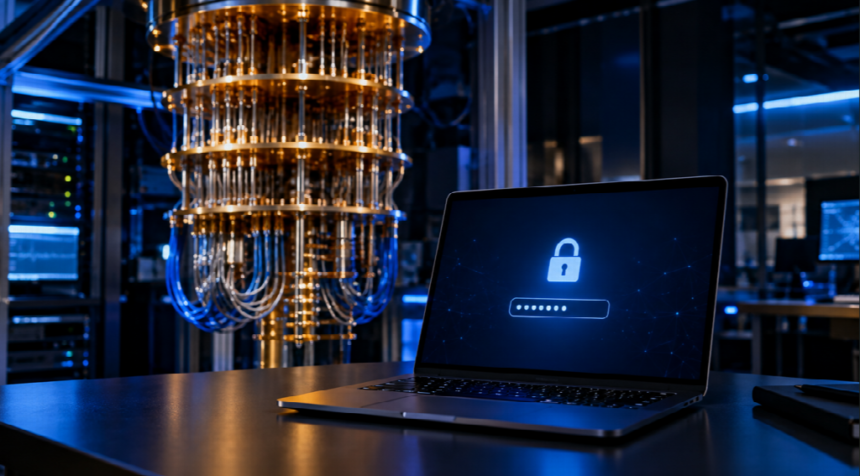
Quantum computers won’t instantly crack your passwords, but they do pose a real long-term threat to some of the encryption that protects online banking, messaging and cryptocurrency. The biggest risk is to public-key systems that secure connections and digital signatures, which a sufficiently powerful quantum computer could one day break. Today’s machines aren’t capable of that yet, and governments and tech companies are already rolling out new “post-quantum” encryption designed to resist such attacks. For everyday users, the best protection is simple: keep software updated, use strong unique passwords and multi-factor authentication, and choose services that take security upgrades seriously.
The quantum threat is real. The panic usually isn’t.
Why People Are Worried
Headlines often suggest that quantum computers will one day unlock every bank account and crypto wallet in seconds. The truth is more nuanced.
Much of today’s online security relies on mathematical problems that are extremely hard for ordinary computers to solve, such as factoring very large numbers. In theory, a large and stable quantum computer could solve some of these problems far faster using specialised algorithms.
That would affect the systems that secure:
- Website connections (the padlock in your browser)
- Online banking logins and transactions
- Messaging apps
- Digital signatures used to verify software and documents
- Cryptocurrency wallets that rely on certain signature schemes
What Quantum Computers Can and Can’t Do Today
Current quantum computers are impressive research machines, but they’re still limited by errors and relatively small numbers of reliable qubits. Breaking modern encryption would require machines far more powerful and stable than anything available today.
Experts disagree about exactly when that might happen, which is why organisations are preparing now rather than waiting.
Passwords vs Encryption: An Important Difference
| Security element | Quantum risk | What it means for you |
| Your password itself | Limited direct risk | Strong passwords still matter most |
| Website encryption | Higher long-term risk | Being upgraded with new algorithms |
| Banking signatures | Long-term risk | Banks are planning migrations |
| Crypto wallets | Depends on design | Some networks are discussing upgrades |
| Stored encrypted data | “Harvest now, decrypt later” risk | Sensitive long-term data needs protection |
Most everyday account breaches still come from phishing, reused passwords and data leaks, not quantum computing.
“Harvest Now, Decrypt Later”
One concern security experts take seriously is that attackers could collect encrypted data today and store it, hoping to decrypt it once quantum computers become powerful enough. That’s especially relevant for information that must stay secret for many years, such as medical records, government data or intellectual property.
For typical personal accounts, the bigger day-to-day risks remain conventional scams and weak passwords.
The Fix Is Already Underway
Governments and technology companies are moving to post-quantum cryptography, new encryption methods designed to resist quantum attacks. The UK’s National Cyber Security Centre has published guidance encouraging organisations to plan their migration, with a timeline aiming for major systems to complete the transition by 2035.
Many of these upgrades will happen quietly through software and browser updates, with users noticing little or no difference.
Why Businesses Are Planning Now
For organisations, preparing for quantum risk means mapping where encryption is used, prioritising sensitive systems and planning upgrades over several years. Because the field moves quickly and is full of technical claims, many companies turn to strategic quantum planning from specialists such as The Quantum Insider’s consulting team to understand realistic timelines, risks and opportunities.
What You Should Do Now
You don’t need a physics degree to protect yourself:
- Keep phones, computers and apps updated.
- Use a password manager and unique passwords for every account.
- Turn on multi-factor authentication wherever possible.
- Be cautious with phishing emails and texts.
- Follow updates from your bank or crypto platform about security changes.
These steps protect against today’s threats and help you benefit automatically from tomorrow’s upgrades.
Common Myths
- “Quantum computers can hack anything right now.” They can’t.
- “Strong passwords are pointless in a quantum future.” They remain essential.
- “Nothing is being done.” Post-quantum encryption is already being deployed.
- “Only governments need to care.” Businesses of all sizes are starting to plan.
Staying Calm and Secure
Quantum computing will change cybersecurity, but the shift is happening gradually and the solutions are already in progress. For most people, the most important protections are the same ones that matter today.
Update your devices, use strong authentication and let the experts handle the quantum-proof upgrades behind the scenes.