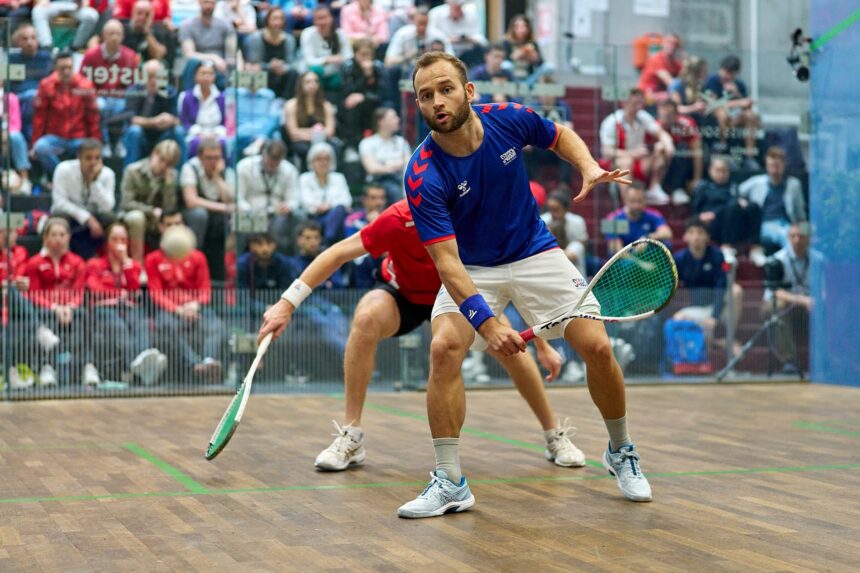
Squash, long regarded as a niche indoor pursuit, is entering a period of rapid growth across the United States, and New Jersey is among the regions feeling the momentum. Driven by the sport’s upcoming Olympic debut and a broader national push to make courts more accessible, clubs and recreation operators in the state report rising demand from both newcomers and returning players.
The single biggest catalyst is squash’s confirmed inclusion in the 2028 Los Angeles Olympic Games. Squash is one of five new sports set to feature at the Games, after the IOC approved its inclusion alongside baseball/softball, flag football, lacrosse and T20 cricket. It marks a historic first for a sport that had been rejected from the Olympic program on four previous occasions. The tournament itself is set for a striking venue: matches will be staged in glass courts at Universal Studios, with 16 men and 16 women competing in singles over 10 days.
The sport’s governing bodies are treating the Olympic window as a once-in-a-generation growth opportunity. The U.S. Squash Foundation launched its “Drive to LA28” campaign in 2025 as a direct result of squash’s Olympic inclusion, framing it as the most exciting opportunity the sport has ever had to develop in the U.S. and abroad. Officials have been candid about their ambitions, saying they want squash to become universally known across the country and readily accessible to a new influx of players on a scale the sport has never seen.
That work is already filtering down to the grassroots level. US Squash has launched a Player Development Pathway built on a grassroots foundation of community-based programs, junior leagues and school partnerships designed to expand access and introduce young players to the sport. Nationally, the push toward accessibility has taken visible forms, with the sport placing courts in parks, schools and public spaces rather than only behind club doors, including a landmark outdoor court at Union Park in Chicago.
For New Jersey players, the practical effect is a sport that is becoming easier to discover and play. Squash’s appeal has always rested on its efficiency and intensity. A competitive match delivers a demanding cardiovascular workout in well under an hour, making it well suited to working professionals with limited time. Coaches in the region also point to a relatively forgiving entry point: beginners can sustain rallies within a handful of sessions, while the sport’s tactical depth keeps experienced players engaged for years.
The state’s dense population and established racquet-sport culture make it fertile ground for this kind of expansion. Facilities that once treated squash as a secondary offering are increasingly investing in dedicated court time, structured leagues and junior coaching as interest broadens.
Among the venues responding to this shift is Play at Nicol, a multi-sport racquet club built around accessible, community-focused play. The club has positioned squash as a central part of its offering, catering to first-time players and competitive members alike. Those interested in court availability, coaching or league play can find more information through the club’s squash programs in New Jersey.
Industry observers expect the build-up to continue through 2028 and beyond. With governing bodies channeling resources into development and the Olympic broadcast set to put squash in front of its largest-ever audience, the sport appears positioned for sustained growth rather than a short-lived spike. For New Jersey residents, the takeaway is straightforward: court time is becoming easier to find, coaching pathways are expanding, and the local squash community is growing alongside the national surge.
The coming years will test whether facilities can keep pace with rising interest, a challenge already familiar to other racquet sports in the state. But for now, the trajectory is clear. Squash is shedding its reputation as an exclusive, hard-to-access game and stepping into the mainstream, and New Jersey’s clubs are preparing for the players who follow.