AI video generation has evolved into a real production tool rather than an experimental technology. In my testing across multiple projects, I’ve noticed that the real difference between models is no longer just visual quality, but how reliably they support end-to-end content creation. Some models are built for realism, some for storytelling, and others for speed and iteration.
To understand this properly, I tested 10 leading AI video models using the same character, prompts, and evaluation structure. I focused on consistency, motion stability, and real usability in production scenarios rather than benchmark demos.
This article is a hands-on breakdown of how each model actually behaves when used in real content workflows like ads, social media, and storytelling videos.
Let’s break it down.
The shift in AI video generation from tools to production systems
Before comparing models, I think it’s important to zoom out a bit. AI video generation in 2026 is no longer about picking the “best tool.” It has quietly become a production system problem.
Most creators are not struggling with whether a model can generate a good clip. The real challenge is whether the entire pipeline can consistently produce usable content at scale.
In real production, I noticed that the bottleneck is almost never a single output. It is what happens across multiple outputs, scenes, and iterations.
A model might generate one impressive video, but still fail when you try to build a full campaign, a multi-scene story, or a batch of social content.
This is why evaluation has shifted from visual quality alone to system reliability. A good AI video model today needs to behave more like a production partner than a creative tool. It needs to support repetition, consistency, and predictable outputs across different prompts and conditions.
In practice, this means I care less about “wow moments” and more about whether I can trust the model to behave consistently when I scale content.
What matters most in AI video generation in 2026
In real production work, I found that most models fail not because they cannot generate good visuals, but because they lose consistency over time. A single good frame is easy. A stable multi-scene video is not.
The key evaluation factors I focused on were:
- Character identity stability across scenes
- Motion realism and physical behavior
- Camera control consistency
- Multi-scene continuity
- Speed of iteration for creative testing
These factors matter more than raw visual quality because they directly affect whether a video can be used in ads, social content, or client work without heavy editing.
All in one platforms like Loova make this process easier by bringing multiple leading AI models into a single workspace. Instead of switching between separate subscriptions and tools, creators can experiment with different models and compare results more efficiently. It has features like AI image to video and AI text to video, making it a good assistant of content creators.
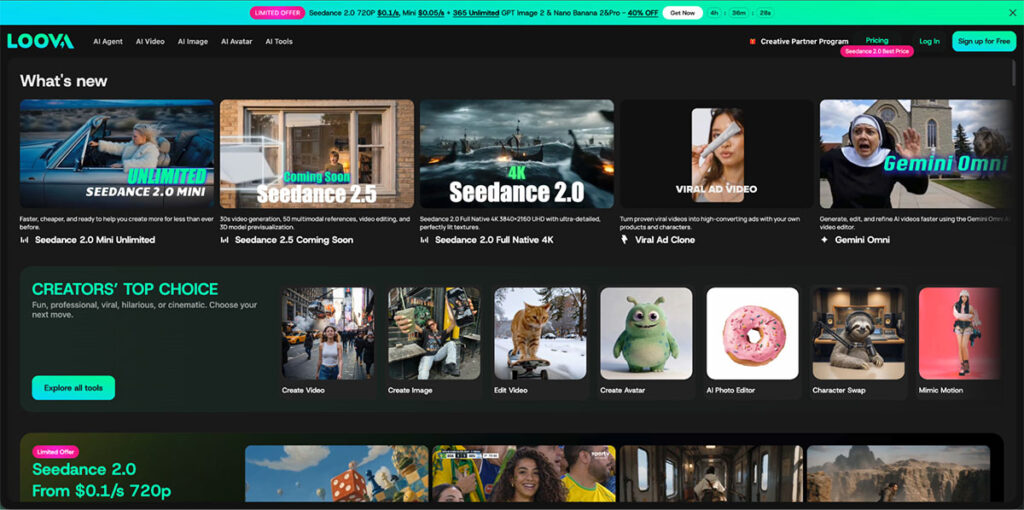
Seedance 2.0 overview
Narrative-first generation with strong reference control
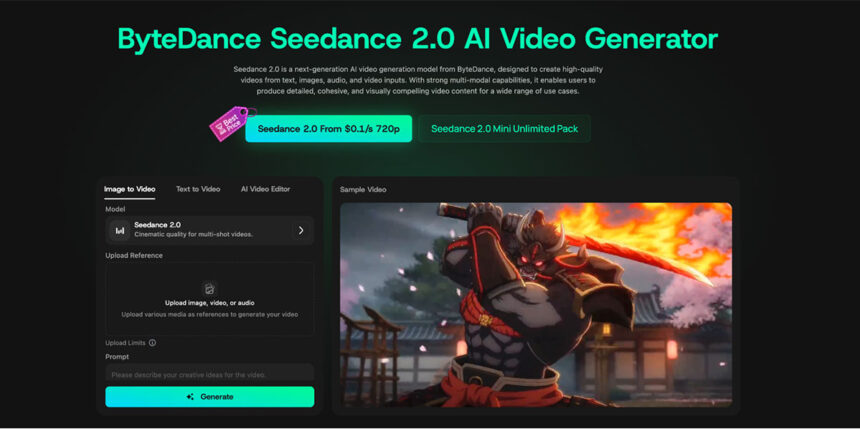
Seedance 2.0 takes a very different approach. Instead of focusing on physical simulation, it focuses on narrative structure and visual storytelling. In my testing, it behaves more like a virtual director that understands how scenes should flow together rather than just generating isolated clips.
The most important thing I noticed is that Seedance does not treat each scene independently. It builds continuity across the entire video sequence, which makes it particularly strong for multi-shot content.
Technically, its strength comes from how it interprets references and context together. When multiple reference images are provided, it does not just copy visual features — it maintains identity logic across different environments and camera perspectives.
Key strengths I observed include:
- Very strong reference image adherence across multiple scenes
- Stable identity preservation even with environment changes
- Natural emotional transitions between shots
- Good handling of multi-scene narrative structure
Seedance performs especially well when used for structured storytelling. Instead of optimizing realism frame by frame, it prioritizes coherence across the full sequence. That makes it feel more like a storytelling system than a rendering tool.
Its limitations appear mainly in physical simulation:
- Fast motion scenes may introduce slight identity variation
- Physics-heavy interactions are less accurate than Kling
- Background consistency can shift based on narrative context
In real production, I find Seedance extremely useful for concept-driven content, short ads, and narrative videos where structure matters more than physical accuracy.
Kling 3.0 overview
Physics-driven realism with strong temporal consistency
Kling 3.0 is the most physically grounded model in this comparison. In my testing, it behaves less like a generative art system and more like a simulation engine that tries to preserve real-world motion logic. This becomes especially obvious when characters move across multiple scenes or interact with complex environments.
Instead of optimizing each frame independently, Kling prioritizes motion continuity. That means it tries to keep weight, momentum, and spatial relationships consistent over time. The result is video that feels stable and physically believable rather than stylized or heavily interpreted.
In practical use, I observed several consistent strengths:
- Strong identity locking across long sequences without facial drift
- Stable clothing behavior even during movement-heavy scenes
- Natural physical motion including walking, turning, and object interaction
- Reliable camera transitions without breaking spatial continuity
Where Kling stands out most is in “production trust.” I can use it in longer sequences without constantly checking whether the character has changed. That makes it especially useful for commercial work where consistency matters more than experimentation.
However, its realism-first design comes with trade-offs:
- Extreme close-ups sometimes lose sharp facial detail
- Emotion-heavy expressions are less flexible than stylized models
- Highly creative or exaggerated scenes are harder to control
In real projects, I tend to use Kling when the goal is cinematic realism, especially for product ads, brand films, and high-quality promotional content.
Veo 3.1 overview
High-end visual fidelity with strong facial realism
Google’s Veo 3.1 feels like a commercial-grade visual engine designed for polished output. In my tests, it consistently produced some of the most realistic facial rendering among all models.
What stands out immediately is how stable its facial rendering is under controlled lighting. It handles skin texture, light falloff, and facial proportions with a level of consistency that feels close to real filmed footage.
Its core strengths include:
- Extremely accurate facial rendering with minimal distortion
- Strong lighting consistency across frames
- High-end commercial look suitable for ads
- Stable expression rendering in controlled scenes
Veo behaves more like a cinematography-focused system. It prioritizes controlled visual output rather than creative variation.
However, I noticed some limitations:
- Clothing details can simplify across scene transitions
- Object persistence is not always stable
- Less flexibility in complex motion scenarios
In practice, I see Veo as ideal for premium advertising content where facial realism is the priority.
Runway Gen-4.5 overview
Cinematic motion design with strong camera intelligence
Runway Gen-4.5 is one of the most “film-aware” models in this comparison. Instead of focusing purely on character consistency, it emphasizes camera language and cinematic composition.
In testing, it consistently produced videos that feel like they were shot by a camera operator rather than generated frame-by-frame. It understands how to simulate push-ins, tracking shots, and handheld motion in a visually coherent way.
Its strengths include:
- Highly cinematic camera movement and framing
- Strong visual storytelling through composition
- Smooth motion transitions across scenes
- Consistent aesthetic styling
Runway performs best when used for visually driven storytelling rather than strict identity preservation.
Its weaknesses include:
- Slight character drift in longer sequences
- Clothing and texture inconsistencies across shots
- Less stable identity control compared to Kling or Seedance
I see it as a strong tool for creative filmmakers and brand designers rather than strict production pipelines.
Hailuo overview
Facial micro-expression accuracy with strong close-up performance
Hailuo is highly specialized in facial detail preservation. In my tests, it consistently delivered some of the most realistic micro-expressions, especially in close-up shots.
Where it stands out is in subtle facial movement. Eye motion, mouth shaping, and emotional transitions feel unusually natural compared to most models in this category.
Key strengths include:
- Highly accurate facial micro-expressions
- Strong skin texture realism in close-ups
- Natural emotional transitions
- Stable facial focus in portrait shots
However, its weaknesses appear in full-body consistency:
- Clothing and outfit changes across scenes
- Weaker spatial identity stability outside facial focus
- Limited multi-scene robustness
It is best suited for talking-head content, emotional close-ups, and human-focused storytelling.
Pixverse V6 overview
Fast generation model optimized for iteration speed
Pixverse V6 is designed for speed rather than perfection. In my testing, it consistently produced results faster than most other models, making it ideal for rapid experimentation.
Its main advantage is iteration efficiency. It allows creators to quickly test multiple visual directions without long waiting times.
Strengths include:
- Very fast generation speed
- Stable basic identity retention
- Good for rapid concept testing
Limitations include:
- Lower detail accuracy compared to premium models
- Clothing and background inconsistency in longer clips
- Reduced stability in complex motion scenes
I use Pixverse mainly in early creative exploration stages.
Sora 2 overview
Long-context narrative understanding for structured storytelling
Sora 2 performs best when handling longer narrative structures. Instead of focusing on single-shot perfection, it focuses on how scenes connect across time.
In my tests, it showed strong ability to maintain story flow and scene logic, which is useful for narrative-driven content.
Strengths include:
- Strong multi-scene narrative coherence
- Smooth temporal progression across clips
- Good understanding of scene context
Limitations include:
- Identity drift over longer sequences
- Clothing inconsistency across extended videos
It works best for conceptual storytelling and long-form AI-generated videos.
HappyHorse 1.0 overview
Stylized motion model optimized for social content
HappyHorse 1.0 is clearly designed for stylized and expressive motion rather than realism. In testing, it produced highly dynamic and exaggerated movement styles that work well for short-form social content.
Strengths include:
- Strong motion exaggeration for stylized visuals
- Fast generation suitable for short content cycles
- Good visual energy for social media clips
Limitations include:
- Weak realism compared to other models
- Limited identity consistency for real-world characters
- Reduced control in complex scenes
It is best suited for creative social media content rather than commercial production.
Final Thoughts
After testing all 10 models, one thing is clear: the AI video space is no longer about finding a single “best” model. It is about choosing the right tool for the right stage of production. Different models now solve different parts of the content creation process, and performance depends heavily on how well the tool fits the specific task rather than overall capability.
Kling and Seedance stand out in overall usability, but they approach the problem from different angles. Kling focuses on physical realism and temporal stability, making it more reliable for grounded motion and consistent visuals. Seedance, on the other hand, emphasizes narrative structure and creative control, which makes it stronger for multi-scene storytelling and prompt-driven direction.
Other models tend to specialize in narrower strengths such as facial fidelity, cinematic camera movement, generation speed, or stylistic expression. Instead of competing across all dimensions, they perform best when used within their specific strengths.
In real production, I rarely rely on a single model. I often combine multiple tools depending on the task. Each stage benefits from a different strength—some models are better for rapid ideation, while others are more suitable for final output quality. Using platforms like Loova helps me compare outputs side by side and select the strongest result without constantly switching between tools or losing creative context.
FAQs
What is the best AI video model in 2026?
There is no single best model because each one is built for a different purpose. In my testing, Kling 3.0 performs best for physical realism and stable motion, while Seedance 2.0 performs best for narrative structure and reference-based consistency. Other models like Veo 3.1 and Runway Gen-4.5 are stronger in cinematic quality and visual style.
Which AI video model has the best character consistency?
Kling 3.0 and Seedance 2.0 are the most consistent overall in my tests. Kling is stronger in maintaining identity across motion-heavy scenes, while Seedance is better at preserving identity when multiple reference images are used across different environments.
Which model is best for commercial and advertising content?
For high-end commercial work, Kling 3.0 and Veo 3.1 are the strongest choices. Kling is better for physical realism and product behavior, while Veo is stronger for facial quality and polished advertising visuals. The choice depends on whether motion realism or visual refinement is more important.
Which AI video model is best for social media content?
Seedance 2.0 and Pixverse V6 perform best for social content because they allow faster iteration and quicker generation of variations. This makes them more suitable for TikTok, Instagram Reels, and short-form creative testing where speed matters more than perfect realism.
Can AI video models maintain the same character across multiple scenes?
Yes, but performance varies. Most modern models can maintain basic identity, but only a few handle multi-scene consistency reliably. Kling 3.0 and Seedance 2.0 currently perform the best in maintaining stable identity across different camera angles and scene transitions.
Is image to video better than text to video for consistency?
In most cases, yes. Image to video AI provides a fixed visual reference, which significantly improves identity stability. Text to video AI is better for exploring ideas, but it is more likely to introduce variation in facial features, clothing, or scene structure.
How many reference images should I use for consistent results?
For professional use, I recommend at least three to five reference images: one front-facing portrait, one side profile, one full-body shot, and one expression or emotion reference. More detailed reference sets generally improve consistency across scenes.
Why do AI video models change character appearance between scenes?
This usually happens because each frame is generated independently or partially reinterpreted by the model. Differences in camera angle, lighting, or motion can cause identity drift. Models with stronger temporal consistency or reference locking handle this better, but no model is completely perfect yet.
Which model is fastest for generating AI videos?
Pixverse V6 is one of the fastest models in this comparison. It is optimized for rapid generation and quick iteration, making it useful for testing ideas before moving to higher-quality models.
Can I combine different AI video models in one project?
Yes, and this is actually a common production approach. Many creators use fast models like Pixverse or Seedance for concept testing, then switch to higher-quality models like Kling or Veo for final output. This helps balance speed, cost, and quality.