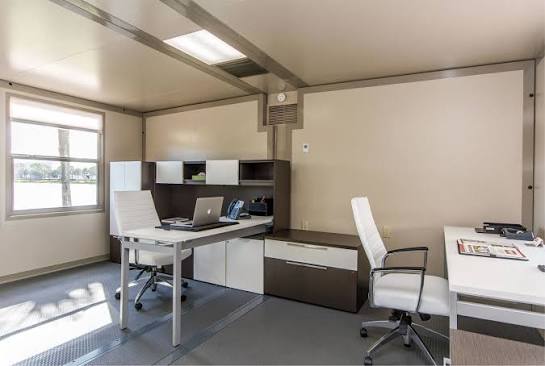
Mobile offices are portable, prefabricated workspaces. Construction sites, events, and short-term projects use these units as temporary or semi-permanent offices, and teams can begin work without waiting for a permanent construction. Because manufacturers build the units in factories and deliver them ready for installation, projects experience less on-site construction and disruption. Here are a few features that demonstrate the adaptability and functionality of mobile offices:
On-Site Installation
Mobile offices are delivered and positioned through a coordinated workflow that connects transportation directly to final placement. Installation is included as part of the delivery service, so transport, positioning, and setup all happen within a single integrated process. Once on site, teams set the structure in place and complete any required connections. Because everything is handled together, there’s less need to bring in separate contractors for different stages of on-site preparation and installation.
Fast Deployment
Mobile buildings accelerate workspace setup by allowing organizations to deploy prebuilt units wherever temporary office space is required. These units arrive as complete structures, which removes the extended timelines associated with conventional on-site construction. Worksites gain immediate office functionality without disrupting ongoing field operations. A construction crew is able to install a unit adjacent to an active jobsite and begin coordinating tasks from that location once installation is complete.
Fast installation supports project flexibility as site conditions change over time. As workload increases, organizations expand the workspace by adding additional units, which maintains operational continuity instead of pausing work for construction. Mobile offices also relocate to align with shifting work zones as a project progresses. This mobility helps teams maintain consistent coordination and workflows across different phases of the project.
Multi-Sector Use
Mobile offices are used in construction, education, healthcare, government, commercial, and disaster-response settings because they can adapt to diverse needs. Teams use these units on construction sites to manage the day-to-day work. Managers review plans, supervisors track progress, and engineers record site details without leaving the area. A highway project is able to place a unit close to the work zone, allowing staff members to oversee schedules and complete safety checks in real time.
Mobile offices provide additional space for schools during renovations or increases in student enrollment. Schools install these units on campus and continue instruction without relocating students. This arrangement maintains an uninterrupted learning environment while the main building undergoes upgrades or expansion.
In healthcare settings, mobile buildings support administrative tasks, patient intake, and temporary staffing during peak demand or facility upgrades. These functions remain separate from clinical treatment areas, which preserves space and focus for direct patient care. Government agencies use mobile offices for field operations and public-facing services. Officials deploy them for activities such as licensing, coordination work, and event management at large gatherings. During disasters, these units support supply organization and response coordination. Although the physical structure remains consistent, its operational role shifts based on the requirements of each situation.
Occupancy-Ready Units
Interior finishes, built-in services, and spatial layouts are installed before the unit leaves the production facility. Most interior construction occurs during manufacturing rather than on the worksite. Once fabrication is complete, the unit functions as a finished workspace before transport or placement. After delivery and installation, it operates when connected to required utilities. A temporary office used for emergency response coordination is placed on site and becomes operational shortly after utility connections are completed; this allows organizations to start utilizing the space immediately.
Regulatory Compliant Structures
Mobile offices are configured to meet building code and accessibility requirements before deployment. Structural framing, electrical systems, plumbing, fire protection, and energy-related components are integrated according to project specifications and applicable regulations. Designers adjust layouts and system plans to align with jurisdiction-specific codes and intended occupancy before fabrication begins; this verifies that compliance is built into the unit rather than corrected later.
This approach also streamlines approval processes across different jurisdictions and project environments. It does so by aligning design documentation with regulatory expectations from the outset. It also reduces the need for redesign during permitting reviews and supports faster authorization for installation and use on site.
Deploy Mobile Offices Today
Mobile offices are built as modular units that are designed, manufactured, and installed through one coordinated process. This approach reduces the time between planning the space and using it at the worksite. It allows teams to start using a workspace quickly without waiting for brick-and-mortar construction. Contact modular building providers to get a mobile office today.