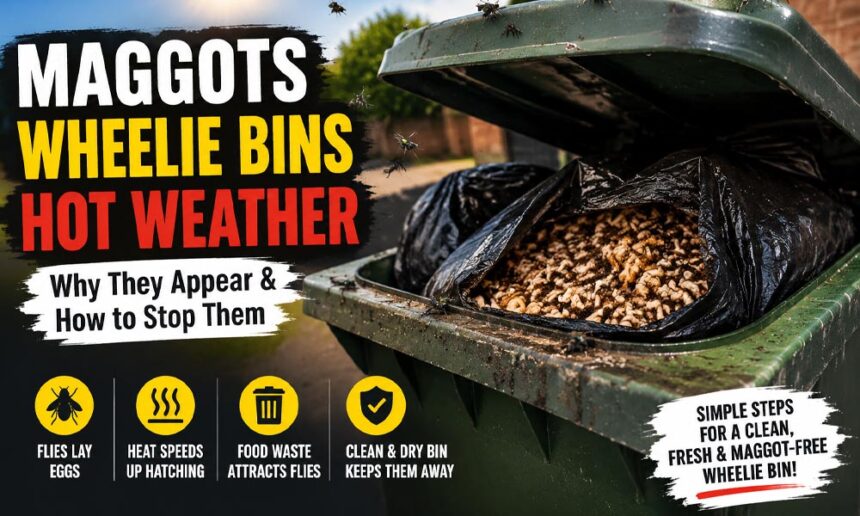
Summer can be a lovely time of year, but it can also bring an unpleasant surprise to your outdoor bin. One day, everything looks normal. The next day, you lift the lid and notice tiny white maggots moving around the waste. It is upsetting, but it is also a very common problem.
The maggots wheelie bins hot weather problem happens because warm bins are perfect places for flies. Food waste starts to smell much faster in the heat. Flies follow that smell, enter the bin, and lay their eggs on soft or wet waste. Those eggs can hatch quickly when the weather is warm.
The good news is that maggots are not difficult to prevent when you know what causes them. In this guide, we will explain why they appear, which types of waste attract flies, how to notice the early signs, and how to keep your bin clean. We will also share easy habits that can make a big difference during summer.
What Causes Maggots in Wheelie Bins?
Maggots do not appear from nowhere. They are the young form of flies. Adult flies search for places where their young can find food. A wheelie bin filled with old food, wet waste, and strong smells gives them everything they need.
A fly may land on a piece of meat, fruit, pet food, or other waste and lay tiny eggs. These eggs can be hard to see because they are very small. In warm weather, they may hatch within a short time. The small white larvae that come out are what we call maggots.
Many people think only very dirty bins get maggots. That is not true. A small food scrap, a leaking bag, or a little sauce at the bottom can be enough to attract flies. Even a bin that looks mostly clean may still have food left under the lid, near the rim, or inside a corner.
An open or loose lid also makes the problem worse. Flies only need a short time to enter and lay eggs. This is why it is important to keep food waste sealed and the bin lid fully closed.
Why Maggots Wheelie Bins Hot Weather Problems Get Worse
Hot weather makes food waste break down much faster. A chicken bone, piece of fish, or leftover meal may begin to smell strongly after only a few hours in the heat. These smells can travel through the air and attract flies from nearby areas.
The inside of a wheelie bin can become much hotter than the air outside, especially when it sits in direct sunlight. Think of it like a small closed box warming up all day. This heat speeds up the fly life cycle and helps eggs hatch faster.
Moisture also plays a major role in maggots wheelie bins hot weather problems. Food releases liquid as it breaks down. Drinks, sauces, fruit juice, and wet waste may also leak from bags. This creates a warm and damp space where maggots can feed and survive.
A small fly problem can therefore become a large one very quickly. You may see only one or two flies around the lid in the morning, then find many maggots inside the bin the next day. Acting early is one of the easiest ways to avoid a full infestation.
Early Signs of Maggots Wheelie Bins Hot Weather Issues
One of the first warning signs is an increase in flies around your bin. You may see them sitting on the lid, moving around the edges, or flying in and out when the lid opens. This often means they can smell food waste inside.
A stronger smell is another clear sign. In hot weather, waste may develop a sour, sweet, or rotten smell. If you notice the smell before opening the lid, the waste inside is likely breaking down quickly. It is a good time to check for leaking bags or loose food.
You should also look for wet or sticky liquid at the bottom of the bin. This liquid is sometimes called bin juice, and it creates the perfect place for fly eggs and maggots. It can also make the bin much harder to clean later.
Tiny pale eggs may sometimes be found near food waste, under the lid, or around the rim. They may look like small grains of rice. If you see them, clean the area at once. Catching the early signs of maggots wheelie bins hot weather issues can save you from a much bigger job.
Waste That Attracts Maggots Fast
Some types of waste attract flies much faster than others. Meat and fish are among the biggest causes. Raw scraps, bones, skin, and cooked leftovers can become very smelly in warm weather. Flies can quickly find these items, even when they are inside a thin bag.
Dairy waste can also cause problems. Old milk, cheese, yoghurt, and creamy sauces begin to smell as they warm up. Leftover pet food is another common cause because it often contains meat, fish, or strong flavours that flies can detect.
Fruit skins and sweet waste may seem less harmful, but they also attract flies. Bananas, melons, peaches, and other soft fruits break down quickly. Juice bottles, fizzy drink cans, jam jars, and sweet wrappers may still hold small amounts of sugar that create smells.
Wet waste is especially risky. Soup, gravy, cooking liquid, and food oil can leak into the bottom of the bin. Baby nappies and pet waste also hold moisture and heat. These items should always be wrapped and sealed carefully.
Garden waste can sometimes attract flies too. Fresh grass, leaves, and old plants may begin to rot or ferment inside a warm bin. When mixed with food waste, they can add more moisture and make the smell stronger.
How to Stop Maggots Wheelie Bins Hot Weather Problems
The best way to stop maggots is to make it difficult for flies to reach food waste. Always place food inside a strong bag and tie it tightly. High-risk waste such as meat, fish, pet food, and nappies may need two bags during very hot weather.
One useful trick is to freeze meat and fish scraps until collection day. Place them in a sealed bag or container in the freezer, then move them to the wheelie bin shortly before it is collected. This stops the waste from rotting inside the bin for several days.
Drain liquids before throwing containers away. Empty soup, sauce, juice, and other wet food into the proper drain or food waste system where local rules allow. Do not pour liquid straight into the wheelie bin because it can leak and create a wet layer at the bottom.
Keep the lid closed at all times. Even leaving it open for a few minutes may give flies enough time to enter. Check that bags are not trapped under the lid, as this may stop it from closing properly.
You should also look for holes in waste bags before placing them in the bin. Sharp bones, tins, or packaging can tear thin bags. A small leak can release smells and moisture, increasing the chance of maggots wheelie bins hot weather problems.
Best Bin Liners for Hot Weather
A strong bin liner can help keep the inside of your wheelie bin cleaner. Thin bags may stretch, tear, or leak when filled with heavy food waste. During summer, choose thick bags that are made to hold wet and heavy rubbish.
Double-lining can give extra protection on very hot days. Place one liner inside another before adding waste. This is useful for nappies, pet waste, fish scraps, and other items that may leak or smell strongly.
Always tie the liner tightly before placing it in the wheelie bin. Do not leave the top open, even if the main bin lid closes. Flies may still enter when the wheelie bin is opened and reach the exposed waste.
Newspaper, cardboard, or absorbent bin pads can be placed at the bottom of the bin. They help collect small leaks and reduce moisture. Replace them after each collection, especially if they feel wet or smell bad.
Compostable liners can be useful, but some become soft or weak in heat. Check them often and use an extra layer when needed. A liner only helps if it stays sealed and does not break.
How to Reduce Wheelie Bin Smells
Strong smells are one of the main reasons flies visit a wheelie bin. Reducing those smells makes the bin less attractive to them. Start by rinsing food containers before throwing them away. A quick rinse can remove leftover sauce, milk, yoghurt, or juice.
Baking soda can help absorb both moisture and bad smells. Sprinkle a small amount into the bottom of a clean, dry bin before adding a new liner. You can also place it on top of absorbent newspaper or a bin pad.
Vinegar can be used to clean an empty bin and reduce old smells. Mix it with water and wipe or spray the inside after the bin has been emptied. Never mix vinegar with bleach or any cleaner that contains bleach, as this can create dangerous fumes.
Some people use peppermint or eucalyptus oil to help discourage flies. A few drops mixed with water can be sprayed around the outer rim of a clean bin. These scents may help, but they should not replace good cleaning and proper waste handling.
The most important step is to remove the source of the smell. Air fresheners may hide an odour for a short time, but they do not stop food from rotting. Keeping waste dry, sealed, and cool is the best way to control maggots wheelie bins hot weather problems.
Best Place to Keep Your Wheelie Bin
Where you keep your wheelie bin can make a big difference during summer. A bin that sits in direct sunlight becomes much hotter than one kept in the shade. The extra heat makes food break down faster and creates stronger smells that attract flies.
Try to place your bin in a cool and shaded area whenever possible. A spot beside a fence, wall, or garage that stays out of direct sunlight is often a good choice. Good airflow also helps reduce heat and keeps the bin fresher.
Avoid placing your wheelie bin near compost heaps, bird feeders, or piles of garden waste. These places already attract flies, so putting your bin nearby only increases the chance of an infestation. Keeping the area around the bin clean also helps stop pests from gathering.
If you have enough space, leave a small gap between the bin and the wall. This allows air to move around it and helps the bin dry after rain or cleaning. A cool and dry location is one of the easiest ways to reduce maggots wheelie bins hot weather problems.
How to Clean Maggots Wheelie Bins Hot Weather Infestations
If you open your bin and find maggots, do not panic. The problem can be solved with a careful clean. Start by putting on gloves. If the smell is strong, wearing a face mask is also a good idea.
Remove the rubbish carefully and place it into strong, sealed waste bags if needed. Check the inside of the bin for eggs around the lid, corners, and bottom. These small areas are easy to miss, but they are where flies often lay eggs.
Next, use hot water to wash away visible maggots. After that, scrub every part of the bin with a long-handled brush and a suitable cleaning product. Pay extra attention to the lid, rim, hinges, and base where dirt often collects.
Rinse the bin well and leave it open until it is completely dry. A dry bin is much less likely to attract flies again. Taking your time during cleaning helps stop the same problem from returning a few days later.
Fast Ways to Get Rid of Maggots
Sometimes you need a quick solution, especially if bin collection is still a few days away. One simple method is to pour very hot water over the maggots. This removes them quickly and helps loosen dirt stuck to the bin.
Salt is another easy option. Sprinkle a generous amount over the maggots to dry them out. After they are gone, sweep or scoop them into a sealed waste bag before placing them in the general rubbish.
Always clean the bin after removing the maggots. Leaving behind eggs or dirty waste can start the problem all over again. Even if the maggots are gone, flies may return if the smell remains.
Remember to use only one cleaning product at a time. Never mix bleach with vinegar or other cleaners. Keep children and pets away until the cleaning is finished and the bin is safe to use again.
Long-Term Maggots Wheelie Bins Hot Weather Prevention
Stopping maggots once is good, but stopping them every summer is even better. The easiest way is to build a simple cleaning routine. During hot weather, wash your wheelie bin about once a week or after each collection if possible.
Always seal food waste before throwing it away. Drain liquids, tie bags tightly, and avoid placing loose food directly into the bin. These small habits greatly reduce the chance of maggots wheelie bins hot weather problems.
Absorbent pads or newspaper at the bottom of the bin can help control moisture. If you notice they have become wet, replace them with fresh ones. Less moisture means fewer places where flies can lay eggs.
Check your bin every few weeks for cracks or a loose lid. If flies can enter easily, they will. Fixing small problems early is much easier than dealing with a full infestation later.
Common Mistakes That Bring Maggots Back
Many people clean the inside of the bin but forget about the lid. Flies often lay eggs under the lid and around the rim. If these areas are not cleaned, maggots may return very quickly.
Another common mistake is leaving the lid slightly open because the bin is too full. Even a small opening is enough for flies to enter. Try not to overfill the bin, and always make sure the lid closes properly.
Some people wash the bin but do not let it dry. A damp bin creates the perfect place for flies to lay eggs. Others use air fresheners to cover the smell instead of removing the waste that is causing it.
It is also easy to forget about food left in bottles, jars, or takeaway boxes. A quick rinse before throwing them away keeps the bin much cleaner and reduces smells during hot weather.
Safety Tips for Cleaning Maggots
Cleaning a wheelie bin is not difficult, but it should always be done safely. Wear strong gloves to protect your hands from dirty waste and cleaning products. If you have sensitive skin, wearing long sleeves is also helpful.
Open the bin in a well-ventilated area. Fresh air helps reduce strong smells while you clean. If you are using a cleaning product, always follow the instructions on the label.
Never mix different cleaning products together. For example, bleach should never be mixed with vinegar because this can create dangerous fumes. If you want to use another cleaner, rinse the bin well first and let it drain.
After cleaning, wash your hands with soap and water. Keep children and pets away from the cleaning area until everything is finished. Simple safety steps help keep everyone protected.
When to Replace Your Wheelie Bin
Sometimes the problem is not your cleaning routine. The wheelie bin itself may be worn out. A cracked bin can hold dirty water inside the cracks, making it harder to keep clean.
A broken or loose lid is another common problem. If the lid does not close tightly, flies can enter very easily. Damaged edges can also trap food waste that is difficult to remove.
If your bin has repeated maggots wheelie bins hot weather problems every summer, even after careful cleaning, it may be time for a replacement. Many local councils offer replacement bins if the old one is damaged.
A new bin with a smooth inside and a tight-fitting lid is much easier to clean. It also helps keep smells inside and flies outside.
Conclusion
Maggots in a wheelie bin are unpleasant, but they are also preventable. Once you understand why they appear, it becomes much easier to stop them. Heat, food waste, moisture, and flies all work together to create the problem.
Simple habits make the biggest difference. Keep food waste sealed, reduce moisture, clean your bin often, and always let it dry before using it again. A shaded place and a tightly closed lid also help protect your bin during summer.
The best way to deal with maggots wheelie bins hot weather problems is to act early. If you notice more flies, stronger smells, or leaking waste, do not wait. A few minutes of cleaning today can save you a much bigger job tomorrow.
With regular care and the easy tips in this guide, your wheelie bin can stay clean, fresh, and free from maggots throughout the summer of 2026 and beyond.
(FAQs)
Why do maggots appear in wheelie bins during hot weather?
Maggots appear when flies lay eggs on food waste inside the bin. Hot weather makes food break down faster and creates stronger smells. These smells attract flies very quickly.
The warm and damp space inside the bin helps the eggs hatch faster. In some cases, maggots can appear within a day. This is why maggots wheelie bins hot weather problems are more common in summer.
What is the fastest way to get rid of maggots in a wheelie bin?
The fastest method is to remove the waste, seal it inside strong bags, and pour very hot water over the visible maggots. Salt can also help dry them out.
After removing them, scrub the bin well. Clean the lid, rim, corners, and bottom. Then rinse the bin and let it dry fully before adding new waste.
Can maggots come back after the bin is cleaned?
Yes, maggots can return if fly eggs are still hidden inside the bin. Eggs may be found under the lid, around the rim, inside hinges, or in small cracks.
They can also return if the bin stays wet or strong-smelling waste is added again. A full clean, complete drying, and tightly sealed waste bags help stop the problem from coming back.
How can I stop maggots from forming in my wheelie bin?
Keep all food waste sealed inside strong bags. Double-bag meat, fish, nappies, pet food, and other wet or smelly waste during hot weather.
You should also keep the lid closed, place the bin in the shade, and remove liquids before throwing waste away. Regular cleaning is one of the best ways to prevent maggots.
Which types of waste attract flies the most?
Meat, fish, dairy products, pet food, and cooked leftovers attract flies very quickly. These foods create strong smells as they warm up and begin to rot.
Fruit skins, sauces, sugary drinks, nappies, and wet garden waste can also cause problems. Anything that is soft, wet, sweet, or smelly may increase the risk of maggots.
How often should I clean my wheelie bin in summer?
During hot weather, it is best to clean your bin once a week or after each collection when possible. This removes food bits, leaks, and smells before flies find them.
If weekly cleaning is not possible, clean it at least every two weeks. The most important step is to let the bin dry fully after washing.
Can vinegar, salt, or baking soda stop maggots?
Salt can help kill visible maggots by drying them out. Vinegar is useful for cleaning the bin and reducing old smells. Baking soda can absorb moisture and help keep the bin fresher.
These methods work best for small problems and regular care. A large infestation may need hot water, deep cleaning, and a suitable disinfectant.
Are maggots dangerous to people or pets?
Maggots in household bins are usually more unpleasant than dangerous. However, the rotting waste around them may contain harmful germs and bacteria.
Always wear gloves when cleaning the bin. Keep children and pets away from the area, and wash your hands well after the job is finished.
Why does my wheelie bin smell worse in hot weather?
Heat makes food break down much faster. As the waste rots, it releases stronger smells that can travel through the air and attract flies.
Liquids at the bottom of the bin make the smell worse. Keeping waste dry, sealed, and shaded helps reduce odour and lowers the chance of maggots wheelie bins hot weather issues.
Should I replace my bin if maggots keep returning?
You may need a new bin if the lid is broken, the sides are cracked, or the bottom leaks. Damage makes it easier for flies to enter and harder for you to clean the bin properly.
Contact your local council and ask about a replacement. A new wheelie bin with a tight lid and smooth inside can make summer waste care much easier.
You might also like: Innøve: A Calm and Simple Way to Improve Life and Work