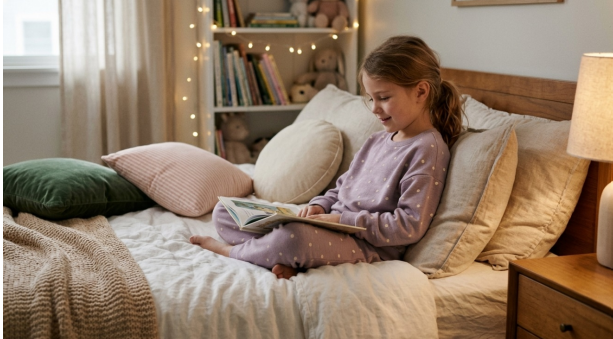
Bedtime is going smoothly until she stops halfway up the stairs, tugs at her waistband, and announces that her new pajamas feel “weird.” Ten minutes later she is back in last year’s set, the one with the faded print and the hem sitting well above her ankles. Most parents have lived some version of this moment. The good news is that finding pajamas she will actually sleep in has less to do with luck and more to do with a few simple checks you can make before you buy.
Start With Fabric, Because She Feels It All Night
Cotton Works for Most of the Year
Breathable cotton is the easiest starting point for kids’ pajamas. It lets heat escape, absorbs a little moisture, and tends to get softer with every wash. A cotton knit with a touch of stretch moves with a restless sleeper, while a woven cotton set feels crisper and slightly cooler on warm nights.
Save Fleece and Flannel for Truly Cold Nights
Fleece and brushed flannel feel wonderfully cozy in the store, but they can leave a child too warm under a thick comforter. If she wakes up damp or kicks off her covers every night, the fabric may be doing too much. When parents ask about the best fabric for kids’ pajamas, the honest answer is the one that matches the bedroom: lighter layers for a heated room, warmer ones for drafty winter nights.
Read the Fabric Label, Not Just the Feel
Two sets can feel equally soft on the shelf and behave very differently overnight. Check the fiber content on the label before you buy. A high cotton percentage usually breathes well, while sets made mostly of polyester can feel silky at first but hold more heat against the skin. Blends are not a problem on their own, but if she tends to sleep warm, the label tells you more than the hand feel.
Get the Fit Right Before You Fall for a Print
Measure Instead of Shopping by Age
Age labels are a shortcut, not a measurement. Two girls the same age can sit a full size apart, so a quick check of height, chest, and waist saves a lot of returns and disappointed mornings. For a step-by-step walkthrough, this girls’ pajama size guide from JuniorKids explains how to measure properly and how to read each column of a size chart instead of stopping at the age label.
Leave Room to Move, Not Room to Trip
Pajamas should let her curl up, stretch out, and roll over without pulling across the shoulders or riding up at the waist. Extra-long legs and sleeves are not the bargain they seem, though. Fabric that pools at the ankles can catch on stairs and bed frames, so look for hems that land at the ankle and cuffs that stop at the wrist.
Check the Small Details She Will Notice
Waistbands, Seams, and Tags
Run a finger along the inside of the waistband before you buy. A soft, covered elastic is far kinder than a tight, exposed band that leaves red marks by morning. Flat seams and printed labels instead of scratchy tags make a bigger difference than most adults expect, especially for children with sensitive skin.
Two-Piece Sets or Nightgowns
Two-piece sets stay in place through tossing and turning, which suits kids who move a lot in their sleep. Nightgowns are easy for younger girls to pull on by themselves, a small win for independence at bedtime. Many families keep both and let the season and her sleeping habits decide which one comes out each night. Short-sleeve sets earn their place in summer, while long sleeves and full-length pants make more sense once the nights turn cold.
Let Her Help Choose
Children are far more likely to wear what they helped pick. Offer two or three options that already pass your fabric and fit checks, then let her choose the color or print. A favorite character or pattern can turn changing into pajamas from a nightly negotiation into the first step of a calm routine, and that small sense of ownership often carries all the way to lights out. Keep the final say on fit and fabric, and give her the say on style. If she has strong feelings about long sleeves or shorts, take them seriously, because comfort preferences are often a real clue about how warm she runs at night.
Plan for Laundry and Growth Spurts
Keeping a few sets in rotation means a busy week never ends with a frantic late-night wash. Launder new pajamas before the first wear to soften the fabric, and follow the care label so prints and stretch hold up. Then check the fit again each season. Sleepwear runs out of room faster than daytime clothes, and a set that fit perfectly in the fall can feel snug by spring.
Better Sleep Starts With the Right Set
Choosing pajamas comes down to three questions: does the fabric suit the season, does the fit leave room to move without extra length, and does she genuinely like wearing it? Asking them before checkout saves money, returns, and bedtime battles. If you are shopping this season, browsing a dedicated collection of girls’ pajamas with these checks in mind makes it much easier to find a set she will reach for night after night.
What is the one pajama detail your daughter refuses to sleep without? Share it in the comments below.