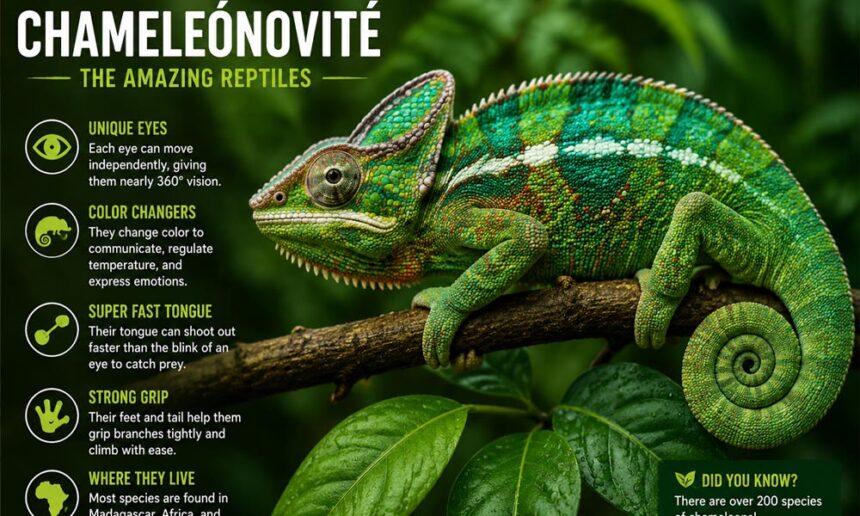
Have you ever seen an animal change its color right in front of your eyes? It almost feels like magic. That is one of the biggest reasons why chameleónovité have amazed people for many years. These unusual reptiles can change their colors, move very slowly, and even look in two different directions at the same time.
But there is much more to them than colorful skin. Chameleónovité are skilled hunters, careful climbers, and important animals in nature. Every part of their body is made to help them survive. Their strong feet, long tongue, and special eyes make them different from almost every other reptile.
In 2026, more people than ever are learning about chameleons. Some want to keep one as a pet, while others simply enjoy watching nature. In this guide, you will learn everything about chameleónovité in a simple and easy way. We will explore where they live, how they hunt, why they change color, and what makes them so special.
What Are Chameleónovité?
The word chameleónovité is used in Slovak and Czech languages. In English, it refers to the family of animals called chameleons. Scientists call this family Chamaeleonidae. Today, experts recognize more than 220 species, and new discoveries are still being made in some parts of the world.
Chameleónovité belong to the reptile group, just like snakes and lizards. Even though they are related to lizards, they have many features that make them different. Their bodies are designed for climbing trees instead of running across the ground.
Think about a normal lizard that quickly runs over rocks. Now imagine a chameleon moving slowly along a tree branch while carefully watching everything around it. That slow movement helps it stay hidden from both prey and danger.
Their unusual body shape also helps them survive. They have gripping feet, a tail that wraps around branches, and eyes that can move on their own. These amazing features make chameleónovité one of the most interesting reptile families in the world.
Where Do Chameleónovité Live?
Most chameleónovité live in warm places where they can enjoy sunlight almost every day. They cannot survive well in cold weather because they depend on outside heat to keep their bodies warm.
The largest number of chameleon species lives in Madagascar, a large island near Africa. In fact, almost half of all known chameleon species are found there. This is why Madagascar is often called the home of chameleons.
Besides Madagascar, chameleónovité also live across many parts of Africa. Some species are found in southern Europe, the Middle East, and parts of Asia. Over the years, a few species have even been introduced into places like Hawaii and Florida, where warm weather allows them to survive.
Not every chameleon lives in the same kind of place. Some enjoy thick rainforests filled with tall trees and plenty of rain. Others live in dry forests, mountains, woodlands, or areas with fewer plants. Each species has learned to live in the environment that suits it best.
Trees are very important for most chameleónovité. Branches give them safe places to climb, rest, hunt, and hide from animals that might want to eat them. Their whole lifestyle depends on having places where they can move above the ground.
Popular Types of Chameleónovité
There are more than 220 kinds of chameleónovité, and every species has something special about it. Some are tiny enough to fit on your finger, while others grow much larger than many people expect.
One of the best-known species is the Veiled Chameleon. It is famous for the tall crest, called a casque, on top of its head. It is strong, active, and one of the most common pet chameleons because it can adapt well when cared for properly.
Another favorite is the Panther Chameleon. This species is loved for its bright colors. Depending on where it comes from, it may show blue, green, orange, red, or yellow shades. These colorful reptiles are especially popular among reptile lovers.
Jackson’s Chameleon is easy to recognize because the males have three horns on their heads. These horns make them look almost like tiny dinosaurs. They are usually green and enjoy cooler mountain areas.
There are also Pygmy Chameleons, which are among the smallest members of the family. Many of them are only a few centimeters long. Their brown colors help them blend in with leaves on the forest floor instead of living high in trees.
On the other end of the size scale is Parson’s Chameleon, one of the largest species in the world. It can grow much bigger than common pet chameleons and has a strong body built for life in the forests of Madagascar.
Each type of chameleónovité has its own colors, size, and lifestyle. This amazing variety is one reason why scientists continue studying these reptiles today.
Why Chameleónovité Change Color
When people think about chameleónovité, they usually think about color change first. Many believe chameleons change color only to hide from danger. That sounds exciting, but it is not completely true.
Changing color is actually a way for chameleons to communicate. Bright colors may show excitement, confidence, or the wish to attract a mate. Dark colors can show fear, stress, or anger. Their skin works almost like another language.
Color change also helps control body temperature. On a cool morning, a chameleon may become darker because dark colors absorb more heat from the sun. Later, when the weather becomes hotter, lighter colors help reflect some of the sunlight.
Scientists have learned that this amazing ability comes from special layers of skin. Tiny cells inside the skin change the way light is reflected. Instead of simply making new colors, these skin cells change how light reaches our eyes.
So, can a chameleon perfectly match every object around it? Not really. While some blending happens, most color changes are linked to mood, communication, temperature, and health rather than copying every background.
This makes chameleónovité even more interesting. Their colors are not just beautiful—they help them survive and communicate every single day.
Amazing Body Features of Chameleónovité
The body of chameleónovité is full of clever designs that help them live in trees. Every feature has a purpose, and together they make these reptiles excellent climbers and hunters.
Perhaps the most famous feature is their eyes. Each eye can move on its own. One eye may watch an insect while the other checks for danger. This gives them a very wide view without moving their head.
Once they find food, both eyes quickly focus on the same target. This helps them judge the exact distance before they strike. Few animals in the world have eyesight like this.
Another amazing feature is the tongue. A chameleon’s tongue is long, sticky, and incredibly fast. In many species, it can reach up to twice the length of the body. It shoots out in a fraction of a second and pulls the insect back almost instantly.
Their feet are also very special. The toes are grouped together like natural tongs, allowing them to grip branches tightly. This strong grip helps them move safely through trees without falling.
Most tree-dwelling chameleónovité also have a prehensile tail. This means the tail can wrap around branches like an extra hand. It gives extra balance while climbing or reaching for food.
Some species have a raised helmet-like shape on their head called a casque. In different species, it may help with collecting rainwater, showing strength, or simply be part of their unique appearance.
All of these body features work together perfectly. They allow chameleónovité to survive in places where many other reptiles would struggle.
How Chameleónovité Hunt and Eat
Unlike many fast-moving reptiles, chameleónovité do not chase their food. Instead, they are patient hunters. They often stay completely still for several minutes while watching the area around them.
Imagine sitting quietly and waiting for the perfect moment instead of running after your meal. That is exactly how a chameleon hunts. It saves energy and surprises its prey.
When an insect comes close enough, the chameleon quickly locks both eyes onto it. Then its powerful tongue shoots forward with incredible speed. Before the insect even knows what happened, it has already been caught.
Most chameleónovité eat insects such as crickets, grasshoppers, flies, beetles, locusts, and worms. Their sticky tongue helps hold the prey tightly before pulling it back into the mouth.
Larger species sometimes eat more than insects. They may catch small birds, baby lizards, or tiny mammals if the chance comes. However, insects remain the main food for most species.
Pet chameleons also need healthy live insects. Many owners feed crickets, roaches, mealworms, and other insects that have been given healthy food first. This process, called gut-loading, helps provide extra nutrition to the chameleon.
Good eyesight, patience, and a lightning-fast tongue make chameleónovité some of the most skilled hunters in the reptile world.
Daily Life and Behavior of Chameleónovité
Most chameleónovité enjoy living alone. They are not social animals and usually prefer having their own space. If two adult males meet, they may show bright colors or unusual body movements to warn each other to stay away.
Instead of fighting right away, many chameleons try to solve problems through displays. Bright colors, puffed-up bodies, and slow movements often tell another male that the area is already taken. This helps avoid unnecessary fights.
Chameleons spend much of the day climbing, resting, warming themselves in the sun, and looking for food. They move slowly because quick movement could attract predators or scare away insects.
Most species are active during the daytime. As evening comes, they climb onto safe branches and sleep above the ground where they are better protected from many dangers.
Their slow lifestyle may look peaceful, but chameleónovité are always paying attention to their surroundings. Their excellent eyesight helps them notice both food and danger long before many other animals can.
How Chameleónovité Reproduce and Grow
Like many animals, chameleónovité have special ways of finding a mate. During the breeding season, male chameleons often become much brighter in color. These bright colors help attract females and also warn other males to stay away.
If a female is interested, she allows the male to come closer. If she is not ready, she may show dark colors or act in a defensive way. This simple body language helps both animals understand each other without making sounds.
Most chameleónovité lay eggs. After mating, the female searches for soft soil where she can dig a hole. She carefully places her eggs inside, covers them with dirt, and then leaves them. The eggs develop on their own without help from the parents.
Some species are different because they give birth to live babies instead of laying eggs. These species are often found in cooler places where eggs may not survive as easily.
The time it takes for eggs to hatch depends on the species. Some hatch after a few months, while others take much longer. When the babies finally appear, they are fully independent. They begin climbing, hunting tiny insects, and protecting themselves from the very first day.
The lifespan of chameleónovité also depends on the species. Small species may live only two to five years, while larger ones like the Veiled Chameleon can often live eight to ten years when they receive proper care.
Chameleónovité as Pets
Many people dream of owning chameleónovité because they are colorful, quiet, and different from common pets. Watching a chameleon slowly explore its home can be both relaxing and exciting.
However, they are not pets that enjoy being picked up every day. Most chameleons become stressed if people handle them too often. They are happier when they can climb, hunt, and rest without much disturbance.
Think of a chameleon like a beautiful fish in an aquarium. You enjoy watching it, but you do not need to touch it all the time. This makes them perfect for people who enjoy observing animals rather than playing with them.
Before buying one, it is important to understand the cost and responsibility. Good lighting, healthy food, and the right cage all require planning. A healthy chameleon depends on proper daily care.
Experts also recommend choosing captive-bred chameleónovité instead of wild-caught animals. Captive-bred chameleons are usually healthier, adapt better to home life, and help reduce pressure on wild populations.
How to Care for Chameleónovité
Good care begins with the right home. Chameleónovité need a tall enclosure because they spend most of their lives climbing. A cage with plenty of height is much better than one that is wide and flat.
Branches, vines, and safe live plants give them places to climb and hide. A natural-looking setup helps reduce stress and makes the chameleon feel comfortable.
Light and temperature are very important. Chameleons need a warm basking area during the day and a cooler area where they can rest. They also need UVB light every day to help their bodies use calcium and keep their bones strong.
Humidity is another key part of their care. Different species need different humidity levels, but most enjoy regular misting. Water drops collect on leaves, and that is where chameleónovité usually drink instead of using a water bowl.
Food should always be fresh and healthy. Most pet chameleons eat crickets, roaches, locusts, and other live insects. Owners often feed these insects healthy food first, which is called gut-loading. Calcium and vitamin supplements are also important for good health.
Cleaning the enclosure, checking temperatures, and watching your pet every day can prevent many problems. Small daily care makes a big difference over the years.
Health Problems in Chameleónovité
Like all animals, chameleónovité can become sick if they do not receive proper care. The good news is that many health problems can be prevented with the right setup and healthy food.
One of the most common problems is metabolic bone disease. This happens when a chameleon does not get enough calcium or UVB light. Weak legs, soft bones, and trouble climbing are common warning signs.
Dehydration is another common issue. If the enclosure is too dry or the chameleon cannot drink enough water, it may develop sunken eyes, dry skin, and low energy. Regular misting helps prevent this.
Breathing infections can happen if the enclosure stays too cold or dirty. Parasites, eye infections, and mouth infections may also appear if hygiene is poor or food quality is low.
Watch your chameleon every day. A healthy animal is active, climbs well, and eats regularly. If you notice weakness, loss of appetite, swelling, or unusual behavior, it is best to visit a reptile veterinarian as soon as possible.
Why Chameleónovité Matter in Nature
Chameleónovité are much more than beautiful reptiles. They help keep nature balanced by eating large numbers of insects every day. Without them, some insect populations could grow too quickly and damage plants.
At the same time, chameleons also become food for other animals. Birds, snakes, and some mammals hunt them. This makes them an important part of the natural food chain.
Scientists also learn a lot by studying chameleons. Because these reptiles are sensitive to changes in their environment, they can show when forests are becoming unhealthy. If chameleon numbers begin to fall, it may be an early warning that nature needs help.
Protecting chameleónovité also helps protect many other plants and animals that share the same forests. Healthy ecosystems depend on every living creature doing its part.
Threats and Protection of Chameleónovité
Even though chameleónovité have survived for millions of years, many species now face serious challenges. One of the biggest problems is the loss of forests. When trees disappear, chameleons lose their homes.
Climate change is another growing problem. Small changes in temperature and rainfall can affect where chameleons can live. Some species have very limited ranges, making them even more vulnerable.
Illegal wildlife trade also causes harm. Some people capture wild chameleons and sell them as pets. This reduces wild populations and can damage local ecosystems.
Other dangers include forest fires, pollution, farming, and invasive animals that compete with or hunt chameleons. Some rare species now live only in very small forest areas.
We can all help protect chameleónovité. Choosing captive-bred pets, supporting wildlife organizations, protecting forests, and sharing correct information all make a positive difference. Even small actions help protect these amazing reptiles for future generations.
Fun Facts About Chameleónovité
Did you know that some chameleónovité are smaller than your thumb? One of the tiniest species in the world is only a few centimeters long. At the same time, the largest species can grow much longer than many people expect.
A chameleon’s tongue is one of the fastest tools in nature. It shoots out with incredible speed and can catch an insect before it has time to escape. This amazing hunting skill has impressed scientists for many years.
Their eyes are just as impressive. They can look in almost every direction without turning their head. This wide view helps them watch for food and danger at the same time.
Many chameleons walk with a slow rocking motion that makes them look like leaves moving in the wind. This clever movement helps them stay hidden from predators.
Some species have horns, while others have tall casques or bright colors that make them look almost like tiny dragons. Every species has its own unique look and personality.
Because of their unusual appearance, chameleons have appeared in books, cartoons, movies, and artwork around the world. They are often used as symbols of change, patience, and the ability to adapt.
Conclusion
Now you can see why chameleónovité are among the most amazing reptiles on Earth. They are much more than animals that simply change color. Every part of their body is designed to help them climb, hunt, and survive.
From their moving eyes and powerful tongue to their gripping feet and balancing tail, every feature has an important job. These reptiles may move slowly, but they are always aware of the world around them.
Whether you are learning about them for school, thinking about keeping one as a pet, or simply enjoying nature, there is always something new to discover about chameleónovité. They remind us that even quiet animals can have incredible abilities.
As we move through 2026 and beyond, protecting these reptiles is more important than ever. By caring for forests, supporting responsible pet ownership, and respecting wildlife, we can help make sure future generations continue to enjoy the amazing world of chameleónovité.
(FAQs)
What are chameleónovité?
Chameleónovité are a family of reptiles commonly known as chameleons. Their scientific family name is Chamaeleonidae. They are related to lizards, but they have many special features that make them easy to recognize.
These reptiles are famous for changing color, moving their eyes in different directions, and catching insects with a long, sticky tongue. Most chameleónovité live in trees and warm areas.
Why do chameleónovité change color?
Chameleónovité change color for several reasons. They may use bright colors to attract a mate, warn another chameleon, or show excitement. Dark colors can sometimes show fear, stress, or anger.
Color change also helps them control body heat. Darker colors absorb more warmth, while lighter colors reflect heat. They do not change color only to match their background.
Where do chameleónovité live in the wild?
Most chameleónovité live in Africa and Madagascar. Madagascar is especially important because many unique chameleon species live only on this island.
Some species are also found in southern Europe, Asia, and the Middle East. They may live in rainforests, mountains, dry forests, woodlands, or areas with thick plants.
What do chameleónovité eat?
Most chameleónovité eat live insects. Their common foods include crickets, flies, grasshoppers, beetles, roaches, and worms. They use their fast, sticky tongue to catch prey from a distance.
Larger chameleons may sometimes eat small lizards, birds, or other tiny animals. Pet chameleons should receive healthy, live insects that have been properly fed before being offered.
Are chameleónovité good pets for beginners?
Chameleónovité are usually not the easiest pets for beginners. They need the correct temperature, UVB light, humidity, food, water, and cage setup every day.
They also do not enjoy frequent handling. A chameleon is better for someone who likes watching animals rather than holding or playing with them. New owners should study their needs before bringing one home.
How long do chameleónovité live?
The lifespan of chameleónovité depends on the species, health, and quality of care. Smaller species may live for around two to five years.
Larger species can often live between five and ten years. Good lighting, healthy food, proper humidity, and regular health checks can help a pet chameleon live longer.
How do chameleónovité drink water?
Chameleónovité usually do not drink from bowls like many other pets. In nature, they drink rainwater and small water drops from leaves and branches.
Pet owners often use misting systems or hand sprayers to place water drops on plants. A dripping water system may also help. Fresh water and correct humidity are important for preventing dehydration.
Can chameleónovité see in two directions at once?
Yes, each eye of a chameleon can move separately. One eye can look forward while the other looks backward or to the side.
This gives chameleónovité a very wide view of their surroundings. When they notice prey, both eyes focus on the same target so they can judge the distance before using their tongue.
What health problems affect chameleónovité?
One common problem is metabolic bone disease. It can happen when a chameleon does not receive enough calcium or UVB light. Signs may include weak legs, soft bones, and trouble climbing.
Other health problems include dehydration, breathing infections, parasites, mouth infections, and eye problems. A weak grip, sunken eyes, low energy, or loss of appetite may mean the animal needs help from a reptile vet.
Why are some chameleónovité endangered?
Some chameleónovité are endangered because forests are being cut down. When trees and plants disappear, these reptiles lose their food, shelter, and breeding areas.
Climate change, wildfires, farming, pollution, and illegal pet trade also place them at risk. People can help by protecting forests, avoiding wild-caught pets, and supporting trusted wildlife groups.
You might also like: RepMold: A Simple Guide to the Future of Mold Making