Puppies are full of life. They run across rooms, chase moving objects, chew toys, jump on people, and explore every corner they can find. At first, these actions may look like simple fun. However, puppy play is doing much more than keeping a young dog busy.
Every game teaches a puppy something. Chasing a toy builds body control. Searching for a treat helps the brain work. Playing gently with a person builds trust. Even short moments of play can shape how a puppy thinks, behaves, and reacts to the world around it.
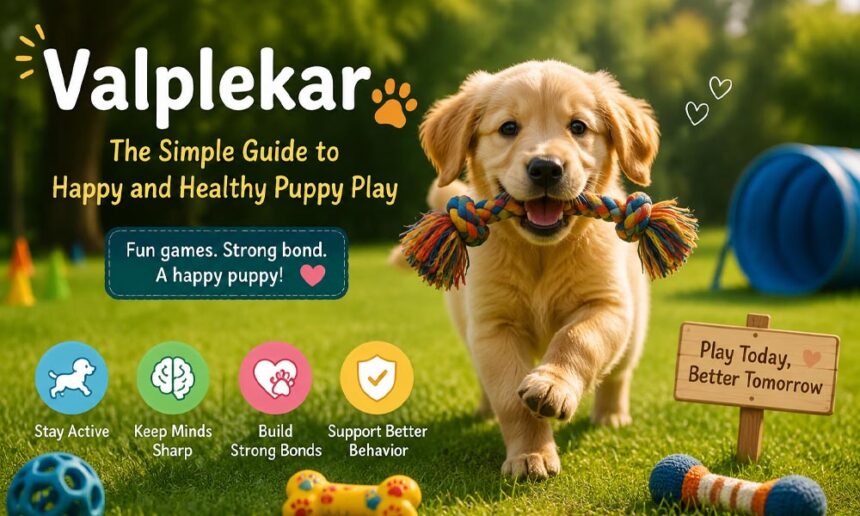
This is where Valplekar becomes important. Valplekar is a simple idea based on safe and useful puppy play. In this guide, we will explain what it means, why it matters, and how it supports healthy growth. We will also explore different games, age-based play, safe toys, biting, social play, and common mistakes.
What Is Valplekar?
Valplekar is a Swedish term connected with puppy play. The word “valp” means puppy, while “lekar” means games or play. Put together, Valplekar can be understood as puppy games or playful activities made for young dogs.
Valplekar includes many normal things puppies already enjoy. It can be a gentle game of fetch, a short tug game, a treat search, or time spent exploring a safe garden. It may also include calm play with another puppy under close watch.
The important point is that Valplekar is not only wild running. Good puppy play has a purpose. It helps the puppy move, think, learn, and connect with others. The game can still feel natural and fun while teaching useful skills at the same time.
Imagine a puppy trying to find a toy hidden under a towel. The puppy sniffs, moves the towel, and keeps trying until it finds the toy. It looks like a small game, but the puppy is learning patience, focus, and problem-solving.
Why Valplekar Is Important
Play is one of the main ways puppies learn. Young dogs do not understand the world in the same way adult dogs do. They use their noses, mouths, paws, ears, and eyes to explore. Valplekar gives them a safe way to learn through these natural actions.
A puppy with regular play has a healthy way to use its energy. Without enough activity, a puppy may begin chewing furniture, biting clothes, barking for attention, or digging in unwanted places. These actions are not always signs of a “bad” puppy. They often mean the puppy is bored, tired, confused, or needs better guidance.
Valplekar also teaches simple rules. A puppy can learn to wait before a toy is thrown, return when called, release a tug toy, or stop when the game is over. These lessons can later make daily training much easier.
Play can also support confidence. A puppy that safely explores new toys, sounds, surfaces, and places becomes more comfortable with change. This does not mean pushing a frightened puppy into difficult situations. It means offering gentle and positive experiences at the puppy’s own speed.
Rest is just as important as play. Puppies need a lot of sleep, and a tired puppy may become more wild instead of calm. Good Valplekar includes short games, clear breaks, and enough quiet time afterward.
How Valplekar Helps Puppy Growth
Valplekar supports a puppy’s body in many ways. Gentle running, turning, chasing, and pulling can help build muscles. These movements also improve balance and control. Over time, the puppy learns how to move its growing body more safely.
Young puppies should not be pushed into hard exercise. Their bones and joints are still growing. Long runs, high jumps, and repeated stair climbing may be too much. Safe play should match the puppy’s age, size, health, and energy level.
Puppy play also supports brain growth. Games that involve sniffing, searching, choosing, or solving a small problem make the puppy think. A treat hidden inside a safe puzzle toy can keep the mind busy without needing fast movement.
Valplekar helps with emotional growth too. Puppies learn how to handle excitement, small problems, and changes during play. A puppy may fail to catch a toy, lose sight of a treat, or need to wait for the game to start. These small moments can teach patience and control.
Social growth is another important benefit. During safe play, puppies begin to understand body language. They learn when another dog wants to continue, slow down, or stop. They also learn that gentle behavior keeps a fun game going longer.
Types of Valplekar
There are different kinds of Valplekar, and each type helps a puppy in a different way. The first kind is structured play. This means the owner guides the game and adds a few simple rules.
Fetch is a good example of structured play. The owner throws a soft toy, encourages the puppy to return, and may ask the puppy to drop the toy. The puppy is having fun, but it is also learning to listen and follow a simple pattern.
Name games are another form of structured Valplekar. You can say the puppy’s name in a cheerful voice and reward it when it looks at you. This small game builds attention and makes later training easier.
The second kind is free play. During free play, the puppy has more choice. It may sniff around a safe space, explore toys, move at its own speed, or play with another suitable puppy. Free play supports curiosity and confidence.
Social play is also an important type of Valplekar. It can happen with people, puppies, or friendly adult dogs. However, dog-to-dog play should always be watched closely. Both dogs should look relaxed and willing to take part.
The best routine includes a mix of different play. Structured games teach rules and focus. Free play allows choice and exploration. Thinking games work the brain, while gentle movement supports the body.
Best Valplekar Games for Puppies
One of the easiest Valplekar games is gentle fetch. Choose a soft toy that is large enough not to be swallowed. Throw it only a short distance. When the puppy picks it up, call it back in a happy voice and reward the return.
Do not worry if the puppy does not bring the toy back at first. Young puppies are still learning. You can use another toy or a small treat to encourage a swap. Keep the game light and avoid chasing the puppy around the room.
Gentle tug is another useful game. Use a safe tug toy rather than your hands, sleeves, or trousers. Move the toy slowly and allow the puppy to pull. Pause often so the puppy does not become too excited.
Tug can teach control when it has clear rules. The game should stop if teeth touch skin or the puppy becomes too rough. Once the puppy is calm, the game can begin again. This helps the puppy understand that gentle play keeps the fun going.
Hide-and-seek is a simple brain game. You can hide behind a door and call the puppy’s name. When the puppy finds you, offer praise or a small treat. This game can help with attention, confidence, and coming when called.
Treat searches are also easy. Place a few small treats in safe and simple hiding spots. Let the puppy use its nose to find them. Start with easy places and slowly make the search more interesting as the puppy improves.
Toy-swapping is another helpful Valplekar activity. Give the puppy one toy, then offer a second toy or treat in exchange. This teaches the puppy that giving something up does not mean losing all the fun.
Exploring a safe place can also count as puppy play. A puppy may enjoy walking over grass, sniffing leaves, hearing soft sounds, or checking out a new room. Exploration should be calm, safe, and suited to the puppy’s confidence level.
Valplekar for Different Puppy Ages
Puppies do not play in the same way at every age. Their bodies, minds, and needs change quickly. Good Valplekar should grow and change with them.
During the first few weeks of life, puppies spend most of their time sleeping, feeding, and staying close to their mother. At this stage, their play is very limited. Gentle movement and contact with littermates support early learning.
From around two to four weeks, puppies slowly become more aware of the world. They begin moving more, touching littermates, and reacting to sounds and smells. Play is still very soft and simple during this stage.
The period from around four to twelve weeks is very important. Puppies become more curious and active. They begin learning about people, other dogs, toys, sounds, surfaces, and new places. Positive Valplekar during this time can help build confidence.
At this age, games should remain short. Soft toy play, simple searches, name games, and gentle exploring often work well. Puppies can become tired very quickly, even when they still appear excited.
From three to six months, puppies usually have more energy and better control of their bodies. They may enjoy short fetch games, basic training mixed with play, safe tug, and slightly harder search activities.
This is also a common teething stage. Puppies may want to chew more often because their mouths feel uncomfortable. Safe chew toys can help, but toys should always match the puppy’s size and chewing style.
As puppies grow, owners can slowly add more challenge. However, play should not become too long, rough, or demanding. Watch the puppy closely. A happy puppy should look interested, relaxed, and able to stop after the game.
The next part of this guide will explain how to choose safe toys, manage puppy biting, support social play, build a daily Valplekar routine, and avoid common mistakes.
Safe Toys for Valplekar
The right toys make Valplekar safer and more enjoyable. Puppies explore with their mouths, so every toy should be made for their age and size. A toy that is too small could become a choking risk, while a toy that is too hard may hurt growing teeth.
Soft toys are a great choice for young puppies. They work well for gentle fetch and quiet indoor play. Soft rubber chew toys can also help during teething. They give puppies something safe to chew instead of shoes, furniture, or your hands.
Puzzle toys are another smart choice. They hide small treats and encourage puppies to think before getting a reward. These toys keep the brain active and help reduce boredom on rainy days or when outdoor play is limited.
It is also helpful to rotate toys. Instead of giving every toy at once, keep a few away and change them every few days. Old toys will feel new again, and your puppy will stay more interested during Valplekar.
Always check toys before every play session. Throw away broken toys, loose pieces, or anything that could be swallowed. Safe toys help keep every game fun and worry-free.
Valplekar and Puppy Biting
Almost every puppy bites during play. This is a normal part of growing up. Puppies use their mouths to explore the world, just like babies often use their hands. The goal is not to stop all biting right away. The goal is to teach gentle behavior.
If your puppy bites your hand too hard during Valplekar, stay calm. Stop the game for a short moment instead of shouting. When the puppy becomes calm again, offer a toy and start playing once more.
Over time, your puppy begins to understand an important lesson. Gentle play keeps the game going, while rough play makes the fun stop. This simple message is much easier for puppies to understand than punishment.
It also helps to reward soft behavior. When your puppy plays nicely or chews on the correct toy, offer praise or a small treat. Puppies repeat actions that bring good results.
Remember that teething puppies may chew more than usual. Giving them safe chew toys can make this stage much easier for both you and your puppy.
Valplekar With Other Dogs
Playing with other dogs can teach lessons that people cannot always teach. During safe social play, puppies learn body language, sharing, taking turns, and knowing when another dog wants a break.
Healthy play usually looks relaxed. Both dogs take turns chasing, running, or wrestling. They pause now and then, then happily return to the game. Their bodies stay loose instead of stiff.
Not every meeting will be a good match. Some adult dogs do not enjoy puppy behavior, and some puppies become frightened easily. That is why every play session should be watched carefully.
If one puppy keeps hiding, crying, freezing, or trying to get away, the game should stop. Good Valplekar is about learning and having fun, not forcing puppies to keep playing.
Meeting calm, friendly dogs can help puppies become more confident. These positive experiences often make future walks and visits much easier.
How to Make a Valplekar Routine
A simple routine helps puppies know what to expect each day. You do not need long play sessions. Several short games are usually better because puppies become tired quickly.
You might begin the morning with five or ten minutes of gentle fetch or a short walk around the yard. Later in the day, you can play a treat search game or use a puzzle toy. In the evening, finish with calm play and quiet time.
Mix different activities during the day. One game can build movement, another can build thinking, and another can strengthen your bond. This keeps Valplekar fresh and interesting.
It is also helpful to have a clear ending. You can quietly say, “All done,” put the toys away, and let your puppy rest. After a few days, your puppy will understand when play begins and when it ends.
Every puppy is different. Some days your puppy may have lots of energy. Other days it may need more sleep. Watch your puppy closely and adjust the routine when needed.
Common Valplekar Mistakes
One common mistake is making play too rough. Some owners allow puppies to bite hands or jump on people because it seems funny. As the puppy grows bigger, these habits become much harder to change.
Another mistake is playing for too long. A tired puppy may actually become more excited instead of calmer. It may bark more, bite harder, or stop listening. Short, happy sessions often work much better.
Some owners focus only on physical games. Running is important, but puppies also need brain games. Simple sniffing activities, puzzle toys, and treat searches are just as valuable as fetch.
Using unsafe toys is another problem. Small toys, broken toys, or very hard objects can cause injuries. Always choose toys made for puppies and replace damaged ones quickly.
Finally, never force a puppy to play. If your puppy looks tired, nervous, or wants to rest, give it time. Good Valplekar should always feel safe and enjoyable.
How Valplekar Builds Trust
One of the best parts of Valplekar is the relationship it creates. Every happy game teaches your puppy that being with you is safe and fun. This trust becomes stronger every single day.
Think about a puppy that happily brings you a toy. It is not only asking for a game. It is inviting you to spend time together. These small moments help build a close friendship that can last for many years.
Play also makes training easier. A puppy that enjoys spending time with you is more likely to listen, come when called, and stay focused. Learning feels like another fun game instead of hard work.
Always use kind words, gentle praise, and patience. Puppies learn best when they feel safe. A calm owner helps create a calm puppy.
Even five or ten minutes of positive Valplekar each day can build a stronger bond. These simple moments often become the happiest memories for both the owner and the dog.
Conclusion
Valplekar is much more than simple puppy play. It is one of the easiest and most natural ways to help a young dog grow into a healthy, confident, and well-behaved adult.
Every game teaches something valuable. Puppies learn how to move, think, solve problems, trust people, and understand the world around them. Small daily activities can make a big difference over time.
You do not need expensive equipment or special training. A few safe toys, short play sessions, and plenty of patience are enough to get started. Keep every game positive, gentle, and suitable for your puppy’s age and personality.
As we move through 2026, dog owners understand more than ever that learning does not happen only during formal training. It also happens during everyday moments of play. That is what makes Valplekar so valuable.
The next time your puppy brings you a toy, starts sniffing around the garden, or asks you to play, remember that those small moments are helping shape its future. Enjoy them, because good Valplekar is one of the greatest gifts you can give your puppy.
(FAQs)
What does Valplekar mean?
Valplekar is a Swedish word that means puppy play or puppy games. It includes simple activities that help a puppy move, think, learn, and build trust. Fetch, gentle tug, treat searches, toy play, and safe exploring can all be part of Valplekar.
The idea is not only to keep a puppy busy. Good Valplekar also teaches useful skills. A puppy can learn to listen, control biting, wait calmly, and feel safe around people and other dogs.
Why is Valplekar important for puppies?
Valplekar is important because puppies learn through play. When they run, sniff, chase, and solve small problems, they are building both body and brain skills. Play can improve balance, focus, confidence, and social behavior.
It also gives puppies a healthy way to use their energy. Without enough safe play, some puppies may chew furniture, bark often, bite clothes, or become restless. Regular Valplekar can help reduce boredom and guide that energy in a better way.
How long should a Valplekar session last?
Most puppies do better with short play sessions. A session may last around 5 to 15 minutes, depending on the puppy’s age, health, size, and energy. Very young puppies may need even shorter games.
It is usually better to have several small sessions during the day instead of one long session. Stop when your puppy starts biting harder, loses focus, slows down, or becomes too excited. These signs often mean it needs rest.
What are the best Valplekar games for beginners?
Good beginner games include gentle fetch, soft tug, hide-and-seek, treat searches, name games, and toy swapping. These games are simple, safe, and easy to do at home.
Start slowly and keep the game easy. For example, throw a soft toy only a short distance or hide a treat where the puppy can find it quickly. As the puppy improves, you can make the activity a little harder.
Can Valplekar help with puppy biting?
Yes, Valplekar can help teach bite control. Puppies naturally use their mouths during play, so biting is common. The goal is to teach them that gentle play keeps the game going, while hard biting makes it stop.
If your puppy bites too hard, pause the game calmly. Offer a safe toy instead of your hand. When the puppy plays gently, praise it. This clear and patient method works better than shouting or harsh punishment.
What toys are safest for Valplekar?
Safe toys should match the puppy’s age, size, and chewing strength. Soft fetch toys, puppy-safe chew toys, tug ropes, food puzzles, and treat toys are often good choices.
Avoid toys that are very small, broken, sharp, or easy to tear apart. Check each toy before play and remove it if pieces are coming loose. A toy should be large enough that the puppy cannot swallow it.
Can puppies play Valplekar with other dogs?
Yes, safe play with other dogs can be very helpful. Puppies learn how to read body language, take turns, pause, and control how hard they bite. These lessons are important for social growth.
However, all dog-to-dog play should be watched closely. Both dogs should look relaxed and willing to continue. Stop the game if one puppy hides, cries, freezes, or keeps trying to move away.
How can I tell if my puppy is too excited during play?
An overexcited puppy may start jumping wildly, biting harder, barking, grabbing clothes, or ignoring simple cues. It may also move faster and become harder to calm.
When this happens, slow the game down. Put the toy away for a short break and offer quiet time, water, or a safe chew. A puppy that looks very wild may actually be tired and in need of sleep.
Is Valplekar the same as puppy training?
Valplekar is not the same as formal training, but the two can work together. Play can make learning easier and more enjoyable. For example, you can ask your puppy to sit before throwing a toy or call its name during hide-and-seek.
These small lessons help puppies learn without making the activity feel difficult. Over time, Valplekar can support useful skills such as coming when called, waiting, dropping toys, and paying attention.
Can every puppy benefit from Valplekar?
Yes, almost every puppy can benefit from Valplekar, but the type of play should be adjusted. A shy puppy may need gentle search games and calm toy play. A more active puppy may enjoy fetch, tug, and outdoor exploring.
Health also matters. Puppies with pain, illness, or body problems may need special limits. If your puppy gets tired very quickly, avoids movement, cries during play, or seems uncomfortable, speak with a vet before adding more activity.
You might also like: Kotora Melnkalne: The Story Behind Kotor’s Mysterious Online Name