Choosing a 3D printer can feel confusing because beginners usually see two main options: resin and FDM. Both create useful parts, but they work differently and fit different needs. Resin is known for fine detail, while FDM is often used for practical everyday projects. This guide compares quality, speed, cost, ease of use, and common use cases.
What Is the Difference Between Resin and FDM 3D Printing?
Before deciding which option is better, it helps to understand how each method works and why the final results look and feel different.
How FDM 3D Printing Works
FDM 3D printing, or fused deposition modeling, uses plastic filament. The printer heats the filament, pushes it through a nozzle, and builds the object layer by layer. Common materials include PLA, PETG, ABS, and TPU.
FDM is popular with beginners, schools, and hobby makers because it is affordable and flexible. PLA is easy for basic models. PETG adds durability, while ABS handles higher heat with the right setup. For larger parts, organizers, brackets, and functional prints, FDM is usually practical.
How Resin Printing Works
Resin printing uses liquid resin and UV light. The printer cures each layer until the model is complete, which helps create smooth surfaces and tiny details.
Resin is often used for miniatures, figures, jewelry prototypes, dental models, and display pieces. However, it requires more post processing. Parts usually need to be washed and cured. Users also need gloves, ventilation, and careful handling because liquid resin can be messy.
Resin vs FDM 3D Printer: Key Differences
Once you understand the basic process, the real choice comes down to what matters most: detail, cost, speed, convenience, or material flexibility.
Print Quality
Resin usually wins in fine detail. It can capture small textures, sharp edges, and smooth surfaces better than most FDM printers. If you print miniatures, jewelry samples, or detailed models, resin can deliver cleaner results.
FDM prints often show visible layer lines, especially on curved surfaces. Still, modern FDM 3D printing can produce strong and accurate parts for everyday use. For tools, cases, fixtures, and prototypes, FDM quality is often enough.
Printing Speed
Printing speed depends on the model, settings, layer height, and part size. Resin can be efficient when printing many small models at once because it cures a full layer at the same time.
FDM can be faster for larger, simpler objects, especially with thicker layers or larger nozzles. For most users, speed should not be the only deciding factor when choosing a 3D printer.
Material Cost
FDM is usually more budget-friendly. Filament is widely available, often cheaper than resin, and comes in many colors and material types. This makes FDM 3D printing useful for users who want to experiment without high long-term costs.
Resin can cost more over time. Besides resin, users may need cleaning alcohol, gloves, filters, curing equipment, and replacement films. These extra items can add up if you print often.
Ease of Use
FDM is generally easier to start with. A desktop 3D printer can fit in a home office, classroom, garage, or maker space with less cleanup. Many current FDM machines also include automatic leveling and simple monitoring.
Resin printing has a steeper learning curve. It can produce excellent results, but the workflow is more hands on because of cleaning, curing, storage, and safety steps.
Which Desktop 3D Printer Is Right for You?
There is no one-size-fits-all answer, so the better choice depends on your experience level, project type, workspace, and long-term needs.
| User Type | Better Choice |
| Beginners | FDM |
| Hobby Makers | FDM |
| Miniature Collectors | Resin |
| Jewelry Designers | Resin |
| Engineers and Prototyping Users | FDM |
| Home Users | Desktop FDM 3D Printer |
For most beginners, hobby makers, and home users, FDM is the easier starting point. It offers lower operating costs, wider material compatibility, and more flexibility for everyday projects.
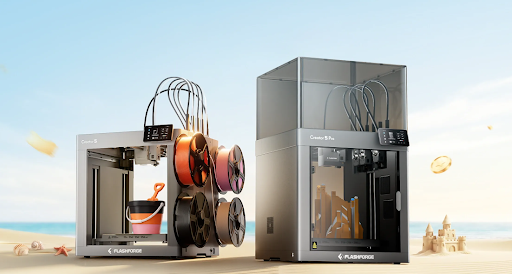
If you are considering an FDM desktop 3D printer, look for automatic leveling, reliable extrusion, stable print quality, and support for several filament types. Flashforge offers a range of FDM desktop 3D printers designed for beginners, educators, hobby makers, and everyday creators who want a more reliable way to start printing practical projects at home or in a small workspace.
Final Thoughts
Both resin and FDM can be the right choice, but they are built for different priorities.
There is no single best 3D printer for everyone. Resin is better for fine detail, smooth surfaces, and professional-looking small models. FDM 3D printing is usually better for ease of use, material choice, durability, and long-term cost. For most homes, schools, hobby spaces, and small workshops, an FDM desktop 3D printer is often more practical.
If you want to start with a more beginner-friendly FDM option, Flashforge offers desktop 3D printers that support everyday projects, classroom use, creative models, and small workspace printing.