Have you ever done something small that made a big difference in someone’s life? Maybe you helped a stranger, supported a friend, or made a kind choice when nobody was watching. These moments may seem simple, but they can stay in people’s hearts for a long time.
In Swedish, there is a special word that connects deeply with these meaningful actions. That word is gärning. At first, it may look like an ordinary word, but it carries a powerful idea. It is not only about doing something. It is about doing something that has meaning, value, or an effect.
The word gärning shows that actions often tell a stronger story than words. A person can say many good things, but their actions show what they truly believe. In this article, we will explore what gärning means, why it is important in Swedish culture, how it is used in daily life, and why this simple word still matters in 2026.
What Is Gärning? Understanding the Swedish Word
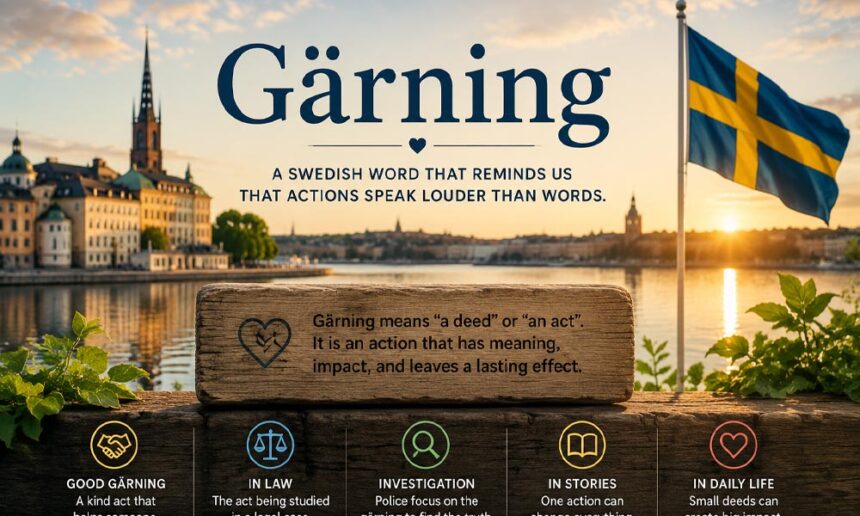
The Swedish word gärning means “a deed” or “an act” in English. However, it is not used for every small thing people do. The word usually describes an action that has importance or creates some kind of effect.
For example, walking to work, drinking coffee, or opening a door are actions, but they are not usually called gärning. These are normal parts of daily life. A gärning is different because it stands out. It is something that people may remember because it changes a situation or affects someone.
Imagine seeing an elderly person carrying heavy bags. You decide to help them. It may only take a few minutes of your day, but for that person, it could mean a lot. That simple act can be seen as a gärning because it has kindness and meaning behind it.
The word can describe both positive and negative actions. A person helping someone in need can create a good gärning. On the other hand, a harmful action that causes problems can also be called a gärning. The important point is that the action has an impact.
Gärning Meaning: Why It Is More Than Just an Action
Many people do hundreds of things every day. They work, talk, travel, and make choices. But not every action becomes a gärning. The word focuses on actions that carry weight and have a result.
A gärning is connected with the idea that what people do matters. It shows that actions can create change, even when they seem small at first. A kind word, a helpful choice, or a brave decision can become something meaningful when it affects another person.
Think about someone you admire. Is it only because of what they say? Usually not. People often respect others because of what they have done. Their actions show their personality, their values, and the kind of person they are.
This is why gärning is such a powerful word. It moves attention away from promises and places it on real actions. It reminds people that what they do can leave a lasting mark.
Gärning vs Gärningen: The Simple Difference Explained
The difference between gärning and gärningen may seem confusing at first, but it is actually easy to understand. The two words are closely connected, but they are used in slightly different ways.
Gärning is the general form of the word. It talks about a deed or action in a broad way. For example, when someone says en god gärning, it means “a good deed.” It does not point to one specific action but talks about the idea of doing something good.
Gärningen, on the other hand, means “the deed” or “the act.” It refers to one specific action that has already happened. This form is often used when people are talking about a particular event, especially in serious situations.
For example, if police are investigating a crime, they may focus on gärningen because they are studying one exact act. They want to know what happened, when it happened, and how it happened.
The difference may be small, but it helps people understand the situation clearly. One word talks about actions in general, while the other points to a specific action.
Gärning and Swedish Culture: Why Actions Matter
In Swedish culture, there is a strong idea that actions are often more important than words. People may listen to what someone says, but they also pay close attention to what that person actually does.
This idea connects closely with gärning. A person’s actions can show their honesty, kindness, and responsibility. Someone may promise to help others, but their real character is shown when they take action.
For example, a person who quietly helps their neighbours, supports their community, or takes care of others may be remembered for their gärning. They do not need to make big announcements. Their actions speak for themselves.
This way of thinking is one reason why the word gärning feels so meaningful. It reminds people that every choice they make can show something about who they are.
Even a small action can have value. A simple gesture of kindness can create a positive moment for someone else. Over time, many small gärningar can create a better community.
The History and Origin of Gärning
The story of gärning goes back many years. The word is connected to the Swedish verb göra, which means “to do.” This connection makes sense because gärning is all about something a person does.
The word also has links to older Scandinavian languages. In Old Norse, there was a similar word that carried the idea of a deed or an act. This shows that the importance of human actions has been part of the region’s language for a very long time.
Over the years, the spelling and form of the word changed, but the main meaning stayed the same. It continued to describe actions that have importance or consequences.
Language often tells us what people value. The long history of gärning shows that actions and responsibility have always been important ideas in Swedish culture.
Gärning in Swedish Law: Understanding Legal Actions
The word gärning has another important use in Swedish law. In legal situations, it describes the exact action that is being examined in a case.
When a crime or serious event happens, courts do not only look at the person involved. They also study the act itself. They ask questions like: What happened? How did it happen? Was it planned? Was it accidental?
This focus on the gärning helps create a fair process. The goal is to understand the facts instead of making quick judgments. The action itself becomes an important part of finding the truth.
For example, if someone is accused of breaking a law, the court studies the gärning. They look at evidence, details, and the events that took place. Understanding the action helps decide what really happened.
There are also several Swedish expressions connected with gärning. These words help explain different types of actions in legal language.
-
Uppsåtlig gärning means an intentional act.
-
Oaktsam gärning means a careless act.
-
På bar gärning means caught in the act.
These examples show how important the idea of action is in Swedish law.
Gärning in Crime Cases and Police Work
In Swedish police work, gärning is an important word because it helps investigators understand what really happened. When a serious event takes place, police do not only look at the people involved. They carefully study the action itself.
Investigators collect evidence, speak with witnesses, and build a timeline of events. They want to understand every detail of the gärning. Small clues, such as where something happened or what happened before and after the event, can help reveal the truth.
A place where an act happened is called gärningsplats in Swedish. The person believed to be responsible for the act can be called a gärningsman. These words show how strongly the idea of action is connected with finding answers.
The goal of police work is not only to find someone to blame. It is to understand the full story. By studying the gärning carefully, investigators can make sure that decisions are based on facts.
Gärning in News and Media
The word gärning is also used often in Swedish news reports, especially when talking about serious events. Journalists use it because it helps them describe situations in a careful and fair way.
Instead of making quick statements, news reports may focus on the action that happened. They may explain that police are studying a gärning or collecting information about a certain event.
This way of reporting helps people understand what is known and what is still being investigated. It also helps avoid unfair opinions before all facts are clear.
For example, when a crime is reported, responsible news sources focus on evidence and events. They do not only focus on emotions or guesses. The idea of gärning helps keep attention on the real action.
Gärning in Daily Life: Small Actions That Matter
The meaning of gärning is not only used in courts or news. It also appears in normal everyday conversations. People use the word when they talk about actions that have a positive or meaningful effect.
A parent may praise a child for helping a classmate. A teacher may tell a student that helping others was a kind gärning. Friends may remember a small action that made a difficult day better.
These moments show that a gärning does not need to be huge. A person does not need to change the whole world to create a meaningful action. Sometimes, the smallest choices can create the biggest feelings.
For example, holding a door open, listening to someone who feels lonely, or helping a neighbour can all be meaningful deeds. These simple actions may only take a few minutes, but they can stay in someone’s memory for years.
En God Gärning: The Meaning of a Good Deed
One of the most common positive uses of the word is en god gärning, which means “a good deed.” It describes an action that brings help, kindness, or support to another person.
A good gärning does not need to be expensive or difficult. It can be something simple, like sharing food, giving useful items to someone, or spending time with a person who needs company.
Many people believe that good actions create a better world. When one person does something kind, it can inspire others to do the same. A single good gärning can start a chain of positive actions.
The beauty of en god gärning is that anyone can create one. You do not need special skills or a lot of money. You only need the willingness to help and care about others.
Gärning in Books, Movies, and Stories
Stories often show the power of a single action. In many Swedish books and films, one important gärning becomes the center of the whole story.
Sometimes it is a crime that changes many lives. Sometimes it is a brave choice that saves someone. Sometimes it is a mistake that creates problems. The action becomes the moment that moves the story forward.
Writers use gärning because actions make characters feel real. People learn about a character not only through their words but through the choices they make.
A story becomes more interesting when readers ask questions like: Why did this person make that choice? What happened because of this action? How will this gärning change the future?
This idea connects stories with real life. Just like fictional characters, people are often remembered because of their actions.
The Moral Meaning of Gärning
The idea of gärning is also connected with right and wrong. Every action has a result. Some actions bring happiness and help, while others may cause pain or problems.
This teaches an important lesson: people should think before they act. Even a small choice can affect another person. A kind action can make someone feel valued, while a careless action can hurt someone deeply.
Many cultures share a similar belief that actions show who a person truly is. Words can be forgotten, but actions often leave a stronger memory.
From a young age, people learn that their choices matter. Children learn that helping others is valuable and that careless behaviour can have consequences. This lesson is closely connected to the meaning of gärning.
Gärning in Modern Life and Social Media
In 2026, the word gärning is not only used in serious discussions. It can also appear in online conversations, jokes, and social media posts.
People sometimes use the word in a playful way. For example, after a funny video where someone makes a silly mistake, people may jokingly talk about “the gärning” that happened.
Even when used as a joke, the basic idea remains the same. The word still points to something someone did. It focuses on the action and the moment.
Social media has made actions more visible than ever. A small act of kindness can now reach thousands of people online. At the same time, negative actions can also spread quickly. This shows why thinking about our gärning is still important today.
Gärning in Today’s World: Small Actions, Big Impact
Modern life can sometimes make people feel that only big changes matter. However, the idea of gärning reminds us that small actions can also create meaningful results.
A person does not need to do something famous to make a difference. Helping someone, making better choices, or supporting a cause can all become important actions.
Many modern movements encourage people to take small steps every day. These ideas show that positive change often starts with simple choices.
For example, a person can:
-
Help someone who needs support
-
Donate items they no longer use
-
Listen carefully to someone
-
Make kinder choices in daily life
Each action may seem small, but many small gärningar together can create a bigger change.
Why Understanding Gärning Still Matters in 2026
The meaning of gärning is still powerful because the world today is full of words, posts, and promises. People often share what they think, but real actions show what they truly do.
Understanding this word encourages people to focus on their choices. It reminds us that our actions affect others, even when we do not notice it immediately.
A kind message, a helpful gesture, or a responsible decision can create a positive effect. These moments may seem small, but they become part of the story we create through our actions.
The idea of gärning helps people become more aware of how they treat others and how they contribute to the world around them.
Conclusion
The Swedish word gärning carries a simple but powerful message. It reminds us that actions have meaning. What we do often says more about us than what we say.
A person’s words may be forgotten, but their actions can stay in people’s hearts. A small act of kindness can brighten someone’s day. A responsible choice can create a better future.
That is why gärning is such an interesting word. It connects language, culture, law, stories, and everyday life. It shows that every person creates a story through their actions.
So, take a moment and think about your own gärning. What actions are you creating today? Even the smallest deed can leave a meaningful mark.
(FAQs)
What does gärning mean in simple English?
Gärning means “a deed,” “an act,” or “an action” in English. However, it is not used for every small thing a person does. The word usually describes an action that has meaning, importance, or an effect on someone or something. A kind action, a brave choice, or even a harmful act can be called a gärning because the focus is on the impact of the action.
Is gärning only used for good actions?
No, gärning is not only used for good actions. It can describe both positive and negative acts. For example, helping a person in need can be called a good gärning, while a harmful action that causes damage can also be described as a gärning. The meaning depends on the situation and the result of the action.
What is the difference between gärning and gärningen?
The main difference is that gärning talks about a deed in a general way, while gärningen refers to a specific act that has already happened. For example, “en god gärning” means “a good deed,” while “gärningen” may be used when talking about one particular action being studied, such as an event in a legal case.
Why is gärning an important word in Swedish culture?
Gärning is important in Swedish culture because it represents the idea that actions matter more than words. People often believe that a person’s true character is shown through what they do. A person can make many promises, but their real choices and actions show their values, kindness, and responsibility.
How is gärning used in Swedish law?
In Swedish law, gärning refers to the exact act or action being examined in a legal case. Courts and police focus on understanding what happened, how it happened, and why it happened. They study evidence, events, and details of the action to make fair decisions based on facts.
What does “en god gärning” mean?
En god gärning means “a good deed” in Swedish. It describes an action done to help, support, or bring kindness to another person. A good gärning does not need to be a huge action. Simple things like helping a neighbour, sharing food, or listening to someone can all be examples of en god gärning.
What does “på bar gärning” mean?
På bar gärning is a Swedish phrase that means “caught in the act.” It is used when someone is discovered while they are doing something wrong or during the exact moment an action is happening. The phrase is often connected with crime or situations where someone is seen directly.
Can small actions be called a gärning?
Yes, small actions can also be called a gärning if they have meaning or create an impact. A small act of kindness, such as helping a stranger, supporting a friend, or making someone feel better, can become a meaningful gärning. The size of the action is not what matters most; the effect it creates is important.
How is gärning used in modern life and social media?
In modern life, including online spaces, gärning is sometimes used in casual ways, such as jokes, memes, or social media posts. Even when people use it in a funny way, the basic idea remains the same: it points to something someone did. The word continues to connect with the idea that actions create moments people remember.
Why does gärning still matter in 2026?
Gärning still matters in 2026 because people continue to value real actions in a world filled with words and online messages. The word reminds us that our choices can affect others. Whether it is a small kindness or an important decision, every action can leave an impact and become part of the story we create.
You might also like: Asiaks: The New Digital Trend Changing How We See Names and Brands