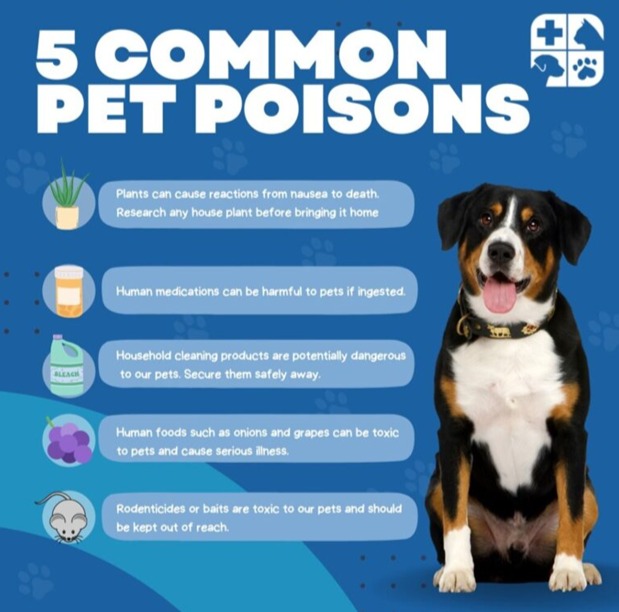
A very large number of household objects, many of which appear harmless to us, have the potential to poison our pets. Poisoning can happen quickly in a pet’s life. The good news is that if you know what common poisonous household substances look like and recognize your pet’s behavior when he/she has been poisoned, the sooner your veterinarian can treat your pet.
Chocolate and Food-Related Toxins
Chocolate poisoning is one of the most well known household poisons for animals. Chocolate contains two ingredients called theobromine and caffeine. Unfortunately, both of these ingredients are digested well in an animal’s body. Some types of chocolate (baking chocolate and dark chocolate) have much higher levels of these two compounds than milk chocolate.
Even a small amount of chocolate can trigger significant reactions in small animals. If your dog eats chocolate, it will likely begin with symptoms like excessive thirst, restlessness and a slight stomach problem. However, as time goes on, other symptoms can develop, including an elevated heart rate, trembling, vomiting, and in severe cases, seizures.
Several other foods can pose a danger to your pet. One type of sugar substitute used in sugar free gum, baked goods, and some peanut butters is called xylitol. When an animal consumes this product, it causes its blood glucose level to drop dramatically and liver failure in severe cases. Animals that ingest xylitol may exhibit symptoms of weakness, confusion, lack of coordination, and liver failure within 30 minutes to a few hours.
Household Chemicals and Cleaning Products
Household chemicals and cleaning supplies are another leading cause of poisoning in dogs. Many different cleaning products that we commonly use to clean our homes are highly toxic to dogs if consumed or if the dog inhales the fumes.
These products range from bleach to disinfectants to drain cleaners and ammonia based products. Pets are often exposed to these products by drinking from dirty water bowls after cleaning, eating from dirty floors while being cleaned, or inhaling strong fumes while being cleaned.
Depending upon the strength of the product and the quantity that was consumed/inhaled, the pet may experience drooling, pawing at his mouth, coughing, red, runny eyes, gastrointestinal distress including vomiting/diarrhea, oral and esophageal burns, labored breathing or collapse.
Toxic Plants in and Around the Home
Although poisonings in dogs occur through various routes of exposure to a variety of substances (such as food, chemicals, etc.), one specific route of exposure to poisonous substances is through plants. There are many different types of plants, both indoors and outdoors, which are toxic to dogs.
For instance, lily flowers are known to be highly toxic to cats; however, dogs that ingest these plants may experience stomach problems. Plants such as aloe vera, oleander, sago palm and azalea can be toxic to dogs and many other companion animals.
Many times, pets will bite into leaves or destroy soil/pottery containing plants simply because of boredom or due to curiosity. Once an animal has come into contact with a toxic substance, it is possible for the toxin to disrupt the animal’s digestive system, heart, or central nervous system.
Due to the wide variation of potential toxicities associated with each type of plant, even minimal amounts of ingestion should be considered seriously by pet owners.
Early Signs of Poisoning in Dogs
There are specific warnings regarding poisons in pets that apply to most types of poisonings. Most often, these early indicators appear almost immediately after ingestion (within minutes to hours).
The earliest signs of poisoning in pets include:
- Suddenly vomiting or continuously throwing up
- Overproduction of saliva or foaming at the mouth
- Blood diarrhea
- Being lethargic or weak
- Agitation or restlessness
- Trouble walking or coordination issues
- Rapid breathing or abnormal breathing patterns
- Certainly seizures (in extreme cases)
In addition to physical symptoms, a poisoned pet may exhibit changes in its normal behavior, such as hiding, whimpering or refusal to eat. In extreme cases, symptoms may begin mildly but become much worse in a short period of time.
Why Prompt Attention is Necessary
A big problem with toxic substances is that they can lead to rapid deterioration. An apparently healthy dog that is a little ill in the morning could develop a life-threatening condition by nightfall, based on the substance ingested and the quantity consumed.
Also, you will rarely see your pet ingest anything toxic, such as a poisonous plant. They usually take small amounts of poisonous substances into their systems while no one is looking. Examples would be them quietly chewing on a poisonous plant, consuming contaminated garbage or licking chemicals off surfaces. Therefore, it is essential to pay careful attention to the smallest of behaviors exhibited by your pet.
Conclusion
Pet poisoning can occur from many common household objects that we do not normally associate with danger, from candy and artificial sweeteners to hazardous materials used to clean our homes and decorative plants. When the early signs of poisoning arise, they are frequently minimal and therefore easily dismissed.
However, once again, these early signs are indicative of an emerging crisis situation. Awareness of the potential hazards present in your home and regular monitoring of your pet’s behavior can greatly minimize the risk factors associated with poisoning your pet and provide ample opportunity for early intervention should something go awry.