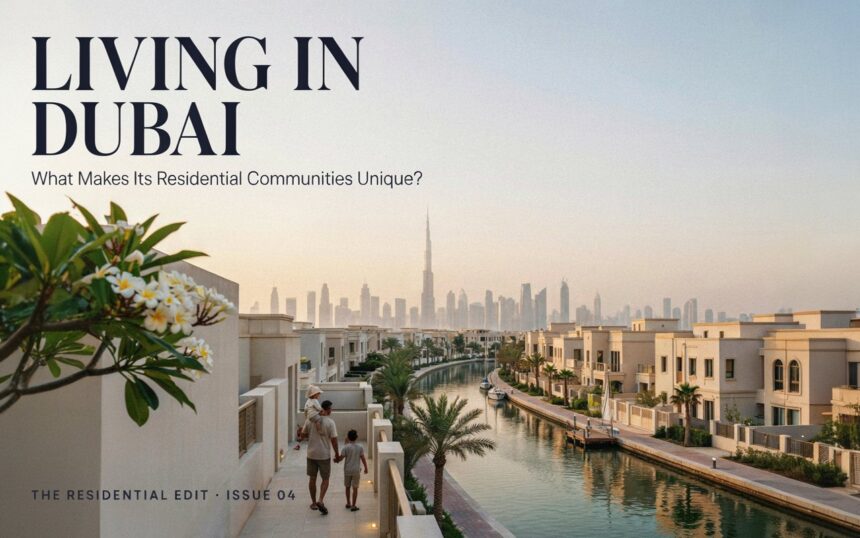
Dubai’s residential market has evolved significantly since the days of high-rises, glamour, and speculative purchases, and now encompasses affordable properties and luxury properties for sale in Dubai. Today’s buyers are not only looking for a good address. They desire a lifestyle, including health, schooling, and ease of movement. This has led to the “20-minute city” concept, where most of a resident’s needs can be accessed within a 20-minute drive from home. It’s now the standard to which all master-planned communities are measured. The transition comes after a record 2025 with a total of over 200,000 transactions and is now in more balanced growth, which is steady and predictable by 2026.
The Larger Picture: Dubai’s 2040 Vision
A lot of what’s going on in these communities relates to the Dubai 2040 Urban Master Plan, which is based on a population of 5.8 million by 2040. The plan proposes to double the city’s green and recreational areas, while 60% of the emirate will be preserved as nature reserves. The economy supports that as well, with UAE GDP projected to increase by 5.2% in 2026, which is significantly higher than the global average.
The city’s population growth is also a factor, with the population projected to reach 4 million in 2025. Much of this demand is from long-term residents and high-net-worth individuals who are participating in programmes such as the Golden Visa. The supply side, meanwhile, is expected to see over 150,000 units released in 2025, but, given historical trends, between 33,000 and 50,000 new units with the potential to be delivered in 2026, which should prevent any real oversupply.
Master Planned Living Like Nowhere Else
Dubai’s neighborhoods are much like micro-economies. One of the first to successfully implement this model, Arabian Ranches is a 6.5 million square metres desert-themed landscape with excellent social infrastructure, such as Jumeirah English Speaking School. There, they can walk or bike to school without ever being in the car at all, on shaded pathways.
Dubai Hills Estate goes further on this turn, offering suburban tranquility with a more urban ambience. It covers an area of 11 million square metres, an 18-hole championship golf course and a large regional park. King’s College Hospital London and Dubai Hills Mall are located within the community, enabling residents to rarely need to travel to major destinations, resulting in high occupancy rates.
Prices Right Now
Prices have now slowed to a more sustainable rate of growth, currently at about 15% year on year in early 2026. However, the situation is very different when it comes to the type of property.
Villas
Low-density housing continues to be in demand, with average freehold villa prices increasing by more than 200% since the pandemic. Less than 20% of total stock are villas and townhouses, and that continues to put downward pressure on prices.
Apartments
The gains in mid-market apartments are expected to be 6 to 8% in well-connected areas such as Jumeirah Village Circle.
Prime Areas
Palm Jumeirah and Dubai Hills Estate remain very active in the resale market with owners rarely having to discount.
Rental yields are also relatively good, at approximately 6.76% across the city. The gross yield of apartments is 7.07%, and the gross yield of villas is closer to 4.93% because they are more expensive to purchase.
Wellness is Influencing Home Design
A more apparent pattern in these communities is the concept of ‘bio-living’ or ‘wellness living’ in which wellness is integrated directly into the home. More than 12% of the UAE construction pipeline now consists of projects built with a wellness focus.
Keturah Reserve in Meydan is a good example of how biophilic design principles can be applied in buildings called “SuperHomes”, with no internal corridors allowing more light and air to enter the building. Ghaf Woods is the city’s first forest-living community that has planted more than 35,000 native trees that create a microclimate up to 5°C cooler than the surrounding city. Eywa, a tower in Business Bay, takes it one step further by incorporating the principles of Vastu Shastra and being constructed from 14,000 kg of crystals designed to counteract the electromagnetic pollution and aid in the regeneration of cells.
The Daily Lives of these Communities
Safety and walkability are at the heart of the design of these places. In Ghaf Woods, for example, the ground level is car-free, with all parking taking place in the basement. Shared areas, such as retail souks, community centres and facilities like the 2.2-mile mountain biking trail at Dubailand, are the bases of community life. Farmers’ markets and family-friendly restaurants are just some of the many amenities that can be integrated into regular activities instead of being extra features.
Getting Around
Even in today’s day and age, location is still a big factor in desirable communities. The majority of the prime residential areas are located along main roads such as Al Khail Road and Sheikh Zayed Road, making commuting to Downtown Dubai or the airport just 15 to 25 minutes away. The Dubai Metro Blue Line extension (due to be completed by 2029) will further enhance links with the suburbs.
What This Means for Investors
The demand for long-lasting properties for sale in Dubai, not just sustainable but also healthy, is growing. Smart homes, which are now included in 65% of new deliveries, are getting an 8% to 12% rental premium. With an increasing number of residents looking to stay on longer term than to sell up quickly, this is providing a more solid foundation for capital appreciation. The overall market is rewarding developments that look beyond superficial luxury and centre on real liveability.
Closing In!
Dubai’s residential communities have really raised the bar by incorporating health, sustainability and smart technology into their daily lives. From the tranquil botanical world of Al Barari to the wooded roads of Ghaf Woods, there are many different worlds created around the well-being of the resident and not only their looks. The properties that have been doing well are the ones that provide more than just four walls, but also provide the people who live there a complete environment that really supports them.