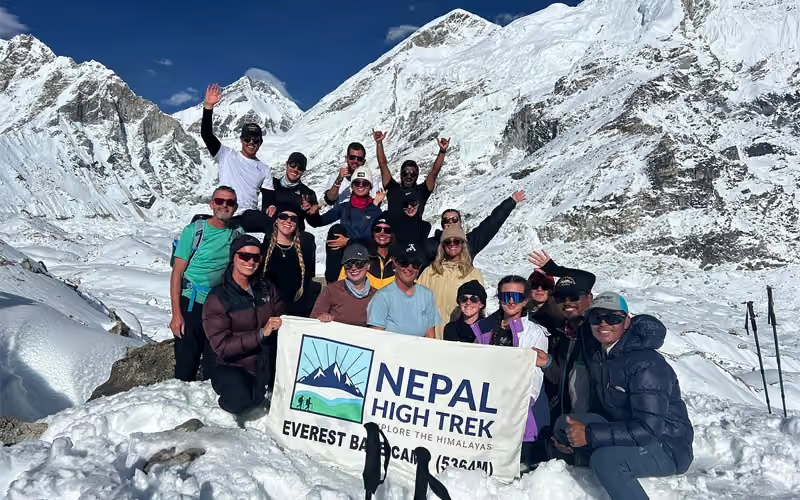
If you’ve spent any time researching Himalayan treks, you’ve probably landed on these two names more than once. Both promise the kind of mountain views that people talk about for years, and both show up constantly in trekking forums and travel groups. But they’re not really competing for the same traveler. The Everest Base Camp Trek and the 7 Days Annapurna Base Camp Trek solve different problems, and picking the wrong one for your situation usually means either running out of vacation days or feeling like you rushed something that deserved more time.
This isn’t a “which one is better” question, even though it’s tempting to frame it that way. It’s really about altitude, duration, how your body handles long walking days at elevation, and what kind of experience you’re actually after. One route pulls you deep into the Khumbu over close to two weeks. The other compresses a genuine high-mountain trek into about a week. Both are real Himalayan trekking experiences with teahouse stays, dramatic scenery, and physical demands — they just get there differently. Let’s break down where each one shines.
Everest Base Camp Trek: The Classic Journey Into the Khumbu
What the Everest Base Camp Trek Is Like
There’s a reason the Everest Base Camp Trek has become shorthand for “serious Himalayan trekking” among people who’ve never even trekked before. The route sits in the Khumbu region of northeastern Nepal, home to Mount Everest, Lhotse, Nuptse, and a long list of peaks that most trekkers had only seen in photos before showing up. What makes this trek distinct isn’t just the destination — it’s the gradual climb through Sherpa villages, monasteries, and prayer-flag-strung bridges that slowly build toward something enormous.
Most trekkers fly into Lukla and start walking from there, working through Namche Bazaar (the unofficial capital of the Khumbu), Tengboche with its famous monastery, then higher into Dingboche, Lobuche, and finally Gorakshep before pushing to Everest Base Camp itself. Kala Patthar deserves its own mention here — a lot of first-timers assume Base Camp is the big viewpoint, but honestly, Kala Patthar is where you get the clean, unobstructed shot of Everest that ends up as everyone’s profile picture. Base Camp itself, especially outside climbing season, is more about the feeling of being there than the view.
Because of the elevations involved, this trek needs more days than most people initially expect, and a good chunk of that time goes toward acclimatization rather than covering ground.
7 Days Annapurna Base Camp Trek: A Shorter Route With Big Mountain Scenery
What Makes the 7 Days Annapurna Base Camp Trek Different?
The Annapurna Sanctuary is a strange and beautiful piece of geography — a natural amphitheater of peaks that opens up almost without warning after days of walking through forest and terraced farmland. The 7 Days Annapurna Base Camp Trek takes advantage of a route that’s naturally more compact than the Everest side, which is exactly why it can be squeezed into about a week without feeling like a sprint.
You start lower, moving through rhododendron forest, river valleys, and villages where terraced hillsides do most of the scenery work early on. Then the landscape shifts — trees thin out, the trail gets steeper, and eventually you’re walking into that sanctuary bowl with Machhapuchhre and the Annapurna massif rising on nearly every side. It’s a dramatic change in a short span, which is part of why this trek has such a loyal following among people who don’t have three weeks to spare.
Seven days appeals obviously to travelers juggling limited vacation time, but it’s worth being honest about something: a genuinely well-run 7-day itinerary depends heavily on your starting point, how the drive or flight legs are arranged, and how efficiently the daily walking is planned. It’s tight, not impossible, and definitely not something to wing without some planning.
Everest Base Camp Trek vs 7 Days Annapurna Base Camp Trek at a Glance
| Factor | Everest Base Camp Trek | 7 Days Annapurna Base Camp Trek |
| Main attraction | Everest and the Khumbu region | The Annapurna Sanctuary |
| Typical experience | Longer high-altitude journey | Shorter mountain trek |
| Time commitment | Usually considerably longer | Around 7 days |
| Highest altitude | Higher | Lower than EBC |
| Scenery | Everest, Lhotse, Nuptse, Khumbu valleys | Annapurna range, Machhapuchhre, sanctuary bowl |
| Cultural character | Strong Sherpa and Buddhist influence | Gurung and Magar communities |
| Best suited to | Travelers with more time to spend | Travelers wanting a shorter trek |
| Main planning concern | Acclimatization and altitude | Time-efficient route planning |
Which Trek Is More Difficult? Altitude, Walking and Fitness
Everest Base Camp Trek Difficulty
The difficulty here comes mostly from elevation, not distance. You’re spending multiple days above 4,000 meters, and the acclimatization days built into most itineraries exist for a real reason — altitude sickness doesn’t care how many marathons you’ve run. Walking days can be long, the air is thin, and temperatures swing hard between sunny afternoons and freezing nights.
7 Days Annapurna Base Camp Trek Difficulty
This one plays a different kind of trick on people. The altitude is lower, sure, but the trail itself throws a lot of steep, uneven stone stairs at you, sometimes for hours at a stretch. Because the itinerary is compressed, there’s less room to slow down if you’re tired, so pacing matters more here than it might on a longer route where you naturally build in rest.
Honestly, neither trek is “easy,” and neither should be treated as effortless just because one is shorter or the other is more famous. What actually separates a good trek from a miserable one usually comes down to preparation, sensible pacing, and an itinerary that respects acclimatization — not just raw fitness level.
Best Time to Trek: Everest vs Annapurna
Spring, roughly March through May, is a favorite for both regions — rhododendrons bloom lower down, and the weather tends to stabilize as the season progresses. Autumn, from around late September through November, is arguably even more popular, with clearer skies and steadier mountain views. Winter is workable on both routes but comes with serious cold at higher elevations, particularly around Everest Base Camp itself. Monsoon season, roughly June through early September, brings rain, leeches on lower trails, and unpredictable visibility, which affects flights into Lukla more than it affects the Annapurna side.
There’s no single “best” month that applies equally to both treks — it really depends on how much cold you can tolerate, how you feel about trekking during busier crowds, and how flexible your schedule is if flights or trail conditions shift things around.
Route, Scenery and Cultural Experience: What Will You Actually See?
Everest Region Experience
The Everest trail moves through Sherpa villages built into hillsides, past monasteries where you’ll hear monks chanting if you time it right, and gradually into high valleys where trees disappear and everything turns to rock and snow. It feels less like a hike and more like a slow approach toward something the whole world already knows the name of.
Annapurna Region Experience
The Annapurna side changes faster. You’ll pass through dense forest, cross rivers, walk beside terraced fields worked by Gurung farmers, and then, almost suddenly, you’re standing inside a ring of some of the tallest peaks on the planet. It’s less of a pilgrimage and more of a landscape unfolding in fast motion.
Accommodation and Food on Both Treks
Both routes rely on the teahouse system — simple lodges offering basic private or shared rooms, with communal dining areas that double as the social hub each evening. Meals are straightforward: dal bhat (the trekker’s staple for good reason), noodle soups, fried rice, potatoes cooked a dozen different ways, and eggs. Menus thin out the higher you climb, and prices tend to climb with them too. Staying hydrated and actually eating enough, even when altitude kills your appetite, matters more than people expect going in.
Permits, Guides and Trek Planning
Both regions require trekking permits, and the exact requirements can shift depending on current regulations, so it’s worth double-checking before you fly out rather than assuming last year’s rules still apply. Hiring a guide or porter isn’t mandatory everywhere, but it makes a real difference in navigation, safety, and honestly, just having someone who knows the trail conditions that week. Transportation — flights to Lukla, jeep rides to Annapurna trailheads — needs its own buffer time in your planning, since delays happen. Travel insurance that specifically covers high-altitude trekking and emergency evacuation is non-negotiable, not optional. For current logistics and route planning, talking to a Nepal-based trekking agency like Nepal High Trek can save a lot of guesswork, especially if permit rules or trail access have changed recently.
Which Trek Is Better for You?
Choose the Everest Base Camp Trek if you’ve got the time for a longer journey, you specifically want to stand at the base of the world’s highest mountain, and you’re drawn to the slow build of acclimatization days and Sherpa culture along the way.
Choose the 7 Days Annapurna Base Camp Trek if you’re working with about a week, you want a shorter but still legitimately challenging mountain trek, and you’d rather see the landscape shift dramatically in a compressed timeframe than commit to a longer expedition-style itinerary.
How to Prepare for Either Trek
Start building walking endurance weeks ahead, and don’t skip practicing on hills — flat treadmill miles don’t prepare your knees for descending stone steps for hours. Break in your boots properly before you land in Nepal; day one is not the time to discover a blister. Pack layers, since mornings and evenings run cold even when afternoons feel warm. Learn the basic warning signs of altitude sickness before you go, not after symptoms show up. Keep your daily pace realistic rather than pushing to match a faster group, and make sure your travel insurance actually covers the altitude and activity you’re doing. No amount of gym fitness fixes a poorly designed itinerary, so pick a route and schedule that gives your body room to adjust.
Final Thoughts: Everest or Annapurna?
There’s genuinely no universal winner here. The Everest Base Camp Trek makes more sense if your main goal is that specific mountain and you’ve got the days to spend on it properly. The 7 Days Annapurna Base Camp Trek makes more sense if you want real Himalayan scenery without giving up a big chunk of your calendar. The right call depends on your available time, how your body handles altitude, your general fitness, and honestly, what kind of experience you’re hoping to walk away with.
Before booking either trek, verify current permit rules, transportation options, and safety guidance directly, since these details do shift from season to season. A well-planned itinerary and an experienced local guide matter more than almost anything else you can control. If you’re still weighing your options, it’s worth reaching out to compare itineraries side by side or ask specific questions about your fitness level and timeline — a route that fits someone else’s Instagram feed isn’t necessarily the one that fits your trip.
Frequently Asked Questions About Everest Base Camp and Annapurna Base Camp
- Is the Everest Base Camp Trek harder than the 7 Days Annapurna Base Camp Trek?
It depends on what kind of “hard” you’re measuring. Everest Base Camp involves higher altitude, longer exposure to thin air, and more acclimatization days, which makes it demanding in a slow, cumulative way. The 7-day Annapurna route is shorter but compresses steep, uneven terrain into fewer days with less built-in rest, so it’s demanding in a different, more immediate way.
- Can I complete the Annapurna Base Camp Trek in 7 days?
Yes, with a well-planned itinerary that accounts for your starting point, transportation arrangements, and a steady daily pace. It’s a realistic timeframe, but it leaves less flexibility if weather or trail conditions cause delays.
- Which is better for beginners, Everest Base Camp or Annapurna Base Camp?
Neither is automatically “beginner-friendly.” Both require some physical preparation and mental readiness for multi-day walking at altitude. Annapurna’s lower elevation profile can feel more forgiving in terms of altitude risk, but its compressed schedule and steep sections aren’t necessarily easier for someone with zero trekking background.
- Which trek has better mountain views, Everest Base Camp or Annapurna Base Camp?
This comes down to personal taste more than fact. Everest offers sweeping high-altitude panoramas across the Khumbu, including views of Everest, Lhotse, and Nuptse. Annapurna offers a more enclosed, amphitheater-style view where peaks surround you from nearly every direction inside the sanctuary.
- How many days do I need for the Everest Base Camp Trek?
The walking itself typically takes less time than the full trip requires once you factor in acclimatization days, potential flight delays into Lukla, and travel time before and after the trek. It’s worth planning around the entire trip window rather than just counting trekking days.
- Can I do a Nepal trek if I only have one week?
Yes — a shorter Annapurna-focused itinerary is generally more realistic for a one-week window than trying to compress a longer high-altitude route like Everest Base Camp into the same timeframe. Trying to rush a longer trek to fit a short schedule usually creates more risk than reward.