Victoria, Texas, sits on expansive clay that shrinks hard in drought and swells fast after a storm. That constant movement can nudge a house out of level long before a dramatic crack appears. Homeowners often see subtle clues first, then wonder whether to watch, water, or call for help. This article covers early warning signs typical of slab-on-grade and pier-and-beam homes in Victoria, why those signs show up in our soils, what you can safely evaluate in the first week, which short-term moves help instead of harm, and how common repair paths are sequenced when issues need more than monitoring.
Early, Visible Clues Inside and Outside the House
In a slab-on-grade home, diagonal hairline cracks running from the corner of a door or window toward the ceiling can signal differential settlement, especially when they lengthen seasonally. Doors that rub at the head on one side or latch only if lifted slightly indicate a racked frame. Baseboards separating at inside corners, crown molding gaps that widen on one wall, and newly cracked floor tile or grout lines across traffic paths are also common. In a pier-and-beam house, a bouncy feel in the hallway, midspan squeaks, or doors that swing closed by themselves can indicate a sagging beam, shifting pier, or humidity-softened subfloor.
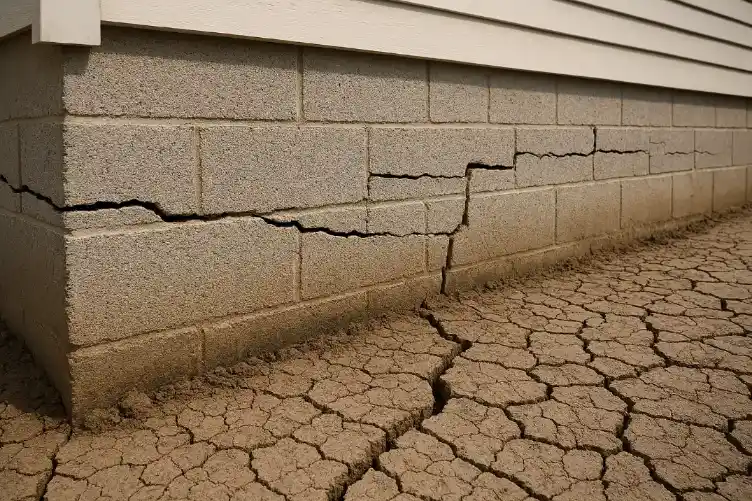
Outside, look for stair-step cracks in brick veneer mortar joints, separations where the brick meets the window trim, and gaps opening between the slab’s brick ledge and the bottom course of brick. A chimney that is pulling away from siding or new cracks radiating from a garage slab corner are red flags. Regional context matters; resources like USA Foundation Repair of Victoria reflect how often these symptoms tie back to moisture swings in local expansive clays rather than one-off construction defects.
Why Victoria’s Expansive Clays Turn Small Signals Into Bigger Shifts
Much of Victoria is underlain by smectitic clay, which swells when it absorbs moisture and shrinks as it dries. During a dry spell, soil at the slab edge loses moisture fastest, causing the perimeter to drop slightly while the interior stays supported. After a Gulf rain, the reverse can happen as wet clay at the perimeter expands and lifts the edges. Trees intensify the effect by pulling more moisture from one side of the house, and downspouts that dump next to the foundation can saturate a corner, softening bearing soil. The result is differential movement that telegraphs as the cosmetic clues you see.
In pier-and-beam houses, shallow block-and-pad supports can settle into soft, wet clay, leaving joists under tension and causing a gentle slope from exterior walls to the center. Humidity complicates things further by expanding wood subfloors even as the soil shrinks. The combination can make seasonal symptoms look worse or shift them around the plan, which is why it pays to track where and when changes appear rather than chasing a single crack with caulk.
A Homeowner’s Week-One Evaluation Without Special Tools
Start with drainage. In a light rain, watch how water moves off the roof and across the yard. Downspouts should discharge several feet from the slab; if water sheets straight to the foundation, add temporary extensions and observe whether ponding at the perimeter subsides. Check that soil grades away from the house for at least several feet. After the storm, walk the perimeter with a flashlight and look for standing water near AC pad corners and low patio edges, which often coincide with crack locations inside.
Inside, photograph each crack with a ruler or coin for scale, label the picture with the date, and repeat after one wet-dry cycle. Use painter’s tape to mark the end of a drywall crack and see if it grows. Place a marble on suspected sloped floors to identify direction and relative magnitude. Open and close problem doors, feeling for binding at the top or bottom; note the hinge side. If you have a water meter with a leak indicator, shut off all fixtures and appliances, then check for movement to rule out a plumbing leak under the slab that can rapidly undermine soil. In a crawl space, look for settled piers, wet soil, or wood rot at sill beams.
Corrections to Avoid and Safer Interim Moves
Resist quick fixes that mask movement. Smearing mortar into a stair-step crack without addressing the cause often leads to a wider, jagged crack later. Grinding a door to fit a racked frame can lock in stress. Installing a French drain tight to the foundation without an outlet to daylight can trap water next to the slab and cause edge lift. Aggressive root cutting near load-bearing walls can destabilize already thirsty soil and invite further settlement as the zone dries unevenly.
Focus on even moisture and clean drainage while you monitor. Extend downspouts 6 to 10 feet and clear clogged gutters so water bypasses the slab. During prolonged drought, a soaker hose can help, but set it 12 to 24 inches from the foundation and run it gently and consistently; soaking the soil directly against the slab can cause heave. Keep mulch and beds a couple of inches below brick weep holes to allow airflow. Trim dense shrubs that trap moisture at the wall. These steps reduce the extremes that drive shrink-swell without committing to structural work before you have a clear pattern.
When Repairs Move Beyond Monitoring: Sequencing and Trade-Offs
When symptoms escalate quickly, or cracks widen, and doors rack more with each wet-dry swing, the next step is assessing structure and soil interaction. The sequence matters. Address active plumbing leaks first; otherwise, new piers can lock the slab into a shape defined by a temporary void. Next, correct drainage by redirecting downspouts and improving grade so the perimeter dries and wets more uniformly. Only then does underpinning make sense if movement remains: steel push piers can reach deeper, denser strata under heavier sections like fireplaces and load-bearing walls; helical piers can suit lighter structures and offer torque feedback during installation; concrete pressed piles are common but depend heavily on local soil friction and depth to firm layers.
Foam injection can fill voids and support flatwork or non-load-bearing slab areas, but it is not a substitute for underpinning where the structure has lost bearing on expansive clays. The trade-off is straightforward: interventions that reach competent bearing material are more disruptive to install but better resist seasonal swings; shallow or cosmetic fixes are less invasive but can track the soil as it moves. After structural stabilization, return to finishes: repair drywall, repoint brick, and adjust doors only once the foundation behavior has calmed through at least one season change.
If you live in Victoria’s clay belt, small clues deserve attention. Document what you see, improve drainage and moisture consistency, and watch how symptoms change across wet and dry periods. Two similar-looking cracks can have different causes, from thirsty tree roots on one side to a downspout saturating a corner or a hidden plumbing leak. By sequencing fixes in the right order and reserving structural work for cases that truly need it, homeowners protect both the frame and the finishes. When questions outpace what you can observe with a camera and a marble, a qualified local foundation specialist can help you decide when to keep monitoring and when to act.