Almost nobody books a first lesson knowing what actually happens during one. The picture in most people’s heads is a ride: sit in the back, look out the window, maybe hold the controls for a minute while somebody competent handles the real work. That is not what a first lesson is. From Savannah out to any small field with a training fleet, the person who booked it ends up in the left seat doing most of the flying, usually within ten minutes of leaving the ground.
That surprise is the main thing worth preparing for. The rest of the day goes easier once you know it is coming.
Finding a School That Will Actually Put You in the Seat
A flight school is a fleet, a group of instructors, and a schedule, and the quality of all three varies widely from one field to the next. What you want is aircraft that fly regularly rather than sit, instructors who teach as a career instead of building hours toward an airline job, and enough availability that you can fly twice a week without fighting for a slot.
If you are in Savannah Aviation careers are one of the established options along the coast, offering discovery flights, training through commercial and instructor ratings, aircraft rental, and maintenance from the same facility. Time logged on a first flight counts toward a certificate, so the introductory hour is not separate from training.
Before You Get to the Airport
The night before matters more than people expect, and the advice is unglamorous.
Sleep properly. Fatigue in an unfamiliar environment turns a manageable amount of new information into an overwhelming amount. Eat a real meal beforehand, but not an enormous one, because both an empty stomach and a very full one make motion feel worse than it is. Skip anything that dehydrates you. Small cockpits get warm and stuffy in a way that amplifies whatever your body was already doing.
Wear comfortable clothes and shoes with thin, flexible soles. You will be using your feet on the rudder pedals, and heavy boots make it hard to feel what you are doing. Bring sunglasses. The glare at altitude is far stronger than on the ground, and squinting for an hour is its own kind of tiring.
The Part Nobody Mentions: The Walkaround
The lesson does not start in the air. It starts on the ramp, with a preflight inspection that takes longer than most people anticipate.
Your instructor will walk the aircraft with you and show you what is being checked and why. Fuel quantity and quality. Oil level. Control surfaces moving freely in the right directions. Tires, brakes, lights, antennas. Anything loose, cracked, or leaking.
This feels tedious the first time, and it is one of the most important habits in flying. There is no pulling over. Everything that gets caught on the ground is a problem that never happens in the air, and instructors treat the walkaround with a seriousness that tends to recalibrate a student’s sense of the whole activity.
Taking the Controls
Once you are strapped in and running, the instructor handles the radio work and the taxi out, and then things move faster than expected.
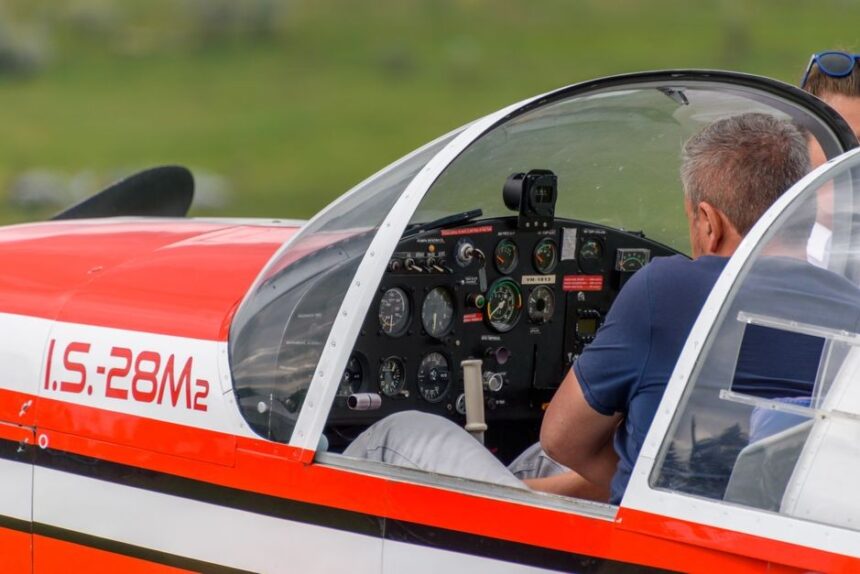
Many instructors put a student’s hands on the yoke during the takeoff roll, following along while the instructor does the actual work. Shortly after that, usually once the aircraft is clear of the pattern and at a safe altitude, they hand it over entirely. You will be asked to make gentle turns, climb, descend, and hold a heading.
The first thing everyone notices is how light the controls are. Small aircraft respond to very little input, and the natural instinct is to push and pull far harder than necessary. The correction takes a few minutes: less pressure, smaller movements, and a habit of looking outside at the horizon rather than fixating on the instrument panel.
The second thing people notice is that they are actually flying. It is a strange feeling to arrive at deliberately, and it is the reason most people book a second lesson.
How It Feels Physically
Small aircraft move differently than airliners. They are lighter, so they respond to air that a large jet would pass straight through.
Expect some bumps, especially on a warm afternoon when heated air rises off the ground unevenly. This feels like driving on a washboard road, and it is entirely normal. Turns feel gentler than they look, because in a coordinated turn you are pressed into the seat rather than sideways.
If you are prone to motion sickness, mention it in advance instead of finding out mid-lesson. Instructors deal with this constantly. Flying early in the morning when the air is smoother, keeping your eyes on the horizon, and directing the air vent at your face handle most of it. Feeling queasy on a first flight says nothing about whether you will make a good pilot, and it usually stops happening after a handful of flights.
Afterward
Back on the ground, expect a debrief. Your instructor will go over what you did, what to work on, and what the next lesson would cover. If you decide to continue, the time gets logged toward your certificate.
The rest of the picture is worth understanding early. A private certificate requires a minimum number of flight hours, though most people take more than the minimum. It requires a written knowledge test and a practical exam with an examiner.
It requires a medical certificate, which is a straightforward examination for most healthy people. You can start ground study immediately and independently, which is the cheapest hour of progress available to you.
Whether to Book One
The introductory lesson exists precisely because nobody can tell in advance how they will respond to it. Some people spend the whole hour grinning. Others find it more work than fun and decide it is not for them, which is a completely reasonable answer and a cheap way to find out.
What it will not be is passive. You will be handling the aircraft, listening hard, and processing an unfamiliar amount of information, and an hour of that is genuinely tiring in a way that surprises people.
Go in expecting to work, and expecting to be worse at it than you imagined. Everyone is. That is what the instructor is there for.