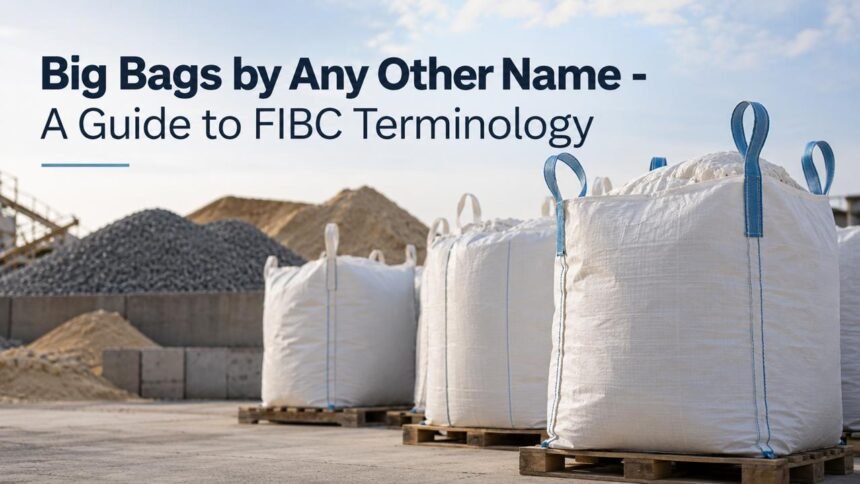
Bulk bags, jumbo bags, super sacks, tonne bags and FIBCs are different names commonly used for the same category of industrial packaging. These large flexible containers are designed to hold, store and transport dry bulk materials such as powders, grains, minerals and construction aggregates. Although terminology varies across countries and industries, the basic construction generally involves woven polypropylene fabric with integrated lifting arrangements that allow mechanical handling.
Understanding the terminology behind big bags helps purchasing teams, warehouse operators and manufacturers communicate accurately. A British construction supplier might request tonne bags, while an American industrial buyer asks for super sacks. Both could be describing similar packaging, but neither expression establishes the complete technical specification. Recognizing the difference between a commercial name and a defined product requirement reduces misunderstandings during procurement.
What Does FIBC Stand For?
FIBC means Flexible Intermediate Bulk Container. It is the technical term for a large flexible packaging unit designed for handling bulk materials. The abbreviation appears frequently in manufacturing specifications, technical documentation and international purchasing agreements.
Each part of the name describes a particular characteristic of the container:
- Flexible: The container is manufactured from flexible materials rather than rigid walls. It can usually be folded when empty, reducing the space required for storing unused packaging.
- Intermediate: The product belongs to the intermediate bulk container category, serving applications between smaller individual packages and larger bulk handling systems.
- Bulk: The container holds substantial quantities of loose material without dividing the contents into numerous smaller packages.
- Container: The packaging forms a defined unit for filling, lifting, transportation and storage.
Woven polypropylene is a widely used material for FIBC construction because it combines relatively low weight with the strength and flexibility required for industrial handling. Fabric properties, stitching, lifting components and other design features are selected according to the intended application.
The phrase flexible bulk container is sometimes used as a shorter description. However, Flexible Intermediate Bulk Container remains the complete technical expression represented by FIBC.
Why Are There So Many Names for the Same Product?
Industrial packaging terminology developed through regional trading practices, established industry habits and everyday descriptions of product size. Some names emphasize appearance, while others reflect common handling methods or familiar weight categories.
The main expressions include:
- Big bag: A widely understood commercial name, particularly familiar in Europe and international industrial markets. It emphasizes the container’s size without specifying its construction.
- Bulk bag: Common in North American industrial purchasing and international trade. The term describes the container’s purpose of holding and moving bulk materials.
- Jumbo bag: Frequently encountered across Asia, the Middle East and international markets. The name emphasizes large packaging dimensions rather than a particular technical standard.
- Super sack: A familiar American industry expression for flexible containers used to handle substantial quantities of industrial materials.
- Tonne bag: Commonly used in the United Kingdom and other metric-system markets, particularly in construction and aggregate handling.
- FIBC: The technical abbreviation most suitable for engineering documents, product specifications and communications that require precise identification.
These associations are not exclusive. Suppliers in Europe may use the term bulk bag, while American manufacturers may refer to jumbo bags. Regional preferences influence everyday language, but global trade has made several expressions recognizable across different markets.
How Does Terminology Differ Between the UK and the US?
The United Kingdom and the United States share many industrial packaging terms, although certain expressions are more familiar in one market than the other.
In the UK, tonne bag is particularly recognizable in construction, landscaping and aggregate supply. The expression reflects the widespread use of metric measurements. Buyers may also encounter jumbo bag and bulk bag in supplier descriptions.
In the United States, bulk bag and super sack are more familiar commercial expressions. They appear in conversations about agricultural products, industrial minerals, chemicals and manufacturing materials. Technical documentation frequently uses FIBC regardless of the commercial name.
Measurement terminology deserves particular attention. A metric tonne equals 1,000 kilograms, while a US short ton equals approximately 907 kilograms. These units are not interchangeable, and a product described as a one-ton or tonne bag should never be assumed to have a specific rated capacity without checking its documentation.
The safest approach in international purchasing is to use FIBC as the technical category and specify the required safe working load, dimensions and construction separately.
Does Every Jumbo Bag Have the Same Construction?
No. A familiar commercial name does not establish how a flexible bulk container is manufactured or which materials it can safely handle.
Two products described as jumbo bags may have different lifting loops, fabric weights, filling openings, discharge arrangements and internal components. One may be intended for free-flowing granular materials, while another requires additional protection against dust, moisture or contamination.
The distinction becomes especially important when handling materials with different bulk densities. Lightweight products may fill the available volume before reaching the container’s rated weight. Dense minerals may reach the safe working load while leaving unused internal space.
Consequently, neither the physical size nor the product’s informal name provides enough information to determine its suitability for a particular material.
Some terminology also causes confusion between packaging categories. For example, the word tote can describe an FIBC in certain industrial settings, but it may also refer to a rigid intermediate bulk container. Buyers should clarify the required construction rather than relying on that term alone.
How Do FIBC Designs Differ?
The terminology becomes more specific when manufacturers describe lifting arrangements, fabric construction and specialized applications.
Cegy Plastics is an FIBC and bulk bag manufacturer based in 10th of Ramadan City, Egypt. The company’s manufacturing operations include in-house polypropylene extrusion, weaving, coating, cutting, sewing, liner welding and laboratory testing. Its product range includes woven polypropylene containers in two-loop, four-loop and ventilated configurations, alongside food-grade and UN-certified options.
These product descriptions identify differences that general commercial terminology cannot communicate:
- Two-loop FIBC: A flexible container fitted with two lifting loops. Its handling arrangements must be compatible with the specified lifting equipment.
- Four-loop FIBC: A construction featuring four lifting points, commonly used with suitable forklifts or lifting frames.
- Ventilated FIBC: A design incorporating ventilation features that allow airflow around suitable products, including certain agricultural materials.
- Food-grade FIBC: Packaging intended for appropriate food applications, where material suitability, hygienic manufacturing and contamination control are important considerations.
- UN-certified FIBC: A packaging configuration approved for specified dangerous-goods applications. Certification must match the relevant material and transportation requirements.
Electrostatic properties introduce another distinction. Type C FIBCs are conductive containers that must be properly grounded during filling and discharge. Type D FIBCs are static dissipative designs intended for use without grounding. Appropriate selection depends on the characteristics of the material and the operating environment.
What Information Should an FIBC Purchase Order Include?
An effective purchase order identifies the required packaging characteristics rather than relying exclusively on expressions such as super sack or jumbo bag.
The specification should communicate the material being packed, its bulk density, the required container dimensions and the safe working load. Buyers should also define the lifting arrangement, filling method and discharge system.
Additional details may include fabric coating, an internal liner, ventilation, food-contact suitability or applicable dangerous-goods requirements. Where repeated use is intended, the bag must be designed and assessed for the specified operating conditions rather than assumed suitable because it appears durable.
For example, an order describing a four-loop FIBC for fine powder communicates more than a general request for a bulk container. However, the supplier may still require details about dust containment, filling equipment, discharge controls and electrostatic hazards before selecting an appropriate construction.
Using familiar commercial terminology alongside a precise technical specification provides clarity without forcing every industry to adopt identical everyday language.
A Practical Glossary of Bulk Bag Components
Several additional terms appear regularly in FIBC specifications and supplier discussions. Understanding them helps buyers interpret product descriptions and compare packaging configurations.
- Lifting loops: Reinforced fabric or webbing attachments used to lift a flexible container with suitable handling equipment. Their number, construction and positioning vary according to the bag design.
- Filling spout: A tubular opening, usually positioned at the top of the container, through which bulk material enters during filling.
- Discharge spout: An opening commonly incorporated into the bottom of a container to support controlled material discharge.
- Liner: An internal layer, often manufactured from polyethylene, used to provide additional separation or protection between the contents and the outer woven fabric.
- Baffle: An internal fabric panel that restricts outward bulging and helps a filled container maintain a more rectangular shape. This configuration can improve the use of available storage space.
- Safety factor: A ratio describing the relationship between tested bag strength and its safe working load. Common classifications include 5:1 and 6:1, but these ratios do not authorize loading beyond the specified working limit.
- Safe working load: The maximum load the container is designed to handle under its specified conditions of use. This value must be established through the relevant product specification.
Commercial names provide a convenient starting point, but technical terminology determines what the packaging is actually designed to do. Whether a buyer requests a tonne bag, super sack, jumbo bag or FIBC, the essential questions concern construction, material compatibility, rated performance and handling requirements. Clear specifications allow manufacturers and purchasing teams in different markets to identify the same product requirements despite their different vocabulary.