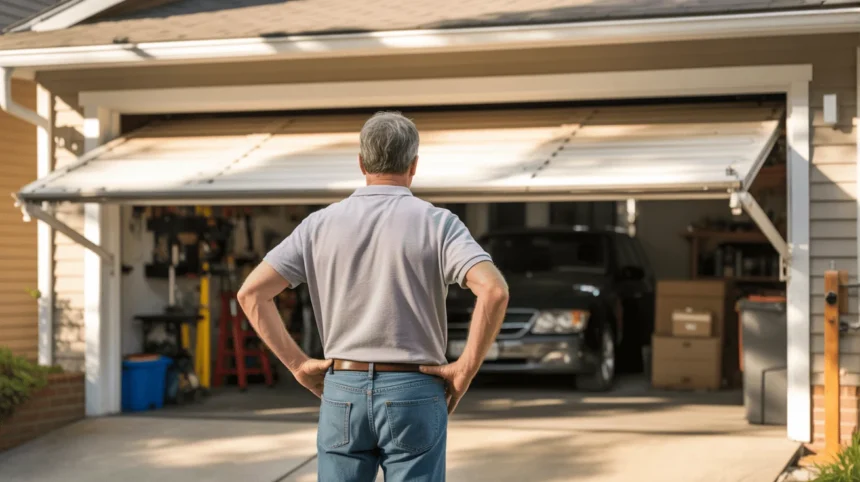
A Chicago heatwave can turn a normal garage door into a daily frustration. One minute your door works perfectly, and the next it refuses to close, reverses halfway down, or sits open while you repeatedly press the remote. While many homeowners immediately suspect a broken opener, the hidden reason is often much smaller: the photo-eye safety sensors near the bottom of the garage door.
During hot, humid summer weather, these sensors can become unreliable for two common reasons. First, extreme humidity can leave condensation on the sensor lenses, blocking or distorting the beam. Second, harsh afternoon sunlight can shine directly into the sensor and overwhelm it, making the system think something is in the door’s path.
If your garage door will not close during the hottest part of the day, the problem may not be the motor at all. It may be humidity, glare, or a sensor alignment issue that needs simple cleaning, shading, or professional recalibration.
Why Garage Door Sensors Fail During Chicago Heatwaves
Garage door safety sensors, also called photo-eye sensors, are designed to stop the door from closing on people, pets, vehicles, or objects. One sensor sends an invisible beam across the garage door opening, while the other receives it. If that beam is blocked, interrupted, or distorted, the opener will stop the door from closing or reverse it back up.
That safety feature is important, but it can become overly sensitive during summer weather. Chicago’s combination of humidity, direct sunlight, hot concrete, and reflective surfaces can interfere with the sensor beam even when nothing is actually in the way.
Common signs of sensor trouble include:
- The garage door starts closing, then immediately reverses
- The opener light flashes repeatedly
- The door only closes when you hold the wall button down
- The remote works in the morning but fails in the afternoon
- One or both sensor lights flicker, dim, or turn off
- The door behaves normally after the sun goes down
These symptoms often point to a sensor issue rather than a major mechanical failure.
How Humidity Causes Condensation on Photo-Eye Sensors
Chicago summer humidity can be thick enough to feel like the air has weight. That moisture can settle on surfaces inside the garage, especially when warm outdoor air meets cooler shaded areas near the floor. Since photo-eye sensors are installed low on the door tracks, they are often exposed to dust, moisture, and temperature swings.
When condensation forms on the sensor lens, it can scatter the infrared beam. The opener may interpret this distortion as an obstruction, even though the doorway is clear. A thin film of moisture, dust, pollen, or grime can be enough to interrupt the signal.
This is especially common after:
- A humid night followed by a hot morning
- A summer thunderstorm
- Washing the garage floor
- Leaving the garage door open during muggy weather
- Rapid temperature changes between the garage interior and outside air
If your door struggles most during humid days, the sensors should be one of the first things you inspect.
How to Gently Clean Garage Door Safety Sensors
Cleaning the sensors is one of the safest first steps homeowners can take. The goal is not to scrub aggressively or move the brackets. You simply want to remove moisture, dust, and debris from the lens area.
Start by looking at both sensor lenses near the bottom of the garage door tracks. They are usually mounted a few inches above the floor, facing each other across the opening.
Use these simple steps:
- Wipe the sensor lenses gently with a soft, dry microfiber cloth.
- Remove spider webs, dust, leaves, or grass clippings nearby.
- Check that nothing is sitting between the two sensors.
- Make sure the sensor lights are steady, not flickering.
- Open and close the door once to test the response.
Avoid spraying water directly onto the sensors. Also avoid harsh chemicals, abrasive pads, or heavy pressure. The sensors are small electrical components, and rough handling can make the problem worse.
If the lenses fog again quickly, humidity may be collecting in that area of the garage. Improving airflow or keeping the area clean and dry can help reduce repeat failures.
Why Afternoon Sunlight Can Blind Garage Door Sensors
Humidity is only half the story. Direct sunlight is another major reason a garage door will not close during a Chicago heatwave.
Photo-eye sensors rely on a clear signal between the sending and receiving units. When the sun hits the sensor at the wrong angle, especially in the afternoon, the receiving eye can become overwhelmed by glare. The opener may read that glare as interference and stop the door from closing.
This problem is more likely when your garage faces west or southwest, where afternoon sunlight can shine directly into the opening. Light-colored driveways, reflective car surfaces, metal tools, glass doors, and nearby windows can also bounce light toward the sensor.
The most frustrating part is that glare problems are often temporary. Your garage door may fail at 3 p.m. and work perfectly at 7 p.m. That timing can make the issue feel random, when it is actually tied to the sun’s position.
How to Block Glare Without Blocking the Sensor
A simple shade can often solve sunlight-related sensor problems. The key is to block harsh glare without covering the sensor beam itself. You should never tape over the lens, disconnect the sensors, or bypass the safety system.
Safe glare-reducing options include:
- Creating a small shade around the receiving sensor
- Using a non-reflective material near the sensor
- Moving shiny objects away from the garage opening
- Keeping vehicles slightly farther back from the sensor path
- Checking whether sunlight is bouncing off nearby metal or glass
A small sensor hood or shade can help, but it should never touch the lens or block the direct line between the two sensors. Matte materials are usually better than glossy materials because they absorb light instead of reflecting it.
If the problem only happens when the sun hits one specific side of the garage, shading that side may be enough to restore normal operation.
Sensor Alignment Can Shift in Extreme Heat
Heat does not only affect the light beam. It can also affect the small brackets holding the sensors in place.
During a heatwave, metal tracks, brackets, and nearby materials can expand slightly. Even a tiny shift can cause the sensors to fall out of alignment. Since the photo-eye beam must travel in a straight line from one sensor to the other, a small tilt can be enough to break the connection.
Look for these alignment warning signs:
- One sensor light is off or blinking
- The sensors appear uneven
- A bracket looks loose or bent
- The door closes only after several attempts
- The issue gets worse during hot afternoons
You can visually inspect the sensors to see whether they are facing each other directly. If a bracket is loose, gently tightening the fastener may help. However, avoid forcing the sensor into position or bending the bracket too far. If the lights will not stay steady, professional recalibration may be needed.
When the Problem Is More Than a Simple Sensor Issue
Not every summer garage door failure is caused by humidity or glare. Heat can also affect the opener motor, wiring, tracks, rollers, and logic board. If cleaning and shading the sensors does not solve the issue, the system may need a deeper inspection.
Call a professional if you notice:
- The door reverses even when the sensors are clean and shaded
- The opener motor hums but the door does not move properly
- The door feels unusually heavy
- The tracks look bent or misaligned
- The opener works inconsistently throughout the day
- Sensor lights remain off even after cleaning and adjustment
- The door slams, jerks, or sticks during operation
These signs may point to a mechanical or electrical problem that should not be ignored. Continuing to use the door while parts are strained can damage the opener, tracks, springs, or panels.
Why Chicago Suburbs Homeowners May Need Professional Recalibration
Homes in the Chicago Suburbs often deal with intense seasonal changes. Garage doors face freezing winters, wet springs, humid summers, and sudden storms. Over time, those conditions can affect sensor placement, wiring, opener limits, and door balance.
A professional technician can check more than just the visible sensor lenses. They can test the wiring, verify the opener settings, inspect the door balance, adjust the travel limits, and recalibrate the safety reversal system. This is especially useful if the door reverses for no clear reason or fails only during certain weather conditions. Homeowners dealing with repeated heat-related sensor failures can rely on Garage Door Repair in Chicago from World of Doors for professional recalibration, opener diagnostics, and same-day garage door service across the Chicago Metro Area.
Professional recalibration may be necessary when:
- The sensors are clean but still unreliable
- The opener lights flash error codes
- The brackets will not hold alignment
- The door closes unevenly
- The opener sensitivity needs adjustment
- The system is older and no longer responds consistently
A trained technician can identify whether the issue is glare, condensation, misalignment, wiring damage, or opener failure.
Considering a Smart-Home Garage Door Opener Upgrade
If your opener is older, summer sensor problems may be a sign that it is time to consider an upgrade. Newer smart-home garage door openers often include better diagnostics, stronger safety features, battery backup options, and mobile alerts.
For Chicago-area homeowners, a smart opener can be useful during storms, heatwaves, vacations, and power interruptions. Instead of guessing whether the garage door closed, you can check its status from your phone. Some systems also alert you when the door is left open or when the opener detects an issue.
A smart-home opener upgrade may be worth considering if:
- Your current opener is more than 10 years old
- The door frequently reverses or refuses to close
- You want mobile control and real-time alerts
- You need better security features
- You want battery backup for summer storm outages
- Your current opener lacks reliable diagnostics
This kind of upgrade is not always required, but it can be a practical solution when repeated sensor problems are tied to an aging opener system.
Summer Maintenance Tips to Prevent Garage Door Sensor Problems
The best time to deal with sensor issues is before the next heatwave hits. A few small maintenance habits can prevent many seasonal problems.
Use this quick summer checklist:
- Wipe sensor lenses every few weeks
- Clear dust, cobwebs, and debris near the tracks
- Watch for flickering sensor lights
- Check whether sunlight hits the sensors directly
- Keep reflective objects away from the garage opening
- Test the door during afternoon heat
- Listen for grinding, sticking, or unusual motor strain
- Schedule service if problems keep returning
Never bypass or disable garage door safety sensors. They are there to prevent injuries and property damage. If the system will not close properly, the safest approach is to identify the cause rather than override the protection.
Conclusion
A garage door that will not close during a Chicago heatwave may not be broken in the way you expect. The hidden reason is often tied to humidity, condensation, glare, or sensor alignment. Moisture can cloud the photo-eye lenses, while harsh afternoon sun can blind the receiving sensor and make the opener think something is blocking the door.
Homeowners can often start with simple steps: gently clean the sensors, remove debris, check the indicator lights, and reduce glare with a safe, non-obstructive shade. But if the problem keeps coming back, it may be time to call a professional in the Chicago Suburbs for sensor recalibration, opener diagnostics, or a smart-home opener upgrade.
By understanding how summer weather affects your garage door sensors, you can avoid unnecessary frustration and keep your garage door closing safely, smoothly, and reliably throughout the hottest months of the year.