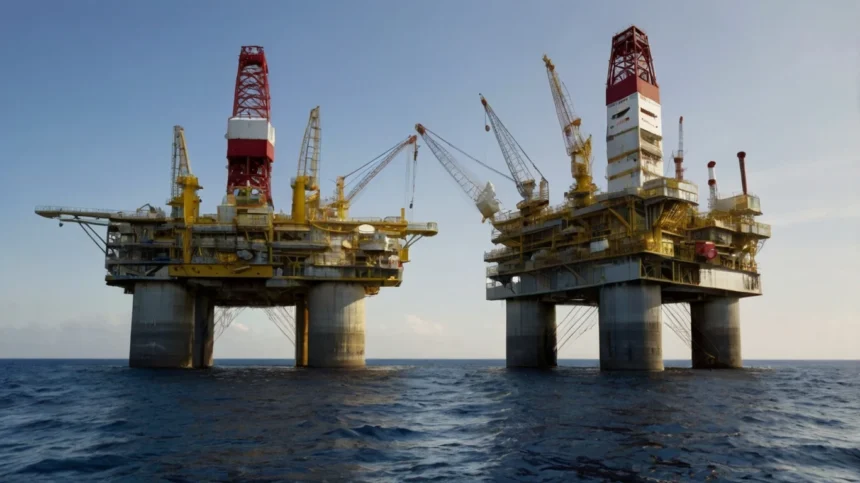
Oil rigs are massive devices that are used to drill holes into the ground or ocean and extract oil or gas. They play an important role in the energy sector. Oil rigs are used to extract fuel that is used in vehicles, ships, factories, and homes.
There are various kinds of oil rig designs. Each type is designed for a particular site and water depth. In this guide, we’ll discuss Types of Oil Rigs in some very simple words.
How equipment such as STS Flexible Marine Oil Hose Jerryborg Marine can assist in offshore oil operations will also be examined.
What Is an Oil Rig?
An oil rig is a large machine or platform that is used to drill into the ground or seabed.
It can be located:
On land
In shallow water
In deep ocean water
Drilling tools are employed at oil rigs to access oil and gas fields. When the oil is discovered, it is brought to the surface to be processed.
Types of Oil Rigs
There are various Types of Oil Rigs, each of which functions in a different setting.
Let’s consider the primary ones.
1. Onshore Oil Rigs
Oil rigs built on land are called onshore oil rigs.
They are used in the desert, field, or remote location with underground oil.
Features:
Easy to build
Lower cost compared to offshore rigs
Easier maintenance
High production in some areas of the world.
The most widespread type of oil rigs in the world is onshore rigs.
2. Offshore Fixed Platforms
Fixed platforms are constructed in shallow seawater as an offshore structure.
They are fixed to the seabed using strong steel legs.
Features:
Very stable structure
Used in shallow waters.
Can handle harsh weather
Long-lasting design
Usually, these rigs are employed when oil is discovered close to sea coasts.
3. Jack-Up Rigs
A mobile offshore rig is known as a jack-up rig.
Long legs capable of going to the seabed.
After the rig is in place, it is raised above the water.
Features:
Migratory, could be moved from one place to another
Appropriate for shallow to medium water depth.
Strong and stable when drilling.
Quick and simple to set up and take down.
Jack-up rigs are the most popular of the short-term drilling rigs.
4. Semi-Submersible Rigs
Semi-submersible rigs are a type of rig that rests on the surface of the water but is partially submerged.
They are anchored in place using heavy anchors.
Features:
Very stable in deep water;
Able to withstand waves and storms.
Employed to drill deep water wells in deep offshore drilling.
Can be relocated from place to place
The rigs are frequently used in deep-sea oil exploration.
5. Drillships
Drillships are specially designed ships used for drilling in deep ocean waters.
They are easily transferable between drilling sites.
Features:
Highly mobile
Can operate in very deep water
Fitted with the latest drilling technology
Self-propelled, as with a ship.
A complex offshore drilling project is done through a drillship.
Equipment Used in Oil Rigs
There are numerous types of equipment used on oil rigs to ensure safe and efficient operation.
Some common equipment includes:
Drilling machines
Pumps
Pipes and valves
Storage tanks
Safety systems
Transport hoses
A key element of an offshore system is the marine oil transfer system.
A typical application of STS Flexible Marine Oil Hose Jerryborg Marine is as an oil hose for ship-to-ship oil transfer. It can facilitate the safe transfer of oil between ships in offshore situations.
How Oil Is Extracted
There are a number of steps in the oil extraction process:
- Surveying
Geologists examine the underground or sea bed rocks to locate the oil reserves.
- Drilling
The oil rig penetrates the ground or sea bed.
- Casing
Support pipes are inserted into the well to prevent the well from collapsing.
- Extraction
Using either pressure or pumps, oil and gas are brought to the surface.
- Transportation
Pipelines, ships, or hoses are used to store and transport oil.
Offshore Safety in Oil Rigs
Safety is crucial in the context of an oil drilling operation.
Oil rigs are required to adhere to a number of safety regulations, including:
Regular equipment checks
Emergency shutdown systems
Fire protection systems
Worker safety training
Weather monitoring
Safety systems are constantly in effect, as oil rigs operate in extreme conditions.
Advantages of Oil Rigs
Oil Rigs come with many benefits.
Oil rigs provide many benefits:
Large energy production
The availability of deep oil reserves.
Sustains the world’s supply of fuels
Generates engineering jobs, jobs in seaward activities
Helps economic growth
Challenges of Oil Rigs
But, there are problems with oil rigs as well:
High construction cost
Harsh weather conditions
Environmental risks
Complex maintenance
Safety concerns
Despite all of these difficulties, oil rigs are still crucial in the production of energy all over the world.
Importance of Marine Equipment
Special marine systems are needed for offshore oil operations.
Oil is safely transported by flexible hoses, pipelines, and connectors.
Such products as STS Flexible Marine Oil Hose Jerryborg Marine are engineered to ensure safe and efficient ship-to-ship oil transfer. These systems can help mitigate risks from leakage and enhance safety during operations in marine settings.
Future of Oil Rigs
The future of oil rigs is changing.
New technologies are making rigs:
More automated
Safer
More environmentally friendly
More efficient
Businesses are also interested in lowering pollution and enhancing safety systems.
Renewable energy is expanding in the future, but oil rigs will continue to be important for many years.
Conclusion
By learning about the Types of Oil Rigs, we can learn about land and sea oil/gas production.
There are several different types of rigs, all with their own specific uses, ranging from onshore formations to high-tech, high-performance drillships. Other key components, such as STS Flexible Marine Oil Hose, Jerryborg Marine, are also crucial for offshore systems to ensure safe oil transfer.
The oil rig is a complicated but critical structure that plays a role in the world’s energy supply and industrialization.