Modern open-plan offices excel at fostering spontaneous collaboration, but they often overload the human nervous system. Constant chatter, flickering fluorescent lights, and visual distractions contribute to cognitive fatigue and elevated stress levels.
Creating dedicated, intimate alcoves for mental recharge provides employees with a necessary refuge to reset, regain focus, and protect their mental well-being throughout the workday.
1. Why Open Offices Need Intimate Recharge Alcoves
Quick Answer: Recharge alcoves provide low-sensory environments within open offices, allowing employees to step away from visual and acoustic clutter to lower cortisol levels and restore mental clarity.
Continuous exposure to environmental noise drains cognitive bandwidth. When workers lack a private space to take brief micro-breaks, productivity drops and burnout increases.
Intimate alcoves act as spatial speed bumps in a busy office layout. They offer psychological safety by signaling that taking a 10-minute mental breather is a valid, supported part of the workday routine.
2. Essential Structural Elements for Acoustic and Visual Privacy
Quick Answer: Effective recharge alcoves combine sound-dampening acoustic wall panels, partial visual screens, and cozy spatial proportions that shield occupants from main hallway traffic.
A quiet space fails if occupants feel exposed to passing colleagues. Intimate design relies on creating a sense of shelter (or “refuge”) where an individual’s back is protected and line-of-sight to high-traffic corridors is buffered.
Integrating comprehensive workplace acoustic privacy solutions ensures that conversation noise from nearby workstations does not bleed into the quiet zone.
3. Sensory Control: Lighting, Color, and Biophilic Touches
Quick Answer: Replace harsh overhead fluorescent fixtures with dimmable, warm-toned lighting (2700K), muted earth tones, and living plants to trigger physiological relaxation.
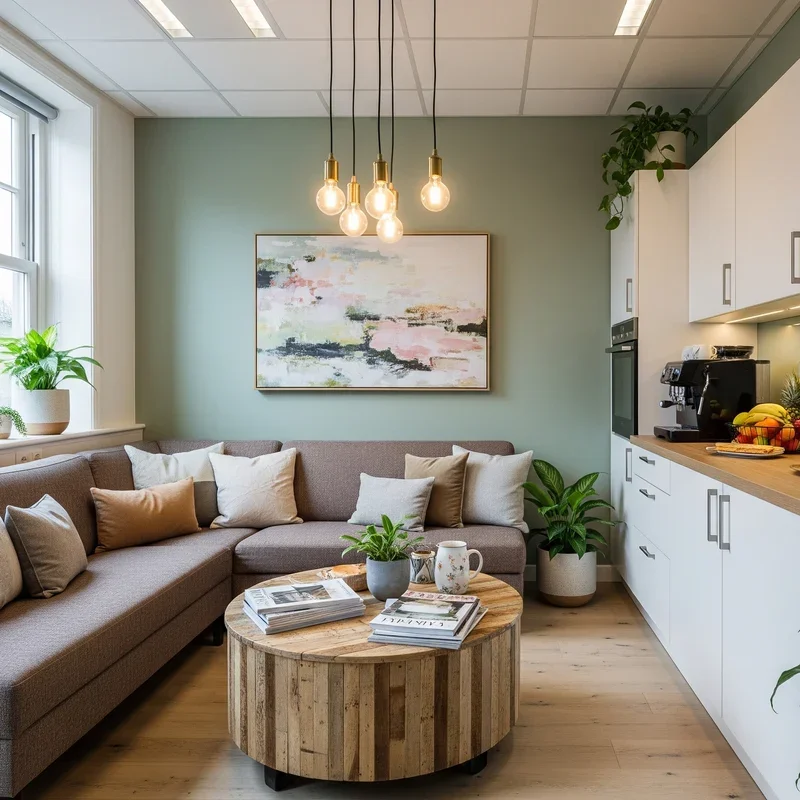
Sensory reduction is the core objective of a recharge alcove. Overhead lighting should be warm and indirect, allowing occupants to adjust light levels based on their personal comfort needs.
- Warm Color Palettes: Muted sage greens, soft terracottas, and warm grays promote calm better than stark white or high-contrast corporate brand colors.
- Biophilic Connections: Incorporating potted plants, natural timber accents, or moss art walls brings nature indoors, lowering heart rates and mental fatigue.
- Textured Fabrics: Soft wool blends, brushed cottons, and matte finishes absorb light reflection and feel comfortable to touch.
Applying biophilic office retreat design principles helps transform basic office nooks into restorative sanctuaries.
4. Furnishing the Quiet Zone: Ergonomics, Stability, and Surfaces
Quick Answer: Select deeply cushioned lounge chairs, supportive footrests, and compact side tables that allow employees to relax without hunching or working.
Furniture inside a mental recharge alcove should discourage active task-work. If you place a standard desk chair and monitor arm inside, the space quickly converts back into an overflow workstation.
Instead, opt for high-back lounge chairs with integrated headrests or cozy, curved banquettes. Compact side tables provide a convenient surface for a cup of tea or a notebook.
When outfitting adjacent breakout zones or small coffee perches near these quiet nooks, utilizing commercial-grade hardware—such as heavy-duty restaurant table bases—ensures rock-solid stability for hot beverages and personal belongings without cluttering floor space or catching foot traffic.
5. Neuroinclusive Design Practices for Diverse Workforce Needs
Quick Answer: Neuroinclusive alcoves cater to neurodivergent employees (such as those with ADHD, autism, or sensory sensitivities) by offering adjustable sensory controls and zero-distraction layouts.
No two employees recharge in the exact same way. An employee with sensory processing sensitivities may require complete silence and dim light, while someone managing ADHD might benefit from a gentle rocking lounge chair or weighted lap pad to settle their energy.
Key principles for a neuroinclusive quiet space layout include:
- Eliminating Glare and Flickering: Avoid exposed bulbs or glossy metallic surfaces.
- Tactile Grounding: Provide subtle fidget tools or textured upholstery that offer grounding sensory feedback.
- Choice and Control: Allow occupants to control light intensity and white-noise settings independently.
6. Common Pitfalls to Avoid in Quiet Space Planning
Quick Answer: Avoid placing alcoves near noisy breakrooms, allowing them to be booked as private meeting rooms, or using cheap, unsupportive furniture.
- Locating Alcoves Near High-Noise Hubs: Placing a recharge nook right next to the kitchen printer or main cafeteria destroys acoustic tranquility.
- Allowing Meeting Overtakes: If employees start using quiet alcoves for 1-on-1 calls or laptop work, the space loses its restorative identity. Establish clear “no-phone, no-work” room etiquette.
- Ignoring Air Quality: Enclosed micro-spaces accumulate carbon dioxide quickly. Ensure alcoves feature adequate ventilation or silent airflow fans to prevent stuffiness.
7. Step-by-Step Implementation Checklist
Use this quick planning checklist when building quiet alcoves in your workspace:
- [ ] Location: Select a low-traffic zone away from elevators, copy rooms, and main entrances.
- [ ] Acoustics: Install sound-absorbing wall panels and ceiling baffles (aim for NRC 0.75 or higher).
- [ ] Lighting: Install dedicated dimmable warm LED fixtures (2700K–3000K).
- [ ] Furnishings: Choose ergonomic lounge seating with supportive lumbar profiles and stable side tables.
- [ ] Policy: Post clear signage indicating the alcove is a technology-free, quiet recharge zone.
Frequently Asked Questions
How many recharge alcoves should an office provide?
A general guideline is providing one quiet recharge seat for every 20 to 30 open-plan workstations, ensuring equitable access across larger floors.
How do you prevent employees from camping in recharge alcoves all day?
Set clear culture guidelines indicating alcoves are designed for 10- to 20-minute micro-breaks rather than full-day heads-down work. Keeping power outlets minimal discourages long laptop sessions.
Designing intimate alcoves for workplace mental recharge is a high-return investment in employee well-being, focus, and retention. By prioritizing acoustic privacy, sensory control, warm natural materials, and neuroinclusive ergonomics, facility planners transform high-stress open offices into balanced, human-centered environments where workers can truly thrive.