Fire safety is one of those responsibilities that landlords can’t afford to treat as an afterthought, and nowhere is that more true than in Houses in Multiple Occupation. When several unrelated tenants share a single building, the risks multiply. More people means more cooking, more electrical appliances, more potential ignition sources, and critically, more lives that depend on the property being built and maintained to the right standard.
Local authorities take this seriously, and rightly so. Statistics consistently show that shared housing carries a higher fire risk than single-family homes, largely because of the sheer number of occupants and the communal nature of kitchens and living spaces. One of the most important, and most frequently overlooked, elements of this protection is the humble fire door. Correctly installed and maintained HMO Fire Doors are designed to hold back flames and smoke for a set period, giving tenants precious extra minutes to escape safely and allowing emergency services more time to respond before a fire spreads throughout the building.
Why Fire Doors Matter More in HMOs Than Standard Homes
In a typical single-let property, a fire that starts in the kitchen might have one exit route and one household to alert. In an HMO, the same fire could threaten multiple bedrooms, a shared kitchen, and common hallways used by everyone in the building. Fire doors are engineered to compartmentalise a property, containing a fire to the room or area where it started for a specified period, usually 30 or 60 minutes depending on the door’s rating.
This compartmentalisation buys tenants time. Instead of a fire spreading unchecked through open doorways and stairwells, a correctly fitted and closed fire door can hold back flames and toxic smoke long enough for everyone to reach a safe exit. Without this barrier, escape routes can become blocked or filled with smoke within minutes, which is why fire doors are treated as a non-negotiable requirement rather than a nice-to-have upgrade.
What Counts as a Compliant Fire Door
Not every solid-looking door will meet the standard required for an HMO. A genuine fire door is constructed with specific core materials, intumescent seals that expand under heat to block gaps, and certified hinges and hardware, all tested and rated together as a complete system. Simply hanging a heavy wooden door and assuming it will do the job is a common and costly mistake.
Fire doors in HMOs are generally required on all rooms leading off an escape route, including bedrooms, kitchens, and any storage areas that open onto a hallway or stairwell. Self-closing devices are also mandatory in most cases, since a fire door left propped open provides no protection at all. Landlords should also check that door frames, thresholds, and vision panels meet the same fire-rated standard as the door itself, as a weak point in any part of the assembly can compromise the whole system.
Common Compliance Failures Landlords Should Watch For
Local council inspectors frequently flag the same issues during HMO fire safety checks. Damaged or missing intumescent seals are one of the most common findings, often caused by wear and tear or poorly fitted door furniture. Gaps around the door frame that exceed the permitted tolerance are another frequent problem, as even small gaps can allow smoke to pass through before the door has a chance to do its job.
Self-closing mechanisms that have been disconnected or adjusted incorrectly are also a recurring issue, particularly in properties where tenants have propped doors open for convenience. Landlords are responsible for ensuring these devices remain functional, which means regular checks rather than a one-off installation and forget approach.
Building a Simple Maintenance Routine
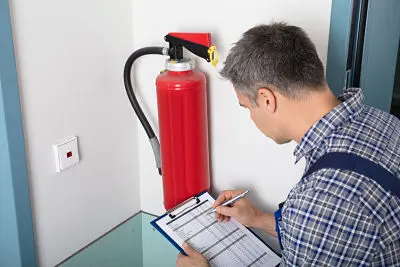
The good news is that staying compliant doesn’t require complicated systems, just consistency. A quarterly visual inspection of every fire door in the property, checking seals, hinges, and closers, catches most problems before they become serious. Keeping a written log of these checks also protects landlords if a dispute or inspection ever arises, since it demonstrates an ongoing commitment to tenant safety rather than a reactive approach.
It’s also worth briefing tenants directly. Many fire door failures happen simply because occupants don’t realise why a door needs to stay closed, or they wedge it open without understanding the risk. A short, friendly reminder at the start of a tenancy, alongside a written house guide, goes a long way toward keeping the building’s fire strategy intact.
Getting It Right From the Start
For landlords converting a property into an HMO, or buying one that’s already licensed, it pays to have fire doors assessed by a qualified professional before tenants move in. Retrofitting compliant doors after the fact is far more disruptive and costly than building compliance into the initial setup.
Combined with working smoke alarms, clear escape routes, and up-to-date fire risk assessments, properly specified fire doors form the backbone of a safe, well-run shared property.
Getting this right isn’t just about satisfying a licensing inspector. It’s about protecting the people living under your roof, and that responsibility should sit at the centre of every decision an HMO landlord makes.