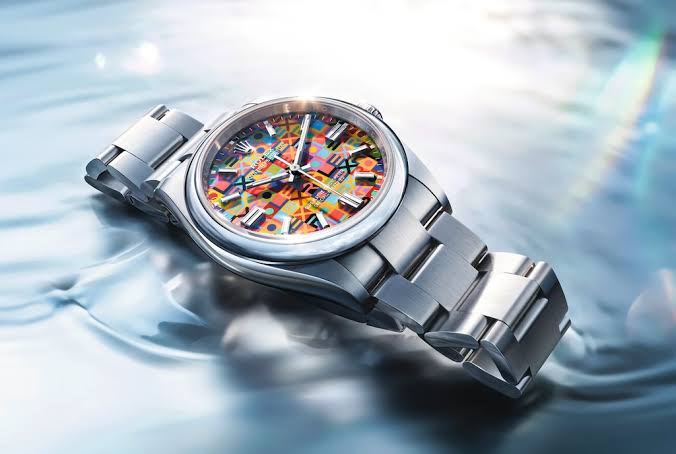
For most of the twentieth century, there was an obvious difference between a proper dress watch and a more functional sports watch. Luxury watches used precious metals, had elegant proportions and incorporated classical techniques of making, whereas sports watches paid more attention to functionality, water resistance, and durability.
However, in the 1970s, this difference was becoming increasingly unclear with the concept of a watch made from stainless steel being introduced and proving its potential of being just as luxurious as a gold watch. Thus, new types of mechanical watches were created.
Luxury sports watches can be considered an important part of collecting nowadays; however, they have a lot to say about fine watchmaking development and its history.
When Stainless Steel Challenged Traditional Luxury
Traditionally, the use of precious metals played an important role in the distinction between costly and pragmatic wristwatches. While gold and platinum implied elegance and sophistication, steel watches were usually worn by people who required watches to survive under tough conditions.
However, by the 1960s and 1970s, changing social perceptions about luxury began to affect the perceptions regarding luxury goods. Professional wear became more relaxed in some workplaces, and the consumer became interested in luxury goods that would combine sophistication and practicality.
The Swiss watchmaking industry has also witnessed significant technological changes during that period. The creation of the quartz mechanism was a revolution for the traditional mechanical mechanism of watches.
In such a situation, the watchmaker Audemars Piguet introduced the Royal Oak in 1972 by Gerald Genta.
According to Audemars Piguet’s historical archives, the design originated from a request for a steel watch that could combine sporting character with elegance. Its creation reflected an attempt to challenge conventional distinctions between practical wristwatches and high end mechanical craftsmanship.
The Royal Oak subsequently became an important reference point in the development of the luxury sports watch, demonstrating that the value of fine watchmaking could be expressed through design and finishing rather than precious materials alone.
Why the Integrated Bracelet Became an Important Design Innovation
Among the key elements in the early luxury sports watches was the relationship between the case and bracelet. Conventionally, wrist watches tended to consider the strap as a detachable element of the wrist watch case by virtue of its protruding lugs. Even before the introduction of the Royal Oak, the use of bracelets on watches was not new; however, it was Genta who showed how it can become a distinctive feature of luxury sports watches. The bracelet was not simply an add on element but also part of the design of the watch case itself.
Audemars Piguet’s research into the Royal Oak bracelet explains how its construction combined techniques associated with jewellery craftsmanship and industrial steel bracelets. The original design used numerous individually finished components, with links gradually decreasing in size to create a balanced appearance.
This approach placed considerable importance on finishing. Brushed surfaces and polished edges reflected light differently, giving the metal a visual complexity that contrasted with its utilitarian associations.
The influence of this design principle extended beyond one manufacturer. Integrated bracelets became an important feature of luxury sports watch design, offering a recognisable alternative to conventional dress watches.
For collectors, the quality of case and bracelet finishing remains an interesting aspect of evaluating mechanical craftsmanship, particularly when examining how manufacturing techniques have evolved between different periods.
The Relationship Between Mechanical Engineering and Modern Design
The introduction of luxury sports watches was not only an aesthetic innovation. It involved a rethinking by the watchmakers of how the conventional mechanical movement should be integrated into unusual watchcases.
A mechanical movement is a sophisticated mechanism that consists of multiple interacting parts which have to work reliably inside a rather compact housing. The size of the calibre determines the thickness and the overall proportions of the final wristwatch.
So thin automatic calibres were especially important in designing the first luxury sports watches. They made possible the combination of a practical look of a steel wristwatch with more fine watchmaking like proportions.
Thus, the first Royal Oak reference 5402 used the self winding Calibre 2121, which was very thin for its time. Its design allowed it to keep relatively slim dimensions of the watch that had quite unusual aesthetics.
The significance of such choices becomes evident when one understands the relationship between the movement structure and case design. One cannot significantly change the dimensions of the watch without taking into account the calibre, the winding mechanism, water resistance issues and the construction in general.
This relationship between external appearance and internal engineering is one of the defining characteristics of sophisticated mechanical watchmaking.
How Luxury Sports Watches Became Part of Collecting Culture
As the luxury sports watch category developed, collectors began paying closer attention to the historical details distinguishing different references and production periods.
Early designs often contained features that were subsequently modified as manufacturing methods improved. Changes in dial finishing, bracelet construction, movement architecture and case proportions became useful points of comparison for enthusiasts studying a collection’s evolution.
For example, differences in the shape of a bezel, the arrangement of dial markers or the construction of bracelet links may help identify the approximate manufacturing period of a timepiece.
Understanding these distinctions requires familiarity with historical references and original production characteristics rather than relying exclusively on contemporary descriptions.
Within the UK collecting community, research frequently involves comparing archival material, auction catalogues and specialist publications to understand how particular designs developed.
Enthusiasts examining the wider history of high end mechanical watchmaking may also encounter an audemars piguet collection while researching changing case designs, movement traditions and the evolution of luxury sports watches.
However, a model’s reputation should not overshadow the details of an individual timepiece. Condition, servicing history, originality and documented provenance remain important considerations when studying watches from earlier production periods.
These characteristics help distinguish historical significance from contemporary popularity.
Why Complications Remain Central to Fine Watchmaking
Although case design often attracts immediate attention, complicated movements continue to occupy an important position within traditional horology.
A complication is any mechanical function beyond the basic display of hours, minutes and seconds. Examples include chronographs, annual calendars, perpetual calendars, minute repeaters and tourbillons.
Each presents a different engineering challenge.
A perpetual calendar, for instance, must mechanically account for months of varying lengths and the conventional leap year cycle. Its construction requires an intricate arrangement of cams, levers and wheels that coordinate calendar indications with the passage of time.
A minute repeater presents a different challenge by translating the time into an audible sequence of chimes. Its design requires precise coordination between the movement, striking mechanism and acoustic properties of the case.
These mechanisms preserve skills that developed over centuries of traditional watchmaking.
Audemars Piguet’s contributions to complicated wristwatches extend beyond its sports watch designs. In 1986, the manufacturer introduced a self winding tourbillon wristwatch, an important development in the modern history of mechanical complications.
Such achievements illustrate why the evolution of fine watchmaking cannot be understood through external design alone. The combination of innovative aesthetics and traditional movement expertise has helped define the character of contemporary haute horlogerie.
The Importance of Hand Finishing in Mechanical Watchmaking
Modern manufacturing equipment can produce components with impressive consistency, but traditional hand finishing continues to distinguish many high end mechanical watches.
Finishing techniques may include bevelled bridges, polished screw heads, decorative striping and carefully prepared movement surfaces.
Some techniques are primarily decorative, while others historically developed alongside practical manufacturing requirements. Their contemporary significance lies partly in the skill and attention necessary to execute them consistently.
Anglage, for example, involves creating polished bevels along the edges of movement components. Achieving clean transitions and consistent surfaces, particularly around complex shapes, can require considerable manual work.
External components may receive similarly detailed treatment. A watch case combining satin brushed surfaces with polished chamfers demands careful finishing to preserve the intended visual contrast.
For collectors, examining these details can reveal differences in manufacturing philosophy between traditional and contemporary watchmaking.
However, finishing quality should not be reduced to the quantity of decorative features visible through a case back. Movement construction, technical reliability and the appropriateness of a particular finishing technique are equally relevant to understanding craftsmanship.
How Changing Lifestyles Continue to Influence Watch Design
Luxury sports watches are an example of how horological design has always been influenced by developments in other spheres of culture.
In past eras, the difference between formal and sporting watches was based on expectations of clothes and professional activities. New inventions in the area of versatile mechanics challenged those distinctions.
In the modern era, the distinction is no longer strict. A sports watch made of stainless steel might be worn with formal clothes, and the old fashioned dress watch may be worn in casual environment.
The changing attitude towards horology prompted the designers to try new combinations of case materials, sizes and movements, but not giving up the existing traditions.
New materials such as ceramics, titanium and new alloys allow watch designers to use innovative technologies. At the same time, the interest in historical references makes them return to the proportions of old watches and their finishing.
Such diversity reflects the balance of innovation and tradition in contemporary horology.
An existing design does not have to forget its origin and become modern. It could be changed only from the point of view of mechanics and materials used, keeping proportions and design characteristics of its origin.
A Lasting Change in the Meaning of Luxury
The rise of the luxury sports watch brought about a change in the perception of fine mechanical watches. Materials like stainless steel which were used for utilitarian purposes were turned into components of sophisticated design and exquisite craftsmanship.
This development showed that innovation in horology is not necessarily about inventing a totally new complication or a new mechanical system. Rethinking an approach towards the combination of already known materials and traditional methods can be no less revolutionary.
For collectors, the evolution of luxury sports watches has become an excellent example of mechanical engineering, decorative artistry and cultural context development.
What is more important about these watches is that apart from their distinctive design, they have helped to bring about a revolution in the industry.