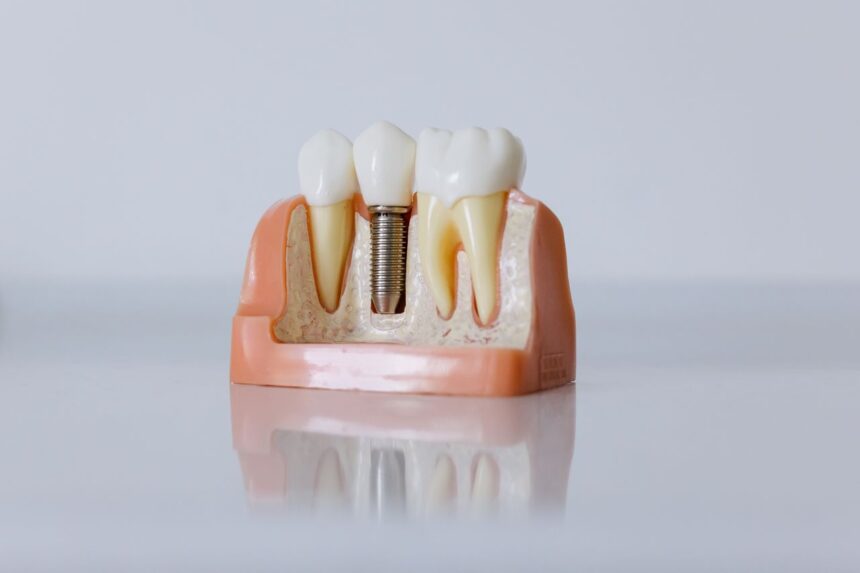
A denture that lifts during lunch or shifts halfway through a sentence demands attention at exactly the wrong moment. Dental implants offer advanced care for missing teeth by anchoring fixed replacement teeth in the jaw, reducing the movement associated with removable dentures. For someone tired of checking their teeth with their tongue before speaking, that stability has a practical appeal.
Traditional dentures still work well for many people. They rest on the gums, though, while fixed implant teeth attach to posts placed in the jawbone. That difference explains much of the steadier feeling.
1. The Teeth Have an Anchor Beneath the Gums
A conventional full denture depends on its fit against the tissues, with saliva helping create a seal. Lower dentures have less surface area to grip and share limited space with a moving tongue. Even a carefully fitted denture sometimes moves during everyday use.
Implants establish a different foundation. As healing progresses, bone bonds with the implant surface. The replacement teeth attach to those implants rather than relying on suction or adhesive for retention. Once healing is complete and the restoration is properly fitted, ordinary mouth movements are much less likely to displace the teeth.
2. Biting Feels More Predictable
Biting into food puts uneven pressure on replacement teeth. With a removable denture, a bite taken at the front sometimes tips the back away from the gums. People often compensate by cutting food into tiny pieces or chewing cautiously on both sides.
Fixed implant teeth resist that rocking motion because chewing forces pass through the restoration to the implants and surrounding bone. After the prescribed healing period, eating often feels less like managing an appliance. Foods that were awkward with loose dentures become easier to chew.
That does not make the teeth indestructible. Ice, hard objects and excessive biting forces still threaten the restoration, and early recovery requires a restricted diet.
3. Speaking Does Not Require Holding a Denture in Place
Speech involves quick, precise movements of the tongue and lips. A loose denture adds another task: keeping the teeth seated while forming words. Some wearers pause to swallow or reposition the denture before continuing a conversation.
Fixed teeth remove the need to steady a removable plate. Their position stays consistent as the mouth moves, which often makes speaking feel less guarded.
There is still an adjustment period. Replacement teeth have their own shape and thickness, and certain sounds take practice. A stable attachment gives the tongue a consistent surface to learn, although accurate tooth placement and a well-fitted restoration remain essential for clear speech.
4. There Is Less Sliding Against the Gums
A denture base that moves repeatedly rubs against the tissue beneath it. Tender spots then change how a person eats, sometimes encouraging them to chew on one side or avoid firmer food altogether.
A properly fitted fixed restoration transfers much of the biting load through the implants instead of depending on a broad plate pressing against the gums. Less sliding often brings greater comfort, especially for people whose lower dentures repeatedly shift.
Comfort still depends on healthy tissue and careful cleaning. Food collects beneath fixed teeth, so daily cleaning around the implants and under the bridge is part of the routine. Persistent soreness needs examination rather than an assumption that it is normal.
5. The Jawbone Has a Reason to Stay Active
After tooth loss, the jawbone gradually shrinks where roots once were. As the ridge changes shape, a removable denture loses some of its original fit. Relining or replacement becomes necessary to restore close contact with the gums. An implant consultation with the team at https://www.premieroralnfacialsurgery.com starts with assessing the remaining bone and its suitability for implant placement.
Implants transmit chewing forces into the jaw and help preserve bone around them. That gives fixed teeth a firmer biological foundation over time. Bone preservation is not a guarantee against future problems, but it is a meaningful advantage over teeth that simply rest on the ridge.
Fun fact: The visible replacement tooth is not the implant itself. The implant sits beneath the gums in the jawbone; a connector joins it to the tooth or bridge above.
Fixed teeth stay in place for daily life, with removal handled by a dental professional when needed. Before treatment, the dentist checks bone volume, gum health and the bite. Once the teeth are fitted, a useful question is how to reach every surface beneath them with cleaning tools. A secure fit deserves a cleaning routine that protects the tissue holding those implants in place.