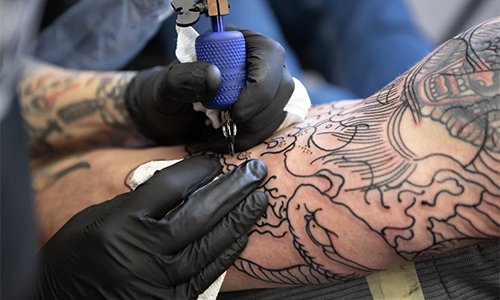
At a tattoo consultation, people often talk through the reference photos, price and placement, then leave the question of discomfort until the day itself. By then, the artist may have reserved several hours and you may feel pressure to get through them. Make pain management part of the booking conversation. A useful plan gives you a way to take a break or stop, and tells you what to do if you are considering a product that changes how the skin feels.
Ask what the session will actually involve
A four-hour booking does not tell you how long you will spend being tattooed, how much time the artist needs to place the stencil, or whether you will have to hold an awkward position. Ask the artist to walk you through the appointment. A shoulder piece may mean lying still with your head turned; a large leg piece may be easier to sit for if you can occasionally change position. The detail that matters to you may be the posture rather than the needle.
If you have had a tattoo before, tell the artist what made the session difficult. You may have struggled with long stretches without a break or found it hard to speak up while they were concentrating. If it is your first tattoo, ask how the artist normally handles requests to pause. A clear answer gives you something to fall back on when you are tense or tired.
Bring up numbing products while there is time to ask questions
A search for “Tattoo numbing cream” may take you to TKTX Original UK’s retail site, where topical products are marketed for tattoo appointments. A listing can help you identify the product you want to ask about. It does not tell you whether the studio accepts it or whether a pharmacist would consider it suitable for you. Send the studio the exact name or a photograph of the label and ask about its policy before you buy or apply anything.
The studio can explain how it prepares the skin and what it will do if you arrive having used a product. A pharmacist or other qualified health professional can review the ingredients, your medicines, any relevant health conditions and previous reactions. Give them enough detail to be useful: the proposed placement and size, whether the skin is irritated, and whether you were considering more than one product. A studio’s willingness to work on an area is a separate question from whether using the cream is medically appropriate.
The FDA’s advisory on topical pain relievers for cosmetic procedures warns against certain products marketed for tattooing and similar procedures. Large treatment areas, damaged skin, prolonged exposure and covering the skin can increase absorption of local anaesthetic. Serious reactions can include seizures, trouble breathing and abnormal heart rhythm. Discussing a product early gives you time to take those risks seriously. Instructions in a tattoo forum or a product review do not account for your health history or identify what is actually in your tube.
Agree on a way to pause
Before work begins, choose a word or signal that tells the artist you need a break. Ask what they would like you to do while the needle is in use so that you can signal without moving the area being tattooed. Find out whether there are natural points to take longer breaks, such as after the outline or before changing position. These details are small enough to settle quickly and useful enough to be worth asking about.
If you are booking a long session, also agree on what happens if you finish early. The artist may be able to choose a stopping point that makes it easier to return another day. Ask how that would affect the price, deposit and wait for the next appointment. Knowing the answer makes it easier to speak up while you still have a choice. You do not need to decide how much discomfort you can tolerate weeks before you arrive.
Give the artist information they can act on
A short message before the booking can cover the basics without requiring a long account of your medical history. You can bring the more private questions about medicines or reactions to your pharmacist or clinician. Here are useful topics for the studio conversation:
- The length of time you expect to be able to stay in one position and any accommodation that would help.
- How to ask for a break and when the artist expects there will be convenient stopping points.
- The studio’s policy on products applied before arrival and what details it wants if you have used one.
- Whether the design can be divided into sessions and how an early stop affects the next booking.
- How to reach the studio afterward if you have a question about its written aftercare instructions.
If the planned area is sunburned, scratched, inflamed or otherwise changed near the date, contact the studio before travelling. Describe what has happened so the artist can explain whether the appointment needs to be rescheduled. If you have already used a product, say what you used, where and when. Bring the package. Those facts are more helpful than trying to describe the product by the colour of its tube.
Decide in advance what would make you stop
A break for discomfort and a stop because you are unwell are different decisions. Tell the artist promptly if you feel faint or otherwise unwell rather than waiting for a convenient stopping point. If there is trouble breathing, a seizure or another severe reaction, seek emergency help. If you suspect a reaction to a product, keep the packaging and tell medical staff what was applied. Do not assume a new symptom is part of being tattooed or try to get through it by adding another product.
A clear stop rule also helps with ordinary discomfort. For example, you can agree that if a brief rest does not make it comfortable enough to continue, you will end the session at the next safe point. Ask the artist how the unfinished area should be cared for and when it can be assessed for the next visit. This is a normal booking detail you can arrange before the appointment, when neither of you is under pressure.
Plan for a session you can adjust
Before the appointment, you should know approximately how the day will run, how to signal for a pause, and what it would take to finish on a different day. If a numbing product is part of the discussion, give yourself time to check the exact formulation and get professional advice. A smaller first session or a design scheduled over several visits can make the experience easier to manage. The useful measure of a plan is whether you can change it when you need to.