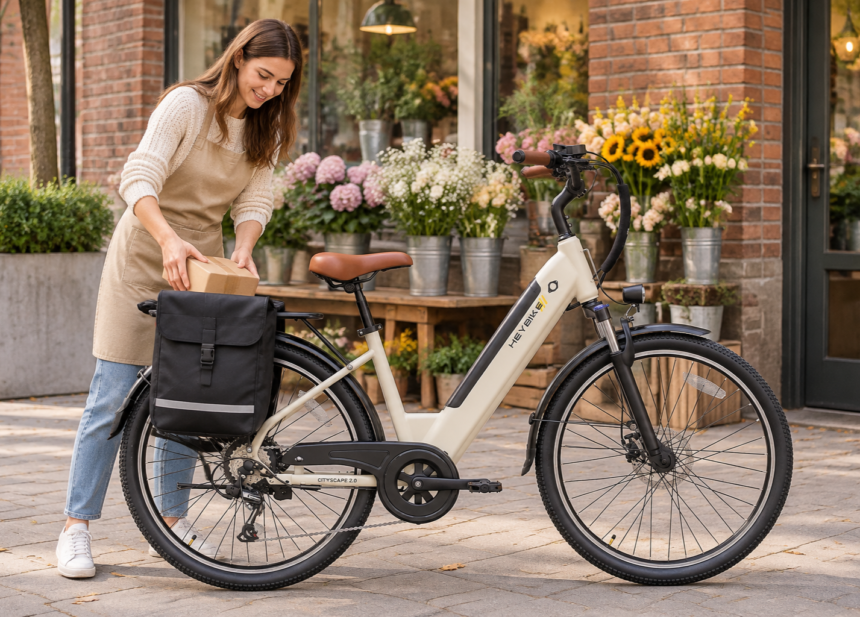
A neighborhood delivery service does not need to replace its entire vehicle fleet to investigate e-bikes. A more useful starting point is a small set of orders with suitable distances, manageable loads, and realistic delivery windows. Those orders let a business test the whole process, including collection, parking, handover, and the return journey.
Think of the first trial as an operating exercise rather than a publicity announcement. The question is whether two-wheel delivery works for your particular goods and streets. A successful short route may reveal a useful niche, while unsuitable orders can remain with the existing delivery method.
Start with the orders, not the vehicle
Review a representative day’s deliveries. Note package dimensions, weight, handling needs, pickup time, and destination access. A small box that fits on a desk may still be awkward to secure on a bicycle. Fragile goods, liquids, and temperature-sensitive orders need their own handling arrangements.
Group the orders that appear compatible and leave the rest out of the first test. For example, a local shop might trial a small number of nearby prepaid orders that fit an approved carrier. That is more informative than selecting the busiest day and hoping a new delivery method can absorb everything.
Ask the rider to walk through the loading and handover process before riding. Include the moments when the bicycle is stationary. Opening a gate, taking a parcel upstairs, or obtaining a signature can occupy more of the shift than the journey between addresses.
Build a route with legal stopping points
Map the complete trip, including the return to base. Confirm current local rules for the bicycle’s configuration and each proposed route. A bike lane, pedestrian area, or shared path should not be treated as automatic permission for every delivery e-bike.
At each destination, identify where the rider may stop and secure the bicycle without blocking a sidewalk, doorway, or accessible route. Contact customers about awkward entrances in advance. An e-bike does not remove the need for lawful parking or a secure handover procedure.
Time an unloaded reconnaissance trip before carrying customer goods. Record waiting at crossings, walking sections, and access delays separately from riding time. Use those observations when setting delivery windows, rather than estimating productivity from a motor’s top speed.
Match the bicycle and carrier to the load
Vehicle payload, rack capacity, and the rating of an attached box or bag are different limits. The rider, equipment, and goods all need to be accounted for under the applicable instructions. Empty space in a box is not permission to keep adding weight.
Look at how the load is secured and whether it affects steering, lights, or the rider’s movement. Try the intended loading arrangement in a controlled setting. A package that shifts during a turn is a handling problem even when the recorded weight is below a published limit.
An electric bike collection can help a buyer understand different bicycle formats, but ordinary consumer models should not be assumed to be commercial cargo vehicles. Ask the manufacturer about the exact model, approved accessories, intended use, and any terms relevant to business operation before committing to a purchase.
Treat charging and downtime as business tasks
Choose an approved charging location and assign responsibility for the equipment. Use the correct charger and follow the battery instructions. Build charging time into the operating plan; an advertised range is not a shift schedule with repeated stops, cargo, hills, and changing weather already accounted for.
Set a return threshold based on a short observed trial with reserve remaining. Include a plan for an interrupted route. A charged phone, a contact at base, and an available backup vehicle can protect both the rider and the customer’s order when conditions change.
Record tire, brake, and drivetrain checks as part of dispatch preparation. If the bicycle needs service, remove it from the schedule until the issue is resolved. Delivery promises should not pressure a rider to continue with a mechanical or electrical problem.
Measure the costs that actually change
Keep a trial log with completed orders, total staff time, distance, charging, consumables, and any extra handling. Add equipment, training, security, insurance, and maintenance costs to the business assessment. Confirm the relevant insurance and delivery platform requirements directly with their providers.
Compare like-for-like routes. A short cluster of nearby orders and a long suburban van route are different jobs. If the e-bike changes only one portion of the operation, calculate that portion rather than claiming that the business has eliminated all vehicle costs.
For a shortlist that includes Heybike, send the manufacturer a clear description of the proposed work: goods, combined load, daily distance, and carrier. Ask about intended use, service access, and purchase terms. Keep that response with the trial budget so the buying decision reflects the actual delivery job.
Finish with a clear operating decision
At the end of the trial, identify which order types worked, which addresses caused delays, and what equipment or staffing changes would be necessary. You may discover a useful route, a limited seasonal service, or a reason to keep the current method. Each is a worthwhile result when it comes from observed work rather than an assumption about what an e-bike ought to achieve.