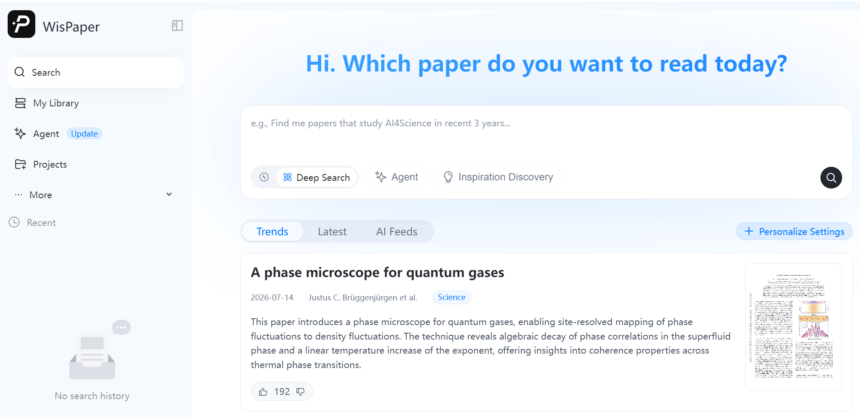
You have the data. The experiments ran clean. But the document in front of you is still blank except for that blinking cursor, and every attempt to start feels like reaching into fog. WisPaper is one of the tools researchers are turning to when the gap between knowing something and writing it down becomes the hardest part of the work.
The Weight of Overwhelming Writing Workflows
Writing a paper means juggling too many things at once. You’re drafting a discussion section while realizing you never formatted the references for a paper you cited three weeks ago. The cognitive load isn’t just the writing — it’s the quiet dread that every sentence is accumulating mistakes you’ll have to fix later, in some version of the document you haven’t opened yet.
Demand for Integrated Writing Support
Most writing tools treat a research paper like any other document — they’ll check your spelling, suggest a cleaner sentence, but they don’t know what a methods section is supposed to do. Graduate students feel this most acutely, learning academic conventions while trying to produce work that meets them. What they need isn’t a better word processor but support that understands the shape of a paper.
Challenges in Academic Manuscript Preparation
Citation formatting alone eats hours — tracking DOIs, checking APA versus MLA compliance, realizing the journal wants a style you’ve never used. Then comes the literature review: reading dozens of papers, synthesizing them, worrying you’ve missed something a reviewer will flag. Most researchers cobble together a patchwork of tools and hope someone will catch what they missed.
Streamlining Academic Writing and Revision
AI-assisted tools are beginning to address these bottlenecks by handling the friction rather than writing the paper for you. WisPaper’s research platform lets you upload a draft and get feedback across logic, writing, and structure before a reviewer weighs in. TrueCite handles citation formatting and verification across APA, MLA, and other styles automatically. AI Survey generates structured literature review summaries with mind maps, every reference traceable to a real paper. And the AI Copilot’s immersive reading mode translates dense text into something you can absorb when working through someone else’s research.
Clearer, Better-Structured Manuscripts
When the logistical weight of writing lifts, what’s left is the actual thinking. Researchers spend more time refining arguments and less time hunting for missing page numbers. The manuscript that goes out for review is tighter, better argued, and more honest to the research behind it.
The blank document will never stop being intimidating. But the hours between the first sentence and the final draft don’t have to be a solo scramble through formatting guides and citation managers.