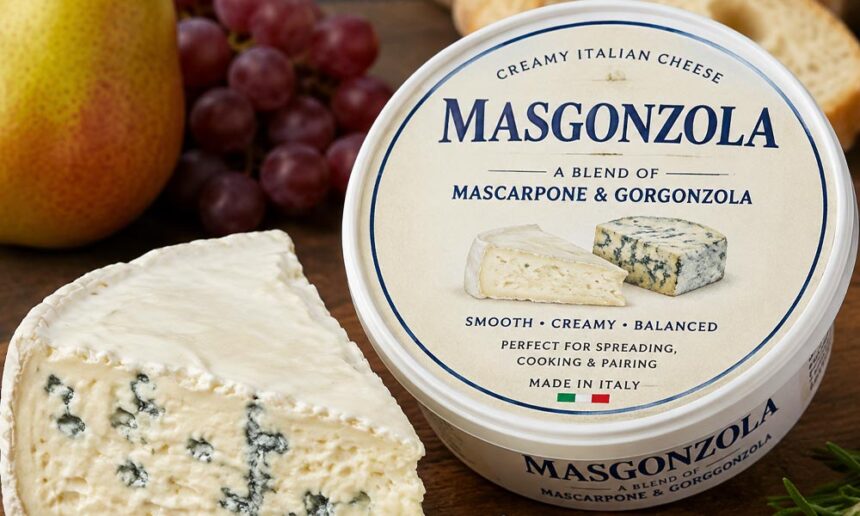
Have you ever seen a cheese on a menu and thought, “What is that?” That is exactly what happens with Masgonzola. It sounds fancy, and it is, but it is also very approachable. Masgonzola is a creamy cheese blend that mixes two very different flavors into one smooth, tasty experience.
In this article, we will explore everything about Masgonzola. You will learn what it is, how it is made, what it tastes like, and why so many people love it. By the end, you’ll know how to use it in snacks, meals, and even special dishes at home.
What Is Masgonzola?
Simply put, Masgonzola is a mix of two cheeses: Mascarpone and Gorgonzola. Mascarpone is soft, creamy, and slightly sweet. Gorgonzola is a blue cheese with a tangy and bold taste. When combined, they make a cheese that is rich, smooth, and easy to enjoy.
Masgonzola is not a traditional cheese like cheddar or mozzarella. Instead, it is a blend or style. Some brands call it “Gorgonzola e Mascarpone,” but the idea is the same. It balances creamy and bold flavors so even beginners can enjoy blue cheese without the strong bite.
The Story Behind Masgonzola
Masgonzola has its roots in Northern Italy, where cheesemakers have been crafting amazing cheeses for centuries. They wanted to make a cheese that kept the famous taste of Gorgonzola but softened its sharpness.
By combining it with Mascarpone, they created a new, smoother cheese. It became popular among gourmet chefs and food lovers who wanted something creamy yet flavorful. Today, Masgonzola is often found in artisan shops and gourmet cheese selections.
How Masgonzola Is Made
Making Masgonzola is simple but careful work. First, Mascarpone is made from cream. It is very soft, smooth, and lightly sweet. Then, Gorgonzola is made from milk and aged to develop its blue veins and tangy taste.
Some producers layer the two cheeses, so you can see white and blue stripes. Others mix them fully to make a smooth spread. The key is balance: more Mascarpone makes it sweeter and softer, more Gorgonzola makes it tangier and saltier. This balance is what makes each batch of Masgonzola slightly different.
What Does Masgonzola Taste Like?
The taste of Masgonzola is very interesting. The first bite is soft, creamy, and slightly sweet from the Mascarpone. Then the tangy and earthy notes of Gorgonzola appear.
It is much milder than regular blue cheese, which makes it perfect for beginners. Even people who usually avoid strong cheeses often enjoy Masgonzola because it is balanced and smooth. Imagine biting into something rich but gentle, with just the right touch of tang—this is the Masgonzola experience.
Masgonzola Texture and Appearance
One of the best things about Masgonzola is its texture. It is soft and creamy, so you can spread it easily on bread, crackers, or a fresh baguette. You don’t need a knife to cut it like hard cheeses.
Visually, it is very attractive. The white Mascarpone layers and blue-green Gorgonzola veins create a marbled look. This makes it perfect for cheese boards, snacks, or any time you want your dish to look as good as it tastes.
Why Masgonzola Is So Popular
Masgonzola has become popular for many reasons. First, it gives the creaminess of soft cheese while keeping some flavor from blue cheese. Many people find blue cheese too strong, and Masgonzola solves this problem.
It is also versatile. You can eat it cold, spread it on crackers, or melt it in pasta and sauces. Its layered look also makes it attractive on social media and at dinner parties. Chefs and home cooks love it because it is both tasty and easy to use.
Best Ways to Eat Masgonzola
You don’t need to do anything fancy to enjoy Masgonzola. A simple slice of bread or cracker is perfect. You can also make a cheese board with fruits like pears, grapes, or figs. Add some nuts, like walnuts, and drizzle honey on top.
Before serving, let Masgonzola sit at room temperature for a few minutes. This softens it and brings out more flavor. Even simple snacks feel special with this cheese.
Cooking with Masgonzola
Masgonzola melts easily, which makes it great for warm dishes. Add it to pasta, risotto, or mashed potatoes, and it creates a creamy, smooth sauce.
You can also put it on pizza or flatbread, or even stuff chicken with Masgonzola and vegetables. You don’t need much; even a small amount adds a lot of flavor. It’s perfect if you want to make simple meals taste special.
Masgonzola vs Gorgonzola: What’s the Difference?
Many people wonder if Masgonzola is the same as Gorgonzola. They are related, but different. Gorgonzola is a classic blue cheese. It can be crumbly or soft, and it usually has a strong, sharp flavor. Some people love it, but beginners might find it too bold.
Masgonzola, on the other hand, is softer and creamier. The Mascarpone makes the blue cheese taste milder. You still get the tangy flavor, but it is gentle and smooth. Masgonzola is perfect for people who want a lighter blue cheese experience or a cheese that spreads easily on bread.
Masgonzola Nutrition Facts
Masgonzola is rich and creamy, so it contains quite a bit of fat and calories. A 100-gram serving has about 394 calories, mostly from the dairy fat. It also contains around 12 grams of protein, which helps you feel full.
The cheese also has calcium for strong bones. Because it includes Gorgonzola, there may be some helpful bacteria for digestion. But remember, it is best enjoyed in moderation. A little Masgonzola goes a long way, so small portions are enough for flavor.
What Foods Go Well with Masgonzola
Pairing Masgonzola with the right foods makes it even better. Fruits like figs, pears, and grapes balance the tangy and creamy flavors. Nuts such as walnuts and pecans add crunch and make every bite more interesting.
You can also drizzle honey or jam on top. Spread Masgonzola on artisan bread or crackers for a simple snack. For drinks, a light wine or sparkling water works nicely. These combinations make Masgonzola a fun and easy cheese to serve at home or for guests.
How to Store Masgonzola
Because Masgonzola is soft, it needs proper storage. Keep it in the fridge and wrap it well or use a sealed container. This prevents it from drying out or picking up other flavors.
Use it within 1–2 weeks after opening for the best taste. Before serving, take it out of the fridge for a few minutes to soften and bring out the flavor. Avoid leaving it out too long, especially on warm days, because it is perishable.
Common Mistakes to Avoid
Many people get excited and make simple mistakes when using Masgonzola. One common mistake is using too much cheese. Because it is rich, a little is enough. Too much can make a dish feel heavy.
Another mistake is overheating. Masgonzola melts easily, but too much heat can make it runny and lose its texture. Also, pairing it with foods that are too bland or too strong can hide its flavors. Always try fruits, nuts, or bread to get the perfect balance.
Is Masgonzola Worth Trying?
If you love creamy cheese, the answer is yes. Masgonzola is smooth, flavorful, and easy to enjoy. It is especially great for people who want to try blue cheese without the strong bite.
Even for beginners, Masgonzola is approachable. You can spread it on bread, add it to pasta, or use it in snacks. It is a cheese that is both fun and gourmet, making everyday meals feel special.
However, if you already love very sharp blue cheese, you might prefer regular Gorgonzola. For most people, Masgonzola is the perfect middle option: creamy, slightly tangy, and easy to enjoy.
Conclusion
Masgonzola stands out because of its balance and versatility. It combines the creamy sweetness of Mascarpone with the tangy flavor of Gorgonzola, creating a cheese that is smooth, rich, and approachable.
It is easy to use. You can spread it, melt it, or serve it to guests. It works in simple snacks and gourmet meals alike. Masgonzola is also visually beautiful with its white and blue layers, making any cheese board or dish look impressive.
In 2026, Masgonzola is a must-try for cheese lovers and beginners alike. Its flavor, texture, and versatility make it a cheese that is fun, memorable, and delicious. Once you try it, you’ll likely want to use it again and again in meals and snacks at home.
You might also like: Kinervus: Why Everyone Is Talking About This Mind and Body Trend