Have you ever finished a sewing project and felt that something was not quite right? Maybe the fabric looked beautiful, but the seams felt weak. Or perhaps the outside looked nice, while the inside had loose threads and messy edges. These small problems often happen because the wrong seam was used.
This is where Nahttypen become important. The word Nahttypen simply means types of seams. A seam is much more than a line of stitches. It holds your fabric together, helps clothes keep their shape, and makes your sewing stronger and neater. Whether you are fixing old clothes, making a dress, sewing a bag, or starting a small sewing business in 2026, learning the right Nahttypen can make a big difference.
The good news is that you do not need to learn every seam at once. A few simple seam types can help you complete most sewing projects with confidence. Once you understand when and where to use each one, sewing becomes much easier and more enjoyable.
In this guide, we will explore everything step by step. You will learn what Nahttypen are, why they matter, the most useful seam types, how to choose the right one for different fabrics, and simple tips that help your projects look clean and professional.
What Are Nahttypen?
Nahttypen is the German word for types of seams. A seam is the place where two or more pieces of fabric are joined together. Most people think sewing is only about making stitches, but there is much more to it than that.
A stitch is the thread that passes through the fabric. A seam is the complete join that includes the stitches, the fabric edges, and the way those edges are finished. This is why two sewing projects with the same stitches can still look very different if they use different seam types.
Think about a shirt, a pair of jeans, or even a pillow cover. Every one of these items uses seams to hold the fabric together. Without the right seam, clothes can pull apart, edges can fray, and the finished project may not last very long.
Learning Nahttypen is useful for everyone. It does not matter if you are a beginner, a home sewer, a fashion student, or someone who only repairs clothes from time to time. Once you understand the basic seam types, you will find it much easier to choose the best one for every project.
Why Nahttypen Matter in Sewing
Many beginners choose a seam without thinking about the fabric or the project. This often leads to problems later. A weak seam on heavy denim may tear after a few washes. A thick seam on soft silk may look bulky and feel uncomfortable.
Different fabrics need different seam types. Soft fabrics, heavy fabrics, and stretchy fabrics all behave in different ways. That is why there are many kinds of Nahttypen instead of just one.
The right seam makes your sewing stronger. It helps stop fabric edges from fraying. It also makes the inside of your project look neat and clean. These small details can turn a simple homemade item into something that looks professionally made.
Comfort is another important reason. Imagine wearing a shirt with rough seams that rub against your skin all day. It would not feel nice. Smooth and well-finished seams make clothes much more comfortable to wear.
Good seam choices also save time and money. When clothes last longer, you do not need to repair or replace them as often. This is one reason why many people today focus on better sewing instead of simply making faster sewing.
Stitches, Seams, and Seam Finishes
Many people use these words as if they mean the same thing. In fact, they are different. Once you understand the difference, sewing becomes much easier.
A stitch is the pattern made by the thread. A straight stitch, zigzag stitch, and stretch stitch are all examples of stitch types. The sewing machine creates these stitches as it moves through the fabric.
A seam is where two pieces of fabric are joined together. A plain seam, French seam, and flat-felled seam are examples of different Nahttypen. Each seam uses stitches, but the way the fabric is folded and finished makes every seam different.
A seam finish protects the raw edges of the fabric. For example, a zigzag stitch can stop fabric from fraying. An overlock machine wraps thread around the edge to keep it neat. Binding can also cover raw edges for a clean finish.
Think of building a house. The bricks are like the fabric. The cement is like the stitches. The finished wall is like the seam. Each part works together to create something strong.
Once you know the difference between stitches, seams, and seam finishes, choosing the right Nahttypen becomes much easier.
Main Nahttypen Every Beginner Should Know
When people first start sewing, they sometimes feel there are too many seam types to learn. The good news is that you only need a few basic ones to complete most projects.
Each seam has its own job. Some are made for strength. Others are made to hide raw fabric edges. Some help stretchy fabric move easily, while others create a clean and beautiful finish inside a garment.
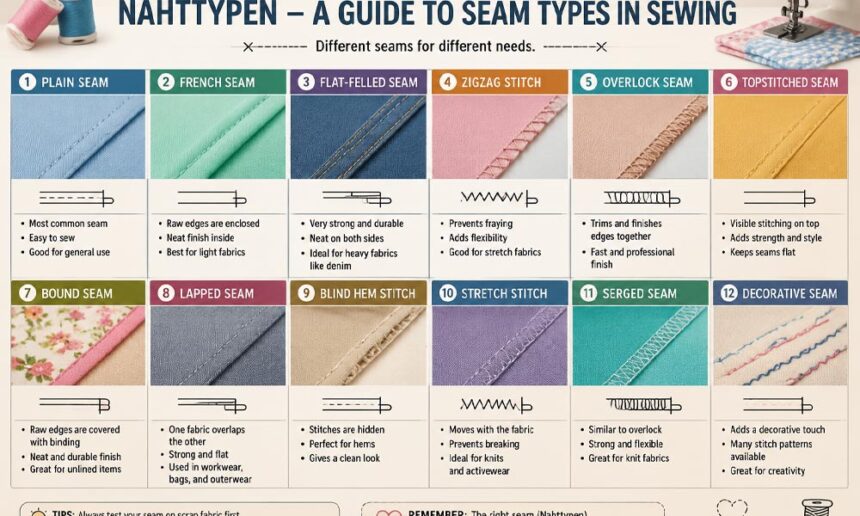
The most useful Nahttypen for beginners include:
-
Plain seam
-
French seam
-
Flat-felled seam
-
Overlocked seam
-
Bound seam
-
Lapped seam
-
Topstitched seam
You do not have to master every one today. Start with the simple seams and practise them on small pieces of fabric. As your confidence grows, you can slowly learn the others.
Think of sewing like learning to cook. You begin with simple recipes before trying something more difficult. Sewing works the same way.
Plain Seam for Everyday Sewing
The plain seam is the most common Nahttypen used in sewing. It is also the easiest one to learn. If you have ever followed a beginner sewing pattern, you have probably already used this seam.
To make a plain seam, place two pieces of fabric with their right sides facing each other. Then sew a straight line near the edge. After sewing, open or press the seam flat. The result is simple, clean, and suitable for many everyday projects.
Plain seams are used in shirts, skirts, pillow covers, simple bags, children’s clothes, and many other sewing projects. They work well on medium-weight fabrics such as cotton and linen.
One thing to remember is that the raw edges are still visible inside the garment. Over time, these edges may start to fray, especially after many washes. That is why many people finish the edges with a zigzag stitch or an overlock machine.
If you are just beginning your sewing journey, this is the perfect seam to practise first. Once you can sew a neat plain seam, learning other Nahttypen becomes much easier.
French Nahttypen for Light Fabrics
If you want the inside of your sewing project to look as beautiful as the outside, the French seam is a wonderful choice. This type of Nahttypen hides all the raw fabric edges inside the seam.
Instead of sewing only once, a French seam is sewn in two simple steps. The first row of stitching joins the fabric. Then the fabric is folded, and a second row of stitches hides the raw edges completely inside the seam.
This seam works especially well on light fabrics such as silk, chiffon, voile, and lightweight cotton. These fabrics often fray easily, so hiding the edges helps keep everything neat and tidy.
French seams are popular for blouses, dresses, scarves, baby clothes, and other soft garments. Because there are no rough edges inside, they also feel smooth against the skin.
Although French seams look beautiful, they are not the best choice for thick fabrics like denim or heavy canvas. The extra folds can become bulky and difficult to sew neatly.
Once you learn this seam, you will notice that even simple sewing projects start looking much more professional.
Strong Nahttypen for Denim and Heavy Fabric
Some sewing projects need much stronger seams than others. Jeans, work clothes, heavy shirts, backpacks, and strong tote bags all face a lot of pulling and daily use. These projects need a seam that can handle extra pressure.
The flat-felled seam is one of the strongest Nahttypen you can learn. Instead of leaving the seam allowances open, one side is folded around the other and stitched down flat. This creates a strong join while also hiding the raw edges.
You have probably seen this seam many times without noticing it. Look closely at your favorite pair of jeans. The strong double rows of stitching along the legs are usually flat-felled seams. They help jeans stay strong even after years of washing and wearing.
Another advantage is that the seam looks neat from both sides. It lies flat, feels comfortable, and gives clothing a clean, finished appearance.
When sewing heavy fabrics, use the correct needle and sew at a steady speed. Thick materials can become bulky, so taking your time helps create smooth and even results.
Nahttypen for Stretch Fabrics
Stretch fabrics are different from cotton or denim. They move when you wear them. If you use the wrong seam, the thread may break when the fabric stretches. That is why choosing the right Nahttypen is very important for these materials.
Think about a T-shirt or sportswear. Every time you move your arms or bend your body, the fabric stretches. A normal straight stitch may not be able to move with it. Over time, the seam may snap or become loose.
For stretchy fabrics, a narrow zigzag stitch or a stretch stitch is often the best choice. These stitches can move with the fabric without breaking. Many people also use an overlock machine because it creates strong and flexible seams at the same time.
It is also important to use the right needle. A ballpoint or stretch needle slides between the fabric fibers instead of cutting them. This helps prevent skipped stitches and keeps the fabric looking smooth.
Before sewing your real project, always test your seam on a small piece of the same fabric. Stretch it gently and see how the seam reacts. This simple step can save you from making mistakes later.
How to Choose the Right Nahttypen
Choosing the right Nahttypen becomes much easier when you ask yourself a few simple questions. What kind of fabric are you using? Will the item be worn every day? Does it need to stretch? Will the inside of the project be visible?
Start by looking at the fabric. Light fabrics like silk and chiffon usually work well with French seams. Medium fabrics like cotton often use plain seams. Heavy fabrics like denim need stronger seams such as flat-felled seams.
Next, think about how the finished item will be used. A shopping bag needs much stronger seams than a light summer blouse. Children’s clothes also need strong seams because they are washed and worn very often.
You should also think about comfort. If the seam touches your skin, a smooth finish will feel much better. French seams and flat-felled seams are both good choices because they hide rough fabric edges.
Finally, think about your sewing tools. If you have an overlock machine, you can finish many projects quickly. If you only have a basic sewing machine, don’t worry. You can still make beautiful seams using simple methods like zigzag stitching and careful pressing.
Thread, Needle, and Seam Allowance
Even the best Nahttypen will not work well if you use the wrong thread or needle. These small details make a big difference in the final result.
Choose thread that matches your fabric. Strong fabrics need strong thread. Fine fabrics usually work better with lighter thread. Good-quality thread is always worth using because it is less likely to break while sewing.
The needle is just as important. Universal needles work well for many woven fabrics. Ballpoint needles are better for knits. Denim needles are made for thick fabrics. Changing an old needle can often solve sewing problems right away.
You should also understand seam allowance. This is the small space between the stitching line and the cut edge of the fabric. Most sewing patterns tell you exactly how much seam allowance to leave.
If your seam allowance is too small, the seam may pull apart. If it is too wide, the finished item may not fit correctly. Following the pattern carefully helps your project turn out the way you expect.
Easy Steps for Perfect Nahttypen
Good sewing is not only about skill. Small habits can improve your work every time you sit down at the sewing machine.
Before you begin, wash and press the fabric if needed. Some fabrics shrink after washing, so it is better to prepare them first. Clean, flat fabric is also much easier to sew.
Next, test your stitch on a scrap piece of fabric. Check the thread tension, stitch length, and seam strength. It only takes a minute, but it can prevent a lot of problems.
While sewing, guide the fabric gently. Do not pull it through the machine. Let the machine feed the fabric at its own speed. Pulling can stretch the fabric and create uneven seams.
After sewing, finish the raw edges if needed. Then press the seam with an iron. Many beginners skip this step, but pressing makes seams look flatter, cleaner, and much more professional.
With these simple habits, your Nahttypen will become stronger, smoother, and more beautiful with every project.
Common Nahttypen Mistakes and Fixes
Everyone makes mistakes while learning to sew. Even experienced sewers sometimes need to remove stitches and sew again. The important thing is knowing how to fix the problem.
One common issue is skipped stitches. This often happens because the needle is old or not right for the fabric. Replacing the needle usually fixes the problem quickly.
Another problem is fabric puckering. If the fabric looks wrinkled along the seam, your thread tension may be too tight. Try adjusting the tension and test again on a fabric scrap.
Broken thread can also be frustrating. Low-quality thread, incorrect threading, or too much tension are common reasons. Take a few minutes to re-thread your machine carefully before starting again.
Sometimes seams look uneven. This usually happens when sewing too fast or pulling the fabric. Slow down, guide the fabric gently, and let the sewing machine do the work.
Do not be afraid to remove a seam and sew it again. Every mistake teaches you something new, and every project helps you improve.
Modern Nahttypen and Sewing Methods
Sewing has changed a lot over the years. In 2026, new tools and new methods help people create cleaner and stronger seams than ever before.
Many factories now use heat-sealed seams for jackets, rainwear, and sports clothing. Instead of using only thread, special tape and heat help seal the seams to keep water out.
Another modern method is fabric bonding. Some fabrics can be joined with special materials instead of traditional stitching. This creates smooth seams that feel comfortable against the skin.
Seamless clothing is also becoming more popular. These clothes use fewer seams, which makes them lighter and more comfortable to wear during sports or everyday activities.
Even if you sew only at home, learning about these modern methods is useful. They show how sewing continues to improve while still using the basic ideas behind traditional Nahttypen.
Nahttypen and Sustainable Sewing
Today, many people want to make clothes that last longer. This is one reason why learning the right Nahttypen is so valuable.
Strong seams help clothes stay in good shape for many years. Instead of throwing away damaged clothing, you can repair it and continue wearing it. This reduces waste and saves money.
Good seam choices also protect fabric from fraying and tearing. When clothes last longer, fewer new clothes need to be made. That is better for both your budget and the environment.
Practising on leftover fabric is another smart idea. Small fabric pieces are perfect for testing new seam types before sewing your main project. This reduces mistakes and helps you learn without wasting good material.
Good sewing is not only about making beautiful clothes. It is also about making thoughtful choices that help your projects last longer.
Conclusion
Learning Nahttypen is one of the best ways to improve your sewing skills. Every seam has a purpose, and choosing the right one makes your projects stronger, cleaner, and more comfortable to use.
You do not need to learn every seam in one day. Start with the plain seam, then practise the French seam and the flat-felled seam. As your confidence grows, you can explore more seam types and discover which ones work best for your favorite fabrics.
Always remember to match your seam with your fabric, use the correct needle and thread, test your stitches before you begin, and press your seams after sewing. These simple habits can make a huge difference in the quality of your work.
Most importantly, enjoy the learning process. Every project teaches you something new. Every stitch helps you improve. With regular practice, choosing the right Nahttypen will soon become a natural part of your sewing, and your handmade projects will look better than ever.
(FAQS)
What does Nahttypen mean in sewing?
Nahttypen is a German word that means types of seams. It describes the different ways two or more pieces of fabric can be joined together.
Each seam type has a different purpose. Some seams are made for strength, while others hide raw edges or allow fabric to stretch. Choosing the right Nahttypen helps a sewing project look cleaner and last longer.
What is the difference between a stitch and a seam?
A stitch is the pattern made by thread as it passes through fabric. Straight stitch, zigzag stitch, and stretch stitch are common examples.
A seam is the full joined area where fabric pieces meet. It includes the stitches, seam allowance, fabric edges, and finish. In simple words, stitches help create a seam, but they are not the same thing.
Which Nahttypen is best for beginners?
The plain seam is the best choice for most beginners. It is simple, quick, and easy to practise. It is commonly used in shirts, skirts, pillow covers, and simple bags.
To make it, place the right sides of the fabric together and sew near the edge. After sewing, finish the raw edges with a zigzag stitch or overlock seam to stop fraying.
Which Nahttypen should I use for light fabric?
A French seam is a great choice for light and soft fabrics such as chiffon, silk, voile, and thin cotton. It hides the raw fabric edges inside the seam.
This makes the inside look clean and smooth. It also helps stop delicate fabric from fraying. However, it is not a good choice for very thick fabric because the folded layers may become bulky.
Which Nahttypen is strongest for denim?
The flat-felled seam is one of the strongest Nahttypen for denim and other heavy fabrics. It folds and hides the raw edges, then holds them down with extra stitching.
You often see this seam on jeans, work shirts, uniforms, and strong bags. It handles pulling, washing, and daily wear very well. A denim needle and strong thread can make the seam even stronger.
What Nahttypen works best for stretch fabric?
Stretch fabric needs a seam that can move without breaking. A narrow zigzag stitch, stretch stitch, or overlocked seam usually works well.
A normal straight stitch may snap when the fabric is pulled. You should also use a ballpoint or stretch needle because it moves between the fabric fibers without causing damage.
Why do my seams look wrinkled or puckered?
Wrinkled seams often happen because the thread tension is too tight. They can also appear when the stitch length is wrong or the fabric is pulled while sewing.
Test your settings on a scrap piece of fabric first. Lower the tension slowly, use the correct needle, and guide the fabric gently. Pressing the seam after sewing can also improve its final look.
Why does my sewing machine skip stitches?
Skipped stitches are often caused by an old, bent, or unsuitable needle. For example, a universal needle may not work well on stretchy knit fabric.
Replace the needle and make sure it matches the fabric. You should also check that the machine is threaded correctly. If the problem continues, clean the machine and test the thread tension.
Do I need an overlock machine for good Nahttypen?
No, you do not need an overlock machine to create neat seams. A normal sewing machine can make many strong and clean seam finishes.
You can use zigzag stitching, French seams, bound edges, or folded finishes. An overlocker is helpful because it trims and finishes fabric quickly, but it is not required for beginners or home sewing.
How can I choose the right Nahttypen for any project?
Start by checking the fabric. Ask whether it is light, heavy, stretchy, slippery, or easy to fray. Then think about how the finished item will be used.
A strong bag needs a stronger seam than a soft blouse. You should also consider comfort, washing, visible inside edges, and the tools you have. Testing the seam on scrap fabric is the safest way to make the right choice.
You might also like: Supermaked: How Modern Shopping Is Getting Easier