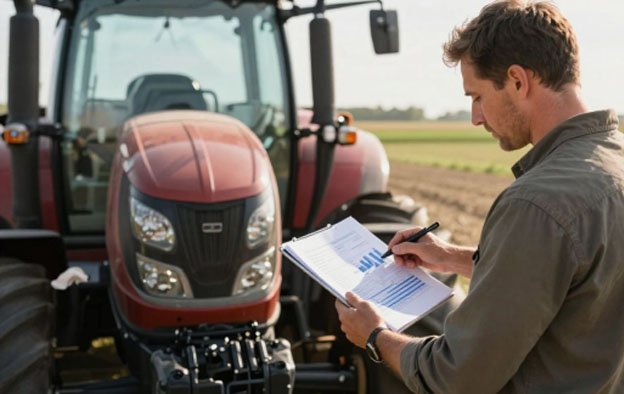
Modern agricultural success relies heavily on your ability to map equipment needs against actual farm utility. Choosing the right machinery involves evaluating your current constraints while considering how your operation plans to grow over the next decade. Strategic farming machines selection defines both your profitability and your ability to scale effectively.
Evaluating capacity gaps in your current equipment fleet
Every aging piece of hardware eventually hits a ceiling where it simply cannot keep up with seasonal demands. You need to identify specific bottlenecks in your daily operations to ensure that any new purchase actually adds value to your workflow.
- Identifying hydraulic output limitations in older tractors
- Pinpointing inconsistent harvest speeds during peak windows
- Recognizing recurring downtime costs for retired models
- Assessing tractor horsepower mismatch for current tillage tools
These indicators often signal it is time for an upgrade before your next planting or harvest season begins.
Projecting future crop production and acreage expansion
Increasing your land footprint requires a clear understanding of the capacity needed for larger scale production cycles. You should weigh the cost of ownership against the potential throughput gains associated with larger capacity machinery.
| Year | Projected Acreage | Equipment Need | Efficiency Goal |
| 2027 | 500 | Standard Combine | 15% increase |
| 2028 | 650 | High-Capacity Grain Cart | 20% increase |
| 2029 | 800 | Advanced Planter | 25% increase |
Mapping these projections helps ensure your investment remains useful well into the future rather than becoming a bottleneck as your farm expands.
Analyzing how new machinery aligns with your specific farming cycle
Not every advanced tool makes sense for your specific soil types or crop rotation patterns. It is vital to look at the seasonal windows where you need the most output and ensure new hardware can withstand intense usage during those short periods. Aligning functionality with your cycle reduces waste and avoids buying over-engineered systems for jobs that require simple tools.
Financial planning and investment strategies
Investing in large-scale hardware requires a disciplined approach to cash flow management and long-term liability. You need to balance the attraction of modern equipment with the harsh realities of interest rates and overhead. Proper planning prevents the common pitfall of over-leveraging your operation for machinery that requires excessive cash outlays.
Budgeting for capital expenditure versus operating leases
Choosing between buying outright or signing a lease depends largely on your current tax situation and cash availability. Outright ownership provides equity, while leasing allows for a predictable monthly expense and easier access to tech upgrades. Each option carries distinct risks that vary based on the volatility of your annual farm revenue.
Understanding depreciation schedules and tax incentives
Tax codes often provide unique benefits for farmers who upgrade their equipment, which can significantly reduce the net cost of a new purchase. Consult with your accountant to understand how bonus depreciation or section 179 deductions apply to your potential investment. Maximizing these incentives effectively lowers the barrier to entry for more capable technology.
Factoring in long-term interest rates and loan repayment plans
Long-term loans are a significant commitment that should be modeled against a range of production scenarios to avoid financial strain. Even if borrowing seems affordable now, consider how a year of poor yields might impact your ability to service debt. Creating a repayment plan that assumes conservative revenue estimates is a safer way to manage your financial exposure.
Technology integration and data compatibility
Digital tools are now central to modern agricultural efficiency, provided they actually communicate with each other. For example, systems like See & Spray™ bring precision to weed control by leveraging real-time imaging to target specific areas. Integrating such technology is only effective when your current digital infrastructure supports the data streams they generate.
Assessing interoperability with existing digital infrastructure
Connecting disparate systems across your fleet can be one of the most frustrating aspects of adopting new tech. Ensure that the software and proprietary communication protocols used by new equipment will function with your monitors, sensors, and servers. Without a clear path to integration, you risk doubling your data entry workload rather than automating it.
Determining the real-world value of precision agriculture features
It is easy to get caught up in the marketing of advanced automation, but you must measure the true return on investment for each feature. Ask if a specific sensor package will actually save on inputs like seed, fertilizer, or fuel over the life of the machine. The value should be measured in verifiable savings per acre, not in the complexity of the dashboard user interface.
Analyzing recurring software subscription costs and data management needs
Subscription models have become common for many precision features, and these costs can accumulate quickly over a full fleet. You need to factor in these recurring expenses alongside regular hardware maintenance. Managing this data also requires time and technical skill, which must be part of your overall cost equation.
Evaluating service, maintenance, and support infrastructure
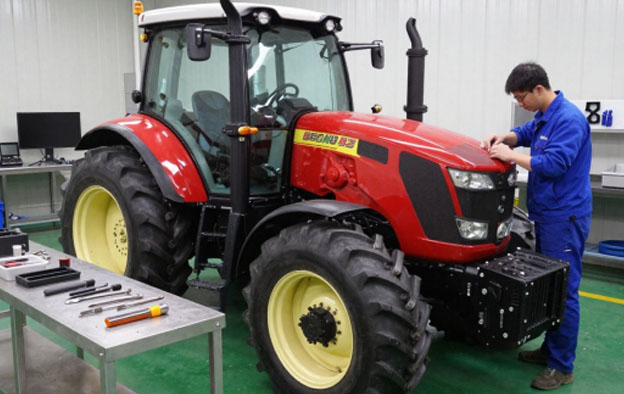
An advanced machine is essentially a liability if you cannot source parts or professional help when it breaks down during the season. Proximity to support networks reduces the duration of technical failures that can pause your entire production window. This focus on local support systems remains a cornerstone of reliable agriculture.
Verifying proximity to authorized dealerships and repair centers
Distance to a qualified dealership is perhaps the most critical logistical factor for any equipment purchase. If your local technician is three hours away, you will feel the impact of every mechanical failure tenfold. Choose brands that have established repair infrastructure within a reasonable travel distance from your main operation.
Researching the availability and lead times for spare parts
Modern manufacturers have different supply chain efficiencies that dictate how quickly you can source critical components. Before committing to a specific machine, ask for average lead times on common wear items like hydraulic hoses or electronic sensors. Dependence on international shipments for basic repairs is a major vulnerability during intense production periods.
Considering the ease of performing routine, in-house maintenance
Some machines are designed with the operator in mind, featuring accessible check-points for oil levels, filter changes, and greasing locations. When you can handle basic maintenance chores yourself, you keep your equipment in top condition without waiting for a dealer technician. A well-designed machine layout significantly reduces your total cost of ownership.
Labor requirements and operator safety
Automation aims to increase productivity, but it also necessitates a higher degree of technical literacy from your employees. The transition to more complex systems often leaves a human-centered skill gap that must be bridged through training. You must also ensure that the increased speed or power of new machinery, whether purchased new or sourced through agricultural machinery auctions, does not come at the expense of staff well-being.
Addressing the skill shift needed to manage advanced automation
When a standard tractor is replaced by one featuring advanced automation, the operator role changes from simple driving to system management. This transition requires employees who feel comfortable troubleshooting digital interfaces as well as mechanical systems. You may need to adjust your hiring or compensation structures to attract workers who possess this mixed technical skill set.
Evaluating current staff training and development needs
Existing staff members often have deep knowledge of your farm’s specific terrain and logistics, but they may lack exposure to new digital platforms. Investing in professional development for your current team is often more effective than attempting to replace or hire new personnel. Providing hands-on access to equipment controls before the season starts can bridge the comfort gap.
Reviewing ergonomic features to reduce operator fatigue and injury
Safety is never just about avoiding accidents; it is about keeping your operators fresh during long, grueling hours in the field. Look for cabs with advanced seat suspension, noise reduction, and intuitive control placement. Reducing physical strain leads to higher operator performance and fewer safety-related issues over the long harvest season.
Environmental impact and regulatory compliance
Regulatory requirements regarding air and soil quality continue to tighten across various agricultural regions. New equipment must satisfy existing mandates while providing an ecological benefit through enhanced operational precision. Aligning your hardware choices with these broader standards keeps your farm competitive and sustainable.
Aligning new machinery with regional emissions standards
Government emissions mandates are increasingly strict, and newer models must meet specific engine tiers to be legal in your jurisdiction. Ensure that any purchase you make is fully compliant today and will remain so for the expected life of the machine. Ignoring these regulatory realities can lead to hefty fines or, worse, being unable to resell the equipment later.
Weighing the long-term benefits of fuel-efficient technology
Fuel costs remain one of the most volatile variables in any farming budget, so efficiency gains are directly linked to your bottom line. Look for engines and transmission systems configured to optimize torque and power output relative to specific field tasks. Every marginal improvement in fuel consumption adds up significantly over several thousand hours of use.
Assessing soil impact and compaction reduction capabilities
Heavy equipment can cause significant compaction, which negatively impacts yield potential for years to come. Look for tire configurations, track systems, and weight distribution designs that distribute force more evenly across the soil. Preserving the health of your land is a primary responsibility that should guide your machinery choices.
Conclusion
Investing in new equipment is a balance between meeting immediate, high-pressure output needs and maintaining long-term financial, environmental, and operational health. By focusing on your farm’s unique constraints—ranging from technical interoperability to local repair infrastructure—you set your operation up for sustainable success. Use this systematic approach to evaluate every potential machine to ensure that each purchase delivers value rather than just overhead costs.