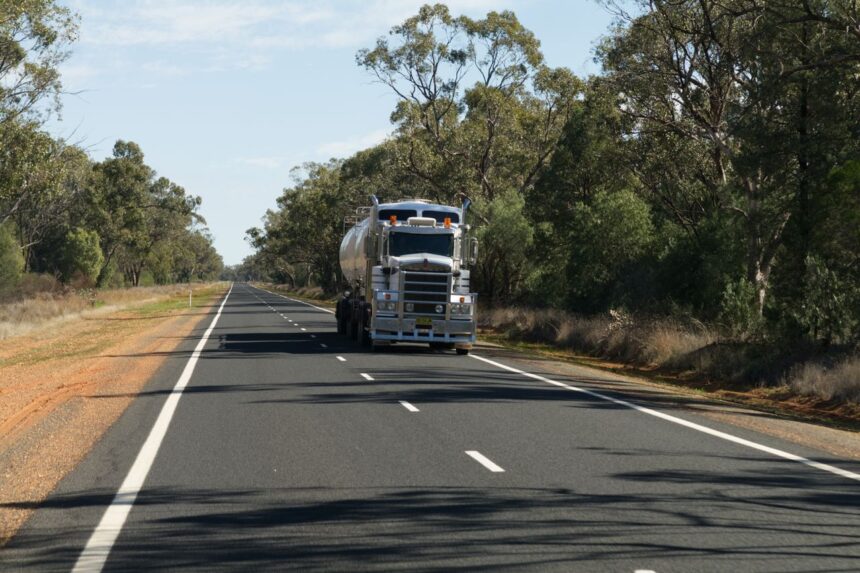
A truck driver may make the immediate mistake that leads to a collision, but the liability inquiry does not always stop behind the wheel. A trucking company can become part of the analysis when the driver was working within the scope of employment or when the company’s own conduct contributed to the conditions that produced the crash.
For truck accident claims in Burbank, CA, identifying that distinction can change the investigation. Instead of examining only speed, lane movement, braking, or other driving decisions, the case may require employment records, driver-qualification information, maintenance documents, company policies, and other evidence showing how the carrier operated. Federal motor-carrier rules may also apply depending on the vehicle and commercial operation involved.
The Driver’s Negligence Can Create Responsibility for an Employer
California recognizes vicarious liability under the doctrine commonly known as respondeat superior. The Judicial Council’s civil jury instructions explain that an employer can be responsible for an employee’s wrongful conduct when that conduct occurs within the scope of employment.
In a trucking case, that can make the driver’s work status relevant. An investigation may ask whether the driver was transporting freight for the carrier, following a company assignment, or otherwise performing duties connected with the business when the collision happened.
This type of liability does not necessarily mean the company itself made the same driving error. The legal question involves the relationship between the driver’s conduct and the work being performed.
Determining that relationship can require more than looking at the company name displayed on the vehicle. Employment, agency, leasing, or other commercial arrangements may need closer examination.
The Company’s Own Decisions Can Create a Separate Liability Question
Vicarious responsibility is different from an allegation that the trucking company itself acted negligently.
California’s CACI instruction on negligent hiring, supervision, or retention addresses circumstances in which an employer knew or reasonably could have known that an employee presented a particular risk and the employer’s negligence contributed to the resulting harm. The Judicial Council included an updated version of this instruction in its 2026 CACI edition.
A trucking investigation might therefore examine the driver’s qualifications and the information available to the company before or during the driver’s employment.
The existence of a prior problem alone does not automatically establish company fault. The evidence must connect the company’s conduct, the particular risk involved, and the injuries caused by the crash.
This is why a claim against a carrier requires more than asserting that it employed the driver.
Driver Qualification Records May Become Part of the Investigation
Federal regulations can impose specific qualification requirements when a driver and carrier fall within the applicable commercial motor vehicle rules.
Under 49 CFR § 391.11, a covered motor carrier may not require or permit a person to operate a commercial motor vehicle unless the driver meets applicable qualifications. Those requirements address matters including licensing, ability to safely operate the type of vehicle, physical qualification, and required testing or equivalent credentials.
When driver fitness becomes an issue after a crash, records related to those requirements can help answer whether the carrier placed a properly qualified driver behind the wheel.
The inquiry remains fact-specific. A regulatory requirement matters most when the evidence shows a meaningful connection between the disputed qualification issue and the collision itself.
A Carrier May Have Duties Beyond Hiring the Driver
Federal motor-carrier regulations also recognize an operational responsibility on the carrier’s side.
49 CFR § 390.11 states that when the federal regulations impose a duty or prohibition on a driver, the motor carrier has a duty to require the driver to observe that requirement.
That provision can make company practices relevant when a crash raises questions about compliance with rules governing covered drivers.
Evidence may include company instructions, internal policies, communications with the driver, and records associated with the trip. Those materials can help determine what expectations existed and how the carrier managed the operation.
A rule violation by itself does not answer every causation question in a personal injury case. The investigation still needs to determine whether the conduct at issue contributed to the collision and resulting harm.
Vehicle Maintenance Can Create Another Company-Level Issue
A crash caused partly by equipment condition may lead the investigation away from driver conduct and toward the entity responsible for the vehicle.
Under 49 CFR § 396.3, covered motor carriers and intermodal equipment providers must systematically inspect, repair, and maintain vehicles under their control. Parts and accessories that affect safe operation must remain in safe and proper operating condition. The regulation specifically references components such as steering systems, wheels, rims, suspension assemblies, and other safety-related equipment.
When brakes, tires, steering, suspension, or another component becomes relevant to a crash, maintenance records can help establish the vehicle’s history before the collision.
A mechanical problem discovered afterward is not automatically proof that the carrier caused the crash. The evidence needs to establish the condition, the carrier’s responsibility for it, and its connection to the collision.
Shared Fault Expands the Records That May Matter
When only driver conduct is disputed, scene evidence may dominate the early investigation. Once possible company fault enters the picture, the relevant record set can become broader.
Depending on the facts and applicable regulations, investigators may examine:
- Driver qualification and licensing information
- Employment or agency records
- Company safety policies and instructions
- Vehicle inspection and maintenance documents
- Dispatch or trip-related records
- Communications connected with the driver’s assignment
- Crash reports, photographs, and witness accounts
These records answer different questions. Scene photographs may explain how the impact occurred, while company records can reveal who controlled particular decisions before the truck reached the crash location.
The goal is not to collect every business document available. It is to identify records that connect a particular act or omission to the crash.
Fault Can Be Allocated Among More Than One Responsible Party
California negligence law allows responsibility to be evaluated among multiple parties whose conduct contributed to the same harm.
CACI guidance on apportionment instructs juries to assign percentages of responsibility when the fault of more than one person or entity was a substantial factor in causing an injury. The allocation can include defendants and, in appropriate circumstances, other responsible parties.
That means a truck crash does not always require choosing between “the driver caused it” and “the company caused it.”
Evidence may support a finding that the driver’s decisions contributed to the collision while separate conduct by a carrier also contributed to the circumstances that produced the harm. Other entities can sometimes enter the analysis as well, depending on the facts.
The exact allocation is based on evidence rather than a predetermined formula.
Company Liability Changes the Scope of the Case, Not the Need for Proof
A trucking company sharing responsibility can broaden a truck accident claim, but it does not eliminate the need to prove negligence and causation.
The driver may have made an unsafe maneuver while performing company work. The carrier may face a separate inquiry concerning driver qualifications, supervision, regulatory compliance, or maintenance. In other cases, the records may show that the company’s conduct had no meaningful connection to the crash.
The key is separating each potential source of responsibility and testing it against the evidence.
When a commercial carrier becomes part of the liability analysis, the case moves beyond what happened during the few seconds before impact. It can also involve decisions made before the truck entered the road—who was permitted to drive it, how the operation was managed, whether the vehicle was maintained, and whether those decisions contributed to the injuries that followed.