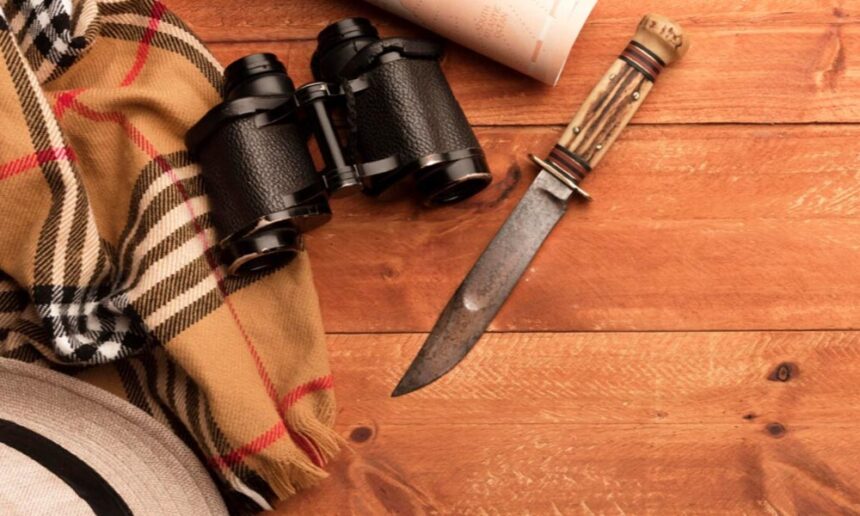
You can spend an impressive amount of money on a hunting knife.
Whether you actually need to is another question.
The right knife depends far more on what you expect it to do than the price tag. A knife mainly used for field dressing has different demands from one expected to handle a much wider range of camp jobs.
Steel matters. So do blade shape, size, grip, and maintenance.
Before getting distracted by whatever looks nicest in the display case, start with these five things below:
- Choose For The Hunt, Not The Display Case
It is all too easy to get distracted by a knife based on looks alone.
But before buying it, picture yourself actually using it during a hunt. Think about the animals you pursue, the jobs the knife needs to handle, and how long you may be working with it.
Those practical details matter much more once the knife is dirty.
- Bigger Is Not Always Better
A large blade may look deceptively capable, but hunting knives benefit from control as much as cutting power.
For detailed work around joints, hide, and meat, a smaller blade can be much easier to manage. Think about the animals you normally hunt, whether short or long-range, and the jobs you expect to perform.
You want enough blade to work efficiently without making precise cuts unnecessarily difficult. There is no prize for carrying the biggest knife into the field, particularly if a smaller one does the job better.
- Corrosion Resistance
Hunting knives get wet, dirty, bloody, and occasionally stay that way longer than you intended.
That makes corrosion resistance worth thinking about when comparing steels. MagnaCut is MKC’s primary steel, partly because it combines strong corrosion resistance with good toughness and edge retention.
That does not make it the only option, but it does show why steel choice is a major factor.
Think about the conditions you normally hunt in and how much maintenance you realistically want your knife to require.
- Check The Grip Before You Buy
Do not judge a hunting knife entirely by its blade.
Pick it up and see what the rest of the knife is doing. Does the handle fill your hand properly? Can you change grip comfortably? Does it feel secure without squeezing unnecessarily hard?
Those details become more important during longer processing jobs.
A knife can have excellent steel and exactly the shape you wanted, but if you spend the entire time fighting the handle, you probably chose the wrong knife.
- Think About Cleaning It Afterward
A hunting knife is going to end up covered in things that need to come off again.
That makes care a very important part of the decision-making process.
Fixed blades are generally straightforward to wash, while folding knives have pivots and spaces where blood and tissue can collect.
If your knife will be regularly used for processing game, look at how easily you can clean the entire thing. You will appreciate simple construction much more after the first messy job than you will in the store.
Final Thoughts
The main takeaway is simple: you need a knife you can rely on when there is proper work to do.
Take the time to understand what you are buying and why it suits the hunting you do. A good knife should make the job in front of you easier, not become another thing you have to work around.
Choose carefully, look after it, and there is every chance the same knife will still be going into your pack many seasons from now.