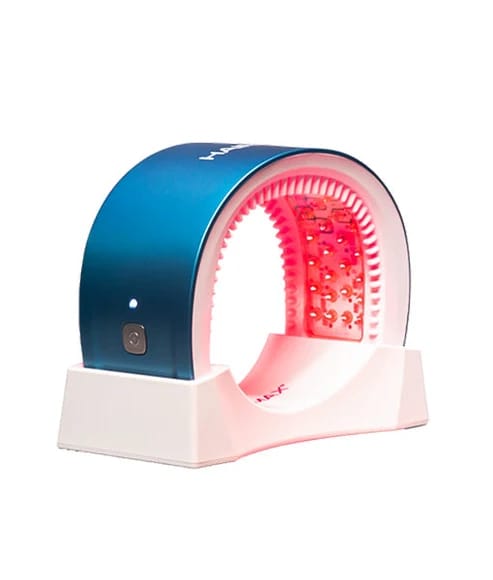
The Hairmax LaserBand uses low-level laser therapy (LLLT), also known as photobiomodulation, to expose functioning hair follicles to red laser light. The treatment is designed for androgenetic alopecia, commonly known as male or female pattern hair loss, where follicles progressively become smaller and produce finer hairs.
Laser therapy does not create new follicles. It aims to stimulate follicles that remain capable of producing hair. Controlled clinical trials have shown improvements in hair density in some people with pattern hair loss, although the biological response and the degree of change vary between individuals.
The technology is best understood by looking at how laser light reaches the scalp, what it may do at the cellular level and how researchers measure changes in hair growth.
HairMax LaserBand Delivers Controlled Laser Energy to the Scalp
For people comparing options for the best HairMax LaserBand, the LaserBand 82 uses 82 medical-grade laser diodes to deliver low-level laser light across areas affected by pattern thinning.
Getting the light to the scalp is a practical part of the device design. Existing hair can obstruct some light before it reaches the treatment area. Hair-parting teeth separate the hair as the band is positioned across the scalp, allowing more direct exposure to the laser light.
The specified treatment protocol is 90 seconds, three times per week. Its hair-parting design helps expose the scalp so laser light can reach the treatment area more directly.
Low-level laser therapy differs from high-powered medical lasers that cut tissue or intentionally generate substantial heat. Photobiomodulation uses lower-energy light to produce biological responses without deliberately damaging scalp tissue.
This delivery method allows controlled laser exposure to be repeated at home without lengthy treatment sessions.
Low-Level Laser Therapy Supports Activity Within the Hair Follicle
Low-level laser therapy is thought to influence cellular processes associated with follicular activity and the hair-growth cycle.
A healthy follicle repeatedly moves through several stages. Anagen is the active growth phase, followed by transitional and resting phases before shedding. With androgenetic alopecia, genetically susceptible follicles gradually miniaturise over successive cycles. The resulting hairs become shorter and finer, which gradually reduces visible density.
One proposed mechanism for photobiomodulation involves the absorption of red light by light-sensitive components associated with mitochondria. Mitochondria contribute to cellular energy production, and light absorption may influence energy availability and cellular signalling within follicular tissue.
Researchers are still investigating the complete pathway. It is therefore more accurate to describe these cellular effects as proposed mechanisms rather than a single established explanation for laser-induced hair growth.
Clinical trials provide a more direct way to determine whether these biological effects translate into measurable changes in hair.
Clinical Evidence Supports Laser Treatment for Pattern Hair Loss
Clinical evidence for low-level laser therapy is strongest for androgenetic alopecia rather than hair loss from all causes.
A 2014 multicentre, randomised, sham-controlled study published in the American Journal of Clinical Dermatology evaluated HairMax laser devices in men and women with pattern hair loss. After 26 weeks, participants receiving laser treatment showed a statistically significant increase in terminal hair density compared with participants using sham devices.
A 2017 systematic review published in Lasers in Surgery and Medicine examined clinical evidence for low-level laser therapy in male and female pattern hair loss. Most included studies reported improvements in measures such as hair density, hair thickness or patient-reported outcomes. The authors also identified limitations in the evidence and called for further research.
A 2021 systematic review and meta-analysis of randomised controlled trials similarly concluded that low-level laser therapy could be effective for pattern hair loss, while noting the need for further long-term research and comparisons between treatment protocols.
The US Food and Drug Administration has cleared HairMax LaserBand devices for over-the-counter use for specified patterns of androgenetic alopecia. FDA clearance does not guarantee a particular outcome for an individual user.
Reported results for the HairMax LaserBand show an average increase of 20.5 hairs per square centimetre after 26 weeks, although individual responses can differ.
Consistent Treatment Allows Time for the Hair Cycle to Respond
Laser treatment needs to be evaluated over months because changes occurring within a follicle take time to become visible above the scalp.
The LaserBand 82 protocol specifies 90-second sessions three times per week. Following this schedule provides repeated exposure in accordance with the intended treatment parameters. Longer or more frequent sessions should not be assumed to produce faster hair growth.
The biological hair cycle explains why patience is necessary. Even when follicular activity changes, a growing hair must emerge from the scalp and gain sufficient length before changes in coverage can become visible.
Clinical research commonly measures hair counts over extended periods for this reason. The 26-week assessment period associated with reported LaserBand results provides a more meaningful timeframe than judging progress after a few sessions.
A regular schedule also makes treatment easier to evaluate. Frequent changes in how a device is used can make it harder to determine whether observed changes reflect the treatment protocol or other factors.
Consistent Monitoring Provides a Clearer Measure of Treatment Response
Treatment response is more useful when assessed consistently rather than judged through day-to-day changes in the mirror.
Hair density can look different depending on lighting, styling, hair length, camera angle and whether the hair is wet or dry. Standardised photographs provide a practical way to reduce these variables.
Photos can be taken at regular intervals using the same:
- lighting conditions
- camera position and angle
- hairstyle and parting
- approximate hair length
- distance from the scalp.
Changes should then be considered over months rather than days. This reflects the timescale used in clinical studies and allows enough time for new growth to become visible.
Hair count is another measure used in clinical research. Researchers typically assess a defined scalp area so changes in terminal hair density can be compared over time. At home, photographs are more practical, but the same principle applies: consistent measurement provides more useful information than relying on memory.
This approach also helps prevent normal differences in styling or lighting from being mistaken for treatment-related changes.
HairMax LaserBand Is Designed for Specific Patterns of Hair Loss
The Hairmax LaserBand is designed for specific patterns of androgenetic alopecia, in which follicles remain present within thinning areas and may still respond to stimulation.
This distinction matters because laser therapy acts on existing follicular activity. It cannot generate entirely new follicles in areas where follicles are no longer functioning.
Androgenetic alopecia typically develops gradually. Men may experience recession around the temples, thinning at the crown or both. Women more commonly develop reduced density across the central scalp.
Sudden shedding, sharply defined bald patches, or rapid unexplained changes do not necessarily follow this pattern and may require investigation for another cause. Establishing the cause of hair loss helps determine whether a device intended for pattern thinning is an appropriate option.
A hair and scalp assessment can therefore provide useful context before treatment, particularly when the pattern or progression of thinning is unclear.
Conclusion
The HairMax LaserBand uses low-level laser therapy to stimulate functioning follicles in people with pattern hair loss. Clinical evidence indicates that this approach can improve hair density for some people with androgenetic alopecia, although individual results vary.
Following the recommended treatment schedule and assessing changes over several months provides a more reliable way to evaluate whether laser therapy is producing a meaningful response.