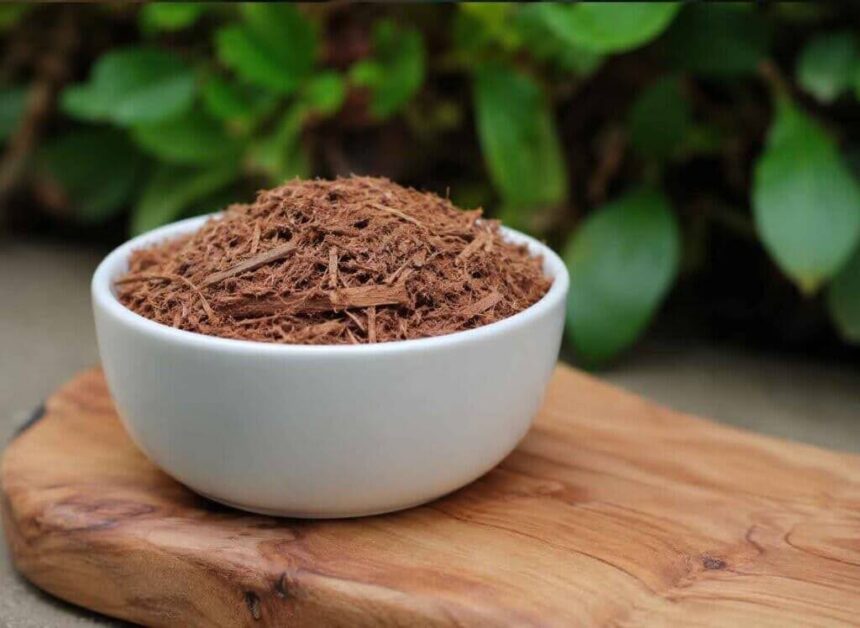
Natural plant materials can take many forms before they reach their final use. Roots and bark may remain as large pieces, be reduced into chips, or be ground into a loose powder. The change is mostly physical, but it can significantly alter the material’s texture, appearance, and handling characteristics.
Mimosa tenuiflora, also known by the older name Mimosa hostilis, is one botanical species commonly discussed in relation to dried root bark. Its root material has a long history in ethnobotanical literature and continues to receive attention in botanical research.
Turning dried root bark into powder involves several general stages. These include preparing the plant material, reducing its size, separating particles, and protecting the finished material from environmental factors.
Understanding these stages provides useful context for anyone researching botanical powders and the terminology used to describe them.
Starting With the Right Plant Material
The quality and characteristics of a powder begin with the plant material from which it is produced.
Mimosa tenuiflora is a woody shrub or small tree associated with dry regions of the Americas, particularly northeastern Brazil. Its roots contain several layers of tissue, including woody material and surrounding bark.
Root bark should not be confused with the entire root. The bark represents the outer tissues, while the central portion contains wood with a different structure.
This distinction matters because different parts of a plant can have different physical and chemical characteristics.
Before any mechanical processing occurs, botanical identification is also important. Common names can vary between regions, while scientific names provide a more consistent way to identify a species.
Preparing Dried Bark for Size Reduction
Fresh bark is naturally flexible because it contains water. That moisture makes fresh plant tissue difficult to turn into a stable, free-flowing powder.
Drying changes the material considerably. As moisture is removed, the bark becomes more rigid and brittle.
The objective at this stage is generally to obtain plant material that is sufficiently dry for mechanical size reduction. Uneven moisture can result in noticeable differences in texture between pieces.
Environmental conditions during drying can also influence the final appearance of the bark. Temperature, airflow, humidity, and exposure to light may all contribute to changes in natural plant material.
For that reason, dried botanical materials are normally handled in controlled conditions rather than exposed unnecessarily to moisture.
Breaking Large Pieces Into Smaller Sections
Large pieces of dried root bark are not normally the final powdered form.
The first physical change involves reducing oversized pieces into smaller sections. These fragments can range from relatively large strips to small chips.
This stage makes the material more manageable and prepares it for further mechanical reduction.
Smaller pieces also provide a more consistent starting material for grinding. However, the exact appearance of the fragments can differ because natural bark does not have a perfectly uniform thickness.
Fibers, knots, harder sections, and softer areas may all occur within the same batch.
The Grinding Stage
Grinding is the main step responsible for transforming bark fragments into particulate material.
Mechanical force breaks the dried material apart into progressively smaller pieces. The resulting particles can range from coarse fragments to very fine material.
The process does not fundamentally change the plant’s botanical identity. Instead, it changes the dimensions of the material.
This distinction is important when discussing powdered MHRB. The term generally refers to root bark associated with Mimosa hostilis, with the material presented in a powdered physical form.
Different grinding equipment can produce different results. Some systems produce a relatively broad range of particle sizes, while others are designed to create a more consistent powder.
Particle Distribution and Uniformity
Not every particle produced during grinding will have exactly the same size.
A batch can contain very fine particles alongside larger fragments. The proportion of each size depends on factors such as the original bark, its dryness, the mechanical equipment, and the processing approach.
Particle distribution is therefore an important characteristic of powdered plant material.
A more uniform powder has particles within a relatively narrow size range. A less uniform material may contain noticeable differences in texture.
This explains why two botanical powders can both be described as “fine” while still looking or feeling somewhat different.
Separating Fine and Coarse Material
Once plant material has been ground, particle separation can help create a more consistent final texture.
Screens or sieves can separate particles according to their approximate size. Larger fragments remain separate from finer particles, allowing the material to be classified into different grades.
This process does not add a new ingredient to the plant material. It simply sorts existing particles.
The resulting categories may include coarse ground material, medium material, or finer powder. Terminology varies depending on the producer and intended application.
Why Surface Area Changes After Grinding
Grinding has another important physical effect: it increases the exposed surface area of the plant material.
Consider a single piece of bark compared with many tiny pieces having the same overall mass. The smaller pieces expose considerably more surface to the surrounding environment.
This affects how powdered material interacts with air and humidity.
Greater surface area can make fine botanical powders more sensitive to environmental moisture. It can also influence how easily particles become dispersed or settle.
These characteristics are common across many powdered plant materials and are not unique to Mimosa tenuiflora.
Changes in Appearance After Milling
Whole bark and powdered bark can look remarkably different even when they originate from the same material.
Larger pieces may display visible fibers, layers, rough surfaces, and variations in color. Grinding breaks these structures into small particles and distributes them throughout the material.
The final powder can therefore appear more consistent in color.
Mimosa tenuiflora root material may naturally range from lighter brown shades to deeper reddish or dark brown tones. Factors such as plant maturity, geographical origin, drying, and storage can contribute to these differences.
Color by itself is not enough to establish botanical identity or chemical composition.
Moisture Is an Important Factor
Humidity can have a noticeable effect on powdered plant materials.
Fine particles have a relatively large exposed surface area, allowing them to interact with moisture in the surrounding air. If enough moisture is absorbed, the powder may lose its loose texture and develop small clumps.
For this reason, dry storage conditions are particularly important for powdered botanicals.
Excessive heat and prolonged exposure to direct sunlight may also affect some natural materials over time.
Keeping the material protected from environmental changes helps preserve its physical characteristics for longer periods.
Packaging and Long-Term Storage
The physical form of a botanical material can influence how it needs to be stored.
Large bark pieces generally have less exposed surface area than finely ground material. Powder, in contrast, can interact more readily with air because of its numerous small particles.
Clean and dry storage conditions can help reduce exposure to unwanted moisture and contamination.
Containers should also be clearly labeled. This is especially useful when several plant powders or dried botanicals are being handled in the same environment.
Storage conditions cannot eliminate natural changes completely, but they can reduce avoidable deterioration.
Powder Does Not Mean Extract
One common source of confusion is the difference between a powder and an extract.
A powder is generally created by physically reducing dried plant material into smaller particles. The original plant matrix remains present.
An extract is produced through a separate process designed to remove or concentrate particular constituents from the original material.
Therefore, the words “root bark powder” and “root bark extract” should not be treated as interchangeable descriptions.
This distinction is useful when evaluating botanical information online or comparing different types of plant preparations.
Understanding Commercial Terminology
Online sources sometimes use botanical terms alongside commercial terminology.
For example, mimosahostilis.shop is a domain name that uses the historical scientific name associated with Mimosa tenuiflora. A website using this terminology should not be confused with a scientific authority simply because its domain contains a botanical name.
When researching a plant online, it is better to examine the actual information provided rather than relying only on a domain name or product description.
Scientific publications, botanical databases, and reputable reference sources can provide additional context about the species and its taxonomy.
Factors That Influence the Final Powder
Several variables can affect how dried root bark looks after grinding.
Plant Age
Older plants may produce bark with different thickness and texture compared with younger specimens.
Growing Conditions
Soil, rainfall, temperature, and regional climate can influence natural plant characteristics.
Drying
Differences in moisture content can affect how easily bark breaks apart.
Mechanical Processing
Different equipment can produce different particle sizes and textures.
Screening
Separating particles can make the final material more uniform.
Storage
Humidity, heat, and light can influence the condition of dried botanical material.
Together, these factors explain why naturally sourced plant powders are not always identical.
Why Processing Information Matters
Knowing how a botanical material has been processed can make descriptions easier to understand.
For example, “root bark” indicates a plant part, while “powder” describes its physical form. These terms provide different pieces of information.
Similarly, a reference to Mimosa tenuiflora identifies the species, while Mimosa hostilis may appear as an older synonym.
Using all three details together, such as species, plant part, and physical form, creates a much clearer description.
Responsible Botanical Research
Mimosa tenuiflora has attracted attention because of its traditional history and naturally occurring constituents. However, information about the plant can vary widely between online sources.
Traditional uses, scientific studies, and commercial descriptions should be evaluated separately.
It is also important to consider local laws. Regulations concerning particular plants, preparations, or naturally occurring compounds can vary between jurisdictions.
A botanical material being naturally derived does not automatically make every preparation safe or legally unrestricted.
Frequently Asked Questions
What is powdered MHRB?
Powdered MHRB generally refers to Mimosa hostilis root bark that has been mechanically reduced into small particles.
Why is root bark dried before grinding?
Dry bark is more rigid and brittle than fresh bark, making physical size reduction easier.
Does grinding change the plant itself?
Grinding mainly changes the physical form and particle size of the existing plant material.
Why can different powders have different textures?
Particle size, grinding equipment, screening, and the original bark can all affect texture.
What is the difference between bark powder and an extract?
Powder is physically ground plant material. An extract is produced by separating particular constituents from the plant.
Why can powdered bark become lumpy?
Humidity can cause fine particles to absorb moisture and stick together.
Does the color of the powder always indicate its quality?
No. Natural color varies with plant origin, age, drying, and other factors.
Is Mimosa hostilis a current scientific name?
Mimosa tenuiflora is the botanical name commonly used today, while Mimosa hostilis is a historical synonym.
What affects the final particle size?
The original material, mechanical processing, and subsequent screening can all influence particle size.
Final Thoughts
The transformation of root bark into powder is primarily a physical change. Dried bark is reduced from larger pieces into progressively smaller particles, and the material may then be separated according to particle size.
This process changes the texture, appearance, surface area, and handling properties of the botanical material. It does not, by itself, turn the plant material into an extract or create a different species.
Mimosa tenuiflora provides a useful example of how natural plant material can exist in several physical forms. Understanding the difference between bark, ground material, and powder makes botanical descriptions easier to interpret.
For accurate research, it is also helpful to consider the plant’s scientific identity, the specific part being discussed, the processing method, and the conditions under which the material has been stored. Together, these details provide a more complete picture of how root bark becomes a fine botanical powder.