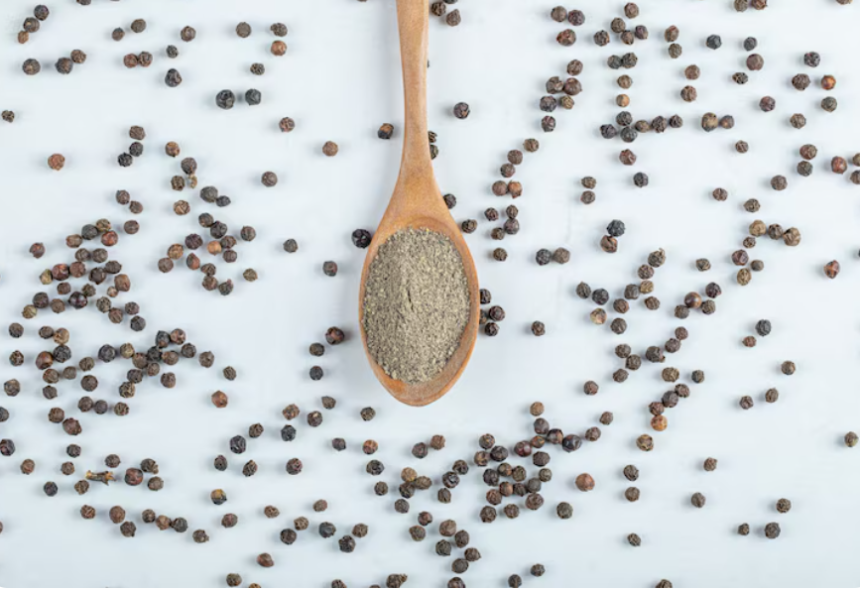
Piperine is the compound that gives black pepper its characteristic pungency. Researchers also study it as a piperine bioenhancer because it may affect how the body processes and absorbs certain compounds.
However, piperine has a basic formulation problem. It has very low aqueous solubility, which can make it difficult to formulate in water-based products. This is why simply adding more piperine is not always the best formulation strategy.
A water-soluble piperine format can offer a different approach. Instead of focusing only on the amount of active ingredient, formulation scientists can work on how piperine disperses, dissolves, remains stable, and becomes available during digestion.
Why Is Piperine Difficult to Formulate?
Piperine is poorly soluble in water. One 2025 study measured its aqueous solubility at about 0.04 mg/mL under the study conditions. Low solubility can create practical problems for product development. For example, a poorly soluble ingredient may:
- Disperse unevenly in water.
- Dissolve slowly.
- Require a suitable delivery system.
- Create challenges in a liquid formulation.
- Limit the amount that becomes available for absorption.
This does not mean that conventional piperine has no value. It means that the delivery format matters.
How Does Piperine Solubility Affect Absorption?
Solubility and absorption are related, but they are not the same thing.
- Solubility describes how readily a compound dissolves in a particular medium.
- Dissolution describes how quickly that compound enters a solution.
- Absorption occurs when the compound crosses biological barriers.
- Bioavailability refers to the rate and extent at which an active compound becomes available in systemic circulation.
These stages should be evaluated separately. A formulation that improves dissolution may make more piperine available for absorption.
But improved dissolution alone does not prove improved human bioavailability. This distinction is important when evaluating ingredient suppliers and formulation claims.
Why Can More Piperine Fail to Solve the Problem?
Increasing the dose does not automatically solve a solubility problem. If a compound remains poorly dispersed or dissolves slowly, a higher amount does not necessarily mean that the entire dose becomes available under the same conditions.
Research has therefore focused on delivery systems that change piperine’s physical behavior. A review of piperine research describes low solubility and limited bioavailability as important formulation challenges and discusses several delivery approaches developed to address them. The better formulation question is: How does the formulation make piperine available?
Which Formulation Technologies Improve Piperine Delivery?
Several technologies have been studied to improve the solubility, dissolution, dispersion, or absorption characteristics of piperine.
1. Cyclodextrin Complexes
Cyclodextrin Complexes
Cyclodextrins can interact with poorly water-soluble compounds and help them disperse more effectively in an aqueous environment. A 2025 study examined piperine complexed with cycloamylose, α-cyclodextrin, and hydroxypropyl-β-cyclodextrin. The complexes showed improved phase solubility and greater stability under the study’s heat, light, and acidic conditions. The researchers also observed greater piperine retention after simulated digestion.
Earlier research also found that piperine inclusion complexes with α- and γ-cyclodextrin had higher solubility than free piperine and physical mixtures. The exact improvement depends on the cyclodextrin, formulation ratio, preparation method, and testing conditions.
2. Self-Emulsifying Systems
Self-emulsifying delivery systems use combinations of oils and surfactants that form fine dispersions when exposed to an aqueous environment. A peer-reviewed piperine study found that its optimized self-emulsifying formulation produced higher dissolution than the comparison capsule. In rats, the formulation also produced higher systemic exposure and improved intestinal absorption.
These results support self-emulsifying systems as one possible approach for poorly water-soluble compounds. However, the reported bioavailability results came from animal testing. They should not be treated as proof of the same effect in humans.
3. Nanoemulsions
A piperine nanoemulsion uses very small droplets to keep the hydrophobic compound dispersed within a formulation.
A 2023 study developed piperine nanoemulsions with measured droplet sizes between about 105 and 250 nm across the tested formulations. The optimized formulation showed improved release and permeation compared with pure piperine dispersion and remained stable in the tested media.
The important point is that a nanoemulsion does not necessarily make the piperine molecule intrinsically water-soluble. It can instead improve how the compound is dispersed or solubilized within the delivery system. That difference matters when assessing technical claims.
What Evidence Shows That Formulation Can Change Solubility?
Different formulation technologies have produced measurable changes under laboratory conditions. For example, a 2025 nanoparticle study reported that its optimized piperine nanoparticle formulation increased measured aqueous solubility from 0.04 mg/mL for piperine to 52.31 ± 0.9 mg/mL. The study also reported a 12.83-fold higher release rate and increased plasma and brain exposure in mice.
That is a substantial result. But it is also specific to that formulation and test system. It should not be used as a universal performance benchmark for every piperine nanoparticle, nanoemulsion, or water-soluble ingredient.
Another study using hot-melt extrusion reported more than 160-fold and 45-fold increases in water solubility for two specific piperine formulations. Together, these studies show why formulation technology can matter. They do not show that one delivery system is always better than another.
How Should You Evaluate a Water-Soluble Piperine Ingredient?
The phrase “water-soluble” should be supported by actual formulation data. Before selecting an ingredient, ask the supplier:
- What does water solubility mean for this specific ingredient?
- Does the material truly dissolve or form a stable dispersion?
- What test method was used?
- What medium and temperature were used?
- How quickly does it dissolve?
- What is the particle or droplet size?
- How broad is the particle size distribution?
- Does the formulation remain stable during storage?
- How much piperine does each batch contain?
- What testing verifies the active content?
- Has the ingredient been tested in the intended finished-product matrix?
These questions help separate a technically characterized ingredient from one supported mainly by a marketing claim.
Which Piperine Format Fits the Product?
The right delivery system depends on the finished product.
| Product format | Key formulation considerations |
| Beverage | Water dispersion, dissolution, physical stability, taste, and dose uniformity |
| Powder | Reconstitution, dispersibility, moisture stability, and dose consistency |
| Capsule | Dose, release characteristics, and formulation compatibility |
| Functional shot | Dispersion, concentration, taste, and storage stability |
| Multi-ingredient product | Compatibility, stability, and interaction between ingredients |
A beverage may need a formulation that performs well in water. A capsule may be better suited to a lipid-based or self-emulsifying approach. A powder needs to redisperse properly when mixed with liquid.
The product format should therefore guide the delivery technology.
What Does Better Piperine Delivery Actually Mean?
Piperine’s value as a potential bioenhancer does not remove its formulation challenges. Its poor aqueous solubility has led researchers to investigate cyclodextrin complexes, self-emulsifying systems, nanoemulsions, nanoparticles, and other delivery technologies.
The evidence shows that formulation can affect important properties such as solubility, dissolution, stability, permeability, and bioavailability. But these outcomes are not interchangeable.
A laboratory dissolution result is not the same as a human absorption result. An animal bioavailability study is not the same as a clinical study. For product developers, that makes formulation data more useful than a simple milligram claim.
The question is how the formulation helps that piperine become available in the environment where it needs to perform.
That is the real shift from using piperine simply as a black pepper extract to designing a delivery system around its physical properties.
Closing Thoughts
Piperine formulation is about more than increasing the amount of active ingredient. Its low water solubility can make delivery difficult, especially in water-based products.
Different technologies can address this challenge in different ways. Cyclodextrin complexes, self-emulsifying systems, nanoemulsions, and nanoparticles have each shown potential in specific studies.
The right choice depends on the finished product and the evidence supporting the formulation. Look beyond the piperine dose. Check solubility, dissolution, stability, dispersion, and supporting analytical data.
A well-designed delivery system can make piperine easier to formulate and may improve its availability. The key is to match the technology to the product and verify the results with appropriate testing.