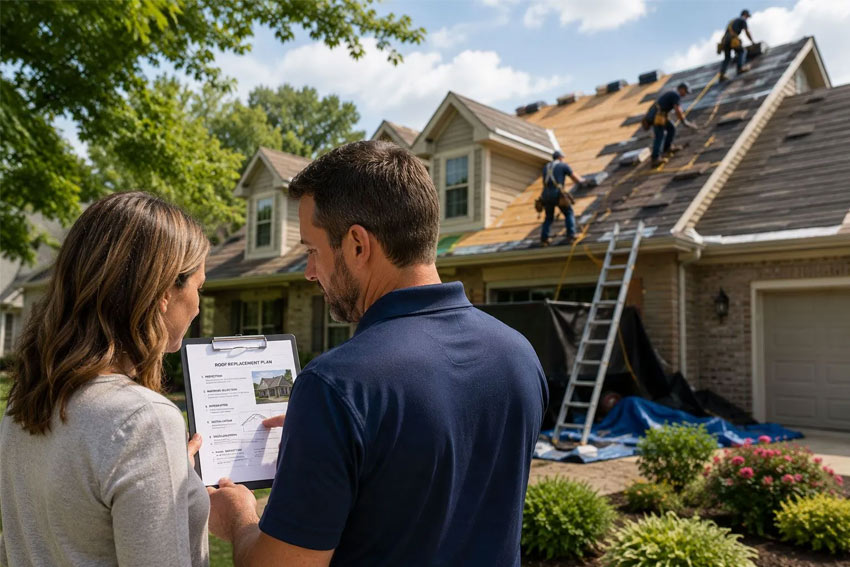
In Longview, roofs face humid summers, sudden cloudbursts, intense UV exposure, and occasional hailstorms. A strong installation involves more than simply laying shingles. The strongest results come from decisions made before the first shingle is cut, including evaluating the roof deck, choosing the appropriate underlayment and drip edge, improving attic ventilation, confirming flashing details, and planning for weather and site protection. These choices determine whether fasteners hold securely, valleys shed water properly, and vents move heat out of the attic. This preparation guide focuses on practical items homeowners can confirm with an installer. Hence, the roof is watertight the day it is removed and stays resilient through East Texas storms.
-
Confirm the Roof Deck Is Sound and Dry
A reliable shingle roof starts with a solid deck. Ask your installer to identify any soft areas during tear-off and replace waterlogged or delaminated OSB or plywood. In the local climate, morning dew and sudden showers can add significant moisture to wood. If the sheathing feels damp or spongy, allow it to dry or replace it so nails hold securely and shingle courses lie flat. Common findings include raised nails from an older roofing layer, split planks in older homes, and rot near the eave. Securing the deck again with ring shank or other corrosion-resistant nails can improve withdrawal strength and help prevent shingles from lifting during strong thunderstorms.
Before the crew arrives, agree on how the deck repairs will be handled and priced, and decide whether blocking or sistering is needed if the rafters are uneven. Local roofers in Longview often publish preparation checklists on sites such as langfordroofingservice.com, which can help you compare deck repair policies, tear-off procedures, and dry-in methods. This is also a good time to ask about replacing damaged fascia, correcting bent drip edges, and confirming gable overhangs are secure before installing new metal edging and starter strips.
-
Select Water Shedding Layers That Match East Texas Storms
Underlayment serves as a backup layer when wind drives rain beneath shingles. Synthetic underlayments resist tearing and dry quickly, which is helpful when crews need to secure the roof before an afternoon shower. Traditional felt can still perform well, but it is more likely to wrinkle when wet. Self-adhering membrane, often called ice and water shield, can provide additional protection in valleys, along eaves, and around penetrations where water movement and capillary action are common. Pair these membranes with a continuous drip edge at both the eaves and rakes so water is directed into the gutters rather than behind the fascia. In valleys, decide whether you prefer an open metal valley or a closed cut shingle valley, and confirm the gauge and finish of any valley metal.
There are several trade-offs to consider. Peel-and-stick membranes cost more, but they seal around fasteners and can reduce leaks in areas with complex roof geometry. Open metal valleys move water and debris efficiently, while closed cut valleys often blend more smoothly with surrounding shingles. Either way, proper syntheticic underlaymetandnd starter strips with factory adhesive at the eaves are essential. A common mistake is skipping ice and water protection at a dead valley or behind a chimney saddle. That shortcut can force water across the sheathing grain and into the attic when a severe storm arrives.
-
Ventilation, Shingle Rating, and Fasteners Must Work Together
Attic airflow affects temperature, moisture levels, and shingle longevity. Continuous soffit intake paired with a ridge vent creates a path for hot, moist air to escape. If insulation blocks the eaves, ask the crew to install baffles so air can travel from the soffit into the attic where a ridge vent isn’t practical, and discuss low-profile vents positioned high on the slope. Proper ventilation helps reduce shingle blistering and keeps the attic cool year-round.
Match the ventilation system with appropriate shingle and fastener choices. In areas exposed to strong storms, a six-nail pattern and nails long enough to penetrate the deck by at least one quarter inch can improve uplift resistance. For hail exposure, impact-rated asphalt shingles, often identified as Class 3 or Class 4, may help reduce granule loss and shingle bruising, although they generally increase the initial cost. Consider a 1970s ranch home with limited intake ventilation that develops curling shingles and premature granule loss. Adding soffit vents and a ridge vent during roof replacement can help stabilize attic temperatures and support proper adhesion of the new shingles.
-
Agree on Flashing and Penetration Details Before Tear-Off
Most roof leaks develop at transitions rather than across open shingle areas. Ask for step flashing on sidewalls rather than chimney flashing, and for new construction to flash properly into mortar joints rather than metal sealed only to the surface. Pipe boots should suit the roof pitch and expected temperature exposure. Silicone or metal boots may last longer than thin neoprene options. When a chimney is wider than 30 inches, a small cricket or saddle behind it can divide and redirect water flow.
Skylights require manufacturer-specific curb kits rather than improvised metal components at the roof-to-wall ttransition, kick-out ledgesdirect water into the gutter instead of behind the siding. Installation sequence also matters. Installersusually install the drip eedge firstspthen placethe yunderlaymentover it. Along the rakes, the metal commonly goes over the underlayment. A frequent problem occurs on two-story homes with complex wall connections when old step flashing is reused. Months later, water stains may appear on the ceiling. Properly installed new flashing can help prevent this type of leak.
Plan for Weather Windows, Site Protection, and Next Day Contingencies
Longview summers often bring dry mornings followed by unpredictable afternoon storms, so crew stadry-ines and dry in plans matter. Confirm that workers will remove only as much roofing as they can resheath, cover, and secure before weather conditions change. Synthetic underlayment secured with cap fasteners can provide temporary protection if a storm develops unexpectedly.
Ask how the property will be protected during the work. Tarps can cover shrubs, protective barriers can shield siding, and magnetic sweeps can collect loose nails at the end of each workday. Move vehicles away from the driveway, protect the air conditioning condenser, mark sprinkler heads, and remove or cover attic valuables beneath areas where decking may be replaced. Choose a dumpster location that avoids overhead power lines and minimizes the risk of damaging concrete. If your neighborhood has a homeowners association or architectural committee, obtain any required approvals before materials are delivered. Keep children and pets indoors or away from the work area because roof removal can scatter debris and fasteners farther than many homeowners expect.
Preparing for a roof replacement in Longview is not about memorizing product names. It is about confirming the building components that determine performance when severe weather a,es: a dry and sec;re roof deck, layered water protection at eave; and valleys, ventilation that moves heat and moisture out;of the attic, new flashing at eve;y transition, and a clear plan for storms and site protection. After installation, check the attic during the first heavy rain, inspect gutters for leftover shingle debris, and confirm that soffit vents remain unobstructed. Keep the contract, photographs of deck repairs, and material labels together for future reference. These simple steps can help your new roof perform well in the climate it will actually face.