Denver’s combination of elevation, dry air, intense sun, hail-prone storms, and rapid temperature swings places unique demands on residential heating and cooling systems. Thinner air affects combustion and heat transfer, while low humidity can influence comfort just as much as indoor temperature. Outdoor equipment also needs placement and protection that reduce weather-related damage without restricting airflow. This article explains the decisions that can help a Front Range home stay comfortable and efficient, from altitude considerations in equipment selection to humidification, duct design, airflow, and outdoor unit protection. These principles can be useful whether you own a 1940s bungalow or a newer home with modern insulation.
-
How Elevation Changes Furnace and Heat Pump Capacity
Thinner air at Denver’s elevation affects both combustion and heat transfer. Gas furnaces must be configured according to manufacturer instructions for the installation altitude. Depending on the equipment, this may involve specific adjustments to ensure safe and proper combustion. These changes should be performed by qualified HVAC professionals using approved procedures and test instruments.
Equipment ratings are generally based on standardized testing conditions, so actual performance can vary with elevation, outdoor temperature, airflow, and installation conditions. Air conditioners and heat pumps may also deliver different capacity at elevation than their published nominal ratings suggest.
A proper load calculation should account for the home’s construction, insulation, windows, orientation, air leakage, solar exposure, and local design temperatures. Equipment selection should then be based on the capacity the system can actually deliver under expected operating conditions. If you are comparing specifications developed under standard conditions, a local source such as UniColorado Heating & Cooling near Denver can help interpret equipment performance in a Front Range setting.
Consider a 1940s brick bungalow with an older cooling system and limited return airflow. On the hottest afternoons, comfort problems may result from a combination of building heat gain, airflow restrictions, and equipment performance rather than equipment size alone. Possible improvements could include additional return capacity, duct corrections, or properly selected replacement equipment.
In another home, a finished attic office beneath a south-facing roof may have very different heating and cooling needs from the rest of the house. A dedicated ductless heat pump may be worth considering when properly sized for the room’s actual load and solar exposure.
-
Managing Dry Indoor Air Without Excessive Humidification
Winter indoor humidity in Denver can become quite low, contributing to dry skin, static electricity, and discomfort. A whole-home humidifier may help, but it should be selected and controlled carefully.
Humidification levels should respond to outdoor temperature and the building’s ability to manage moisture. Raising indoor humidity too aggressively during cold weather can create condensation on windows and other cold surfaces. In some cases, excessive moisture can also accumulate in hidden building materials.
Controls that adjust humidity based on outdoor conditions can help reduce this risk. The appropriate setting depends on window quality, insulation, air leakage, indoor temperature, and outdoor weather.
Ventilation also affects indoor moisture. Energy recovery ventilators and other balanced ventilation systems may help provide fresh air while reducing some of the comfort penalties associated with uncontrolled ventilation.
Filtration should be considered at the same time. A restrictive one-inch filter can increase static pressure in some systems, while a deeper media filter may provide more surface area and lower resistance at a similar filtration level. Filter selection should match the blower and duct system rather than relying only on the MERV rating printed on the package.
-
Protecting Outdoor Units From Hail, Sun, and Snow
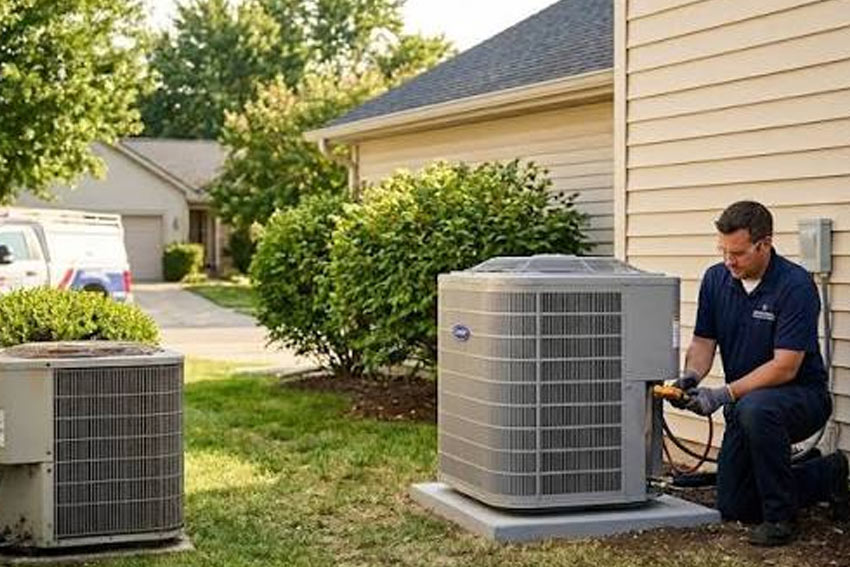
Front Range hail can damage condenser fins and other exposed outdoor components. Factory-approved hail guards or protective panels may help reduce damage while maintaining the airflow required by the manufacturer.
Cottonwood and other airborne debris can also collect on outdoor coils and reduce heat transfer. Keep the coil surface reasonably clean, but avoid aggressive cleaning methods that can bend fins or damage delicate coil surfaces. Professional cleaning may be appropriate when buildup is heavy.
Outdoor equipment should have adequate clearance around the sides and above the discharge area. Avoid solid fencing, tight lattice screens, or decorative enclosures that trap hot discharge air and force the system to recirculate it.
Heat pumps operating through winter also need adequate clearance from snow accumulation. Installation height, drainage, and manufacturer requirements should be considered so the outdoor coil and base remain functional during freezing weather.
Refrigerant line insulation can deteriorate under prolonged ultraviolet exposure. Damaged insulation should be replaced with material intended for HVAC use, and exposed wiring or drainage components should be checked periodically for weather-related deterioration.
-
Airflow and Ductwork That Support High Altitude Performance
At elevation, airflow remains a critical part of system performance. The blower, filter, coil, and duct system must work together within the equipment manufacturer’s approved operating range.
Technicians can measure total external static pressure and compare the result with the blower specifications. Excessive resistance can come from restrictive filters, undersized returns, damaged flex duct, dirty coils, closed dampers, or poorly designed fittings.
Duct connections should be properly sealed using approved materials, and damaged or sharply compressed flex duct should be corrected. Rooms with inadequate return pathways may also develop pressure imbalances when doors are closed, reducing comfort and airflow.
A common problem occurs when a highly restrictive filter is installed in an older system that was not designed for the additional resistance. The result may be reduced airflow, more noise, or equipment performance problems.
Possible improvements can include a larger filter cabinet, additional return area, duct modifications, or another filtration option with lower resistance. Blower changes and equipment settings should be based on measurements and manufacturer specifications rather than assumptions.
4. Deciding Between a Furnace, Heat Pump, or Dual Fuel System
Denver winters can shift quickly between mild sunshine and very cold conditions, so heating system selection should account for both moderate and extreme weather.
A gas furnace paired with central air conditioning can provide strong heating output during cold conditions. A properly selected heat pump can operate efficiently during milder weather and may provide long, steady heating cycles that help maintain consistent indoor temperatures.
A dual fuel system combines a heat pump with a furnace. Controls determine when the system changes from heat pump operation to furnace heat based on outdoor conditions, equipment capabilities, utility costs, and comfort requirements.
Some all-electric systems use resistance heat as supplemental heating. These systems require proper electrical capacity, equipment sizing, and controls so backup heat operates only when needed.
There is no single configuration that fits every Denver home. Building load, electrical service, fuel availability, duct capacity, comfort preferences, installation cost, and operating cost should all be considered before selecting equipment.
Build a Complete High Altitude HVAC Plan
High altitude HVAC performance depends on several decisions working together rather than one equipment upgrade. Begin with an accurate load calculation that considers the home’s insulation, windows, air leakage, solar exposure, orientation, and Denver’s local weather conditions.
Choose equipment based on actual expected performance, then make sure the duct system can provide the airflow the equipment requires. Address restrictive returns, damaged ducts, filtration resistance, and room pressure imbalances before assuming that additional capacity is necessary.
Humidity control should also match the building and outdoor conditions, while outdoor units should be protected from hail, debris, sun exposure, and snow without restricting airflow.
Seasonal maintenance may include checking humidifier components, inspecting outdoor coils for debris, examining condensate drainage, and evaluating overall equipment operation. Refrigerant measurements, electrical testing, combustion adjustments, and internal equipment changes should be performed by qualified HVAC professionals.
When load, airflow, humidity, equipment selection, and weather protection are treated as parts of one system, Denver homes are better prepared for the Front Range’s rapid changes in temperature and demanding seasonal conditions.