Missouri homes face a stubborn mix of heavy spring rains and clay-rich soils. When saturated, that clay holds water against foundation walls; when it dries, it shrinks and can open cracks. The result is familiar to many homeowners: seeping at the cove joint where the wall meets the slab, damp block walls, musty odors, and sometimes standing water. Before hiring a waterproofing contractor, it helps to pinpoint how water enters and choose a repair that targets the source. The right approach may be as simple as redirecting roof runoff or as involved as adding an interior drain and sump pump or excavating and waterproofing a foundation wall from the outside.
-
What Missouri’s Clay Soils and Storms Do to Foundations
Expansive clay swells during hard rains and exerts lateral pressure on basement walls. That pressure forces water into porous block, through hairline cracks, and up at the cove joint. During a fast thunderstorm, roof runoff can overflow gutters and saturate the backfill against the footing; within hours, hydrostatic pressure rises, and water finds the path of least resistance inside. To understand how systems manage that pressure, regional contractor resources such as guardianfoundationrepair.net show typical layouts for interior drain tile, sump basins, and discharge lines that move water away from the foundation.
-
Start at the Surface: Gutters, Downspouts, and Window Wells
Surface drainage is the cheapest leak to fix and the easiest to overlook. Clean gutters keep roof water in the trough rather than pouring behind it. Downspout extensions that carry discharge several feet out keep the footing from becoming a moat. Soil grading should slope away from the house; a compacted clay “lip” can trap water against the wall, so regrading or adding a shallow swale often helps. Window wells need drains set in gravel; without them, water builds up and pours through the window frame during storms. Many wet basements dry up when you manage roof water and shape the soil to shed rain.
Consider a 1960s ranch that shows dampness after every storm, mostly along the back wall. The cove joint darkens, but water never gushes. An inspection finds missing splash blocks and downspouts dumping at the corners. Adding hinged downspout extensions, regrading a low spot that funneled water toward the patio, and covering window wells with ventilated lids may be enough. If a yard stays soggy, a shallow French drain set in washed stone can intercept runoff and carry it to daylight before it reaches the foundation.
-
Interior Drain Tile and Sump Pumps: Relieving Pressure Below the Slab
When water consistently rises at the cove joint or through slab cracks, an interior drain is often the practical choice. Crews sawcut a narrow channel around the basement perimeter, install perforated drain tile in washed stone, and route it to a sump basin. A sump pump with a check valve discharges through a dedicated line that exits the house and terminates well away from the footing. Many contractors add dimple board or a wall flange to guide moisture down to the drain, relieving pressure without relying on the concrete to resist seepage. This approach is installed from inside, so it avoids tearing up landscaping and patios.
Trade-off: interior systems lower pressure and keep floors dry, but the exterior soil and wall can still get wet. That means cold, damp walls can persist if you don’t manage humidity. A common mistake is to “solve” the problem with waterproof paint alone; interior coatings are a Band-Aid if water keeps loading the wall. Consider a split-level in Kansas City that floods during outages. The owner added a battery-backup pump and a high-water alarm so the system keeps working when storms knock out power. They also routed the discharge to a section of pipe with slight fall and a freeze guard so ice won’t backflow into the sump during cold snaps.
-
Exterior Excavation, Membranes, and Footing Drains
When walls are saturated or leaking through mortar joints, stopping water at the source may require exterior work. Crews excavate to the footing, clean the wall, and apply an elastomeric membrane. A protective board or dimple panel shields the membrane and creates a drainage path. A new footing drain rests in washed gravel with a filter fabric to reduce silt, and it ties to daylight or a sump, depending on site elevation. Backfill is compacted in lifts. This method aims to keep the wall dry, but it comes with disruption: shrubs, sidewalks, and decks may need to be removed, and utility locates are essential. In tight lots or along property lines, access can limit how much of the wall you can excavate in one run.
Targeted Fixes and Long-Term Maintenance
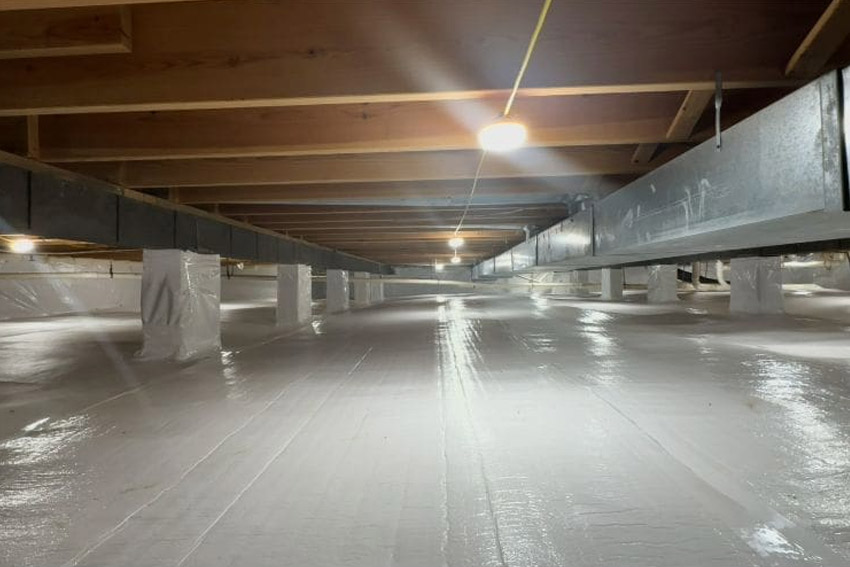
Not every leak needs a full perimeter system. Vertical cracks that seep under pressure often respond to injection with polyurethane (for active leaks) or epoxy (for structural bonding). Stair-step cracks in block should be evaluated to rule out movement before injection or tuckpointing. Window wells that fill during storms may need drains tied to the footing drain and clean gravel instead of compacted soil. In crawl spaces, a sealed vapor barrier, taped at seams and wrapped around piers, limits ground moisture; some homes also benefit from a small sump and a dehumidifier to keep wood moisture down and musty odors at bay.
The best waterproofing keeps working because you maintain it. Test the sump by filling the pit until the float lifts and confirm that the check valve prevents water from falling back. Keep the discharge line clear and sloped so it drains after each pump cycle, and run it far enough out that it doesn’t recycle at the footing. Clean gutters regularly, keep downspout extensions attached after mowing, and remove leaves from window wells. After big rains, walk the perimeter and note any new damp spots, efflorescence, or soil settlement. Matching the fix to the source, then tending the simple upkeep, helps Missouri basements stay dry through clay swells and sudden storms.