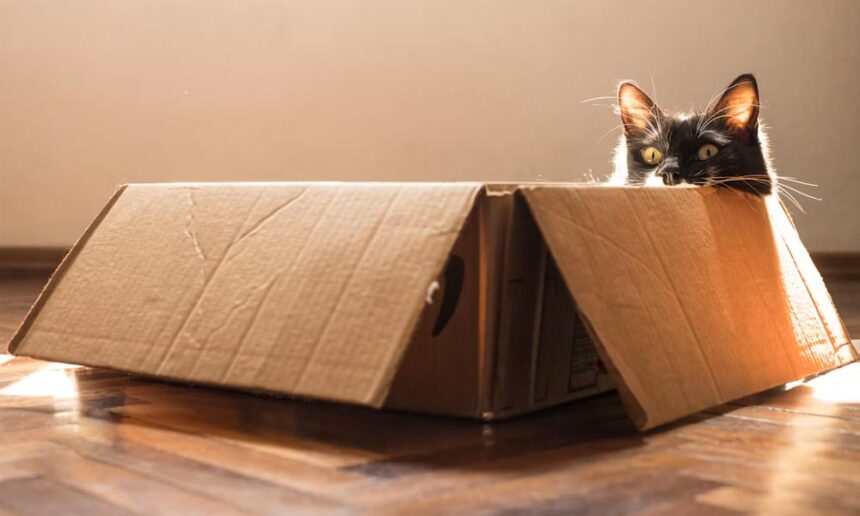
A box full of new toys can look promising, then spend the following month untouched beneath the sofa. Choosing enrichment for a cat involves more than collecting interesting objects. The useful question is what each item lets the cat do, and whether that activity fits the way they already explore, chase, investigate or rest.
A recurring delivery can make it easier to introduce variety, especially when shopping for individual toys has become repetitive. Its value depends on what happens after opening day. With a little observation and a manageable rotation, a selection of toys can become part of a daily routine instead of another pile of possessions.
Start with the cat’s habits
Before comparing boxes, watch a few ordinary play sessions. Does your cat follow movement across the floor, wait behind furniture before pouncing, or carry soft toys from room to room? Perhaps they investigate unfamiliar textures but quickly leave noisy objects alone. These details give you a more useful starting point than a product photograph.
Write down two or three preferences, including anything your cat avoids. A cautious cat may need time to approach something unfamiliar. An enthusiastic chaser may still dislike a toy that moves directly towards them. Treat these observations as a working picture rather than a permanent category; preferences can change with the setting and the way you present an item.
Look for different activities inside the box
Several toys can offer surprisingly little variety if they all ask the cat to do the same thing. When assessing a cat enrichment subscription box, look for a mix of activities rather than simply counting the contents. Cat Universe’s mystery-box collection, for example, describes a combination of toys, treats and enrichment items, available as either a one-off purchase or recurring delivery. Check the current product details to understand what is included and how the ordering options work.
Consider how the contents might fit into your home. A toy intended for chasing needs a clear area where it can move. A food puzzle needs a suitable feeding location. A soft object for carrying or kicking offers a different kind of interaction from a toy you operate yourself. The aim is to add useful choices across the week.
A surprise assortment inevitably involves some uncertainty. If your cat has very specific preferences, ask whether unsuitable categories can be excluded before ordering. A box with fewer suitable items may serve your household better than a larger assortment containing treats you cannot use or toys your cat consistently avoids.
Check the details before committing
Recurring purchases are easiest to assess when the practical terms are clear. Read the subscription information alongside the product description, and calculate the delivered cost rather than relying on the headline price. A useful pre-order checklist includes:
- Delivery frequency: whether the interval matches how quickly you will use the contents.
- Payment and cancellation: when charges occur and how to pause, skip or end deliveries.
- Dietary suitability: whether treat ingredients are disclosed and unwanted food items can be excluded.
- Toy information: intended age range, materials, supervision requirements and cleaning guidance.
- Contents and repetition: what variety is promised and how repeat items are handled.
A one-off order can help you assess suitability before starting a recurring plan. Keep a note of which items your cat actually uses and which remain untouched. That gives you a basis for deciding whether another box offers something useful, rather than allowing the excitement of the delivery to make the decision.
Introduce new items gradually
Opening every packet at once makes it difficult to tell what interests your cat. Start with one item in a familiar space and let them approach at their own pace. If they walk away, leave the experiment there and try again at another suitable time. Repeatedly pushing a toy towards a hesitant cat is unlikely to make the introduction more appealing.
For toys you move by hand, think about the route through the room. A pause beside a chair or a short movement away from the cat creates a different invitation from constant waving. Notice whether your cat watches, follows or disengages, and adjust accordingly. The object itself is only part of the experience.
Cats Protection’s guidance on play recommends short sessions, regular toy rotation and opportunities to catch the toy. It also advises checking items for wear and avoiding unsupervised access to toys that could be swallowed or cause entanglement. Those principles provide a useful framework for deciding how to use unfamiliar contents.
Build rotation into the routine
A new delivery provides options, but you still need a system for using them. Keep a small selection accessible and store the rest out of reach. When you change the selection, bring back an older favourite alongside something less familiar. There is no need to retire an object that your cat continues to enjoy simply because a newer one has arrived.
Make storage practical for yourself. A container for toys that require supervision, a separate place for washable items and a note of what needs replacing can prevent confusion. Follow the manufacturer’s cleaning instructions, and discard damaged pieces rather than passing them back into the rotation.
If deliveries are arriving faster than items are being used, extend the interval or pause the plan. Building up unused stock makes it harder to see what you own and reduces the convenience a subscription was supposed to provide.
Adapt the contents to your household
In a home with several cats, introduce toys where each animal has room to participate or leave. Watch whether one cat takes over while another waits at a distance. Separate sessions may give you a clearer view of individual preferences than a busy shared unboxing.
Match the activity to the individual cat rather than assuming that every item suits every age. A floor-level game may be more appealing than a fast aerial chase. Follow age and supervision guidance, and keep packaging, string and small detachable parts out of reach. If treats are included, check that they suit the cat’s existing feeding arrangements before offering them.
Boxes also sit within a wider home environment. Comfortable resting areas, suitable scratching surfaces and places to retreat remain part of everyday care. Think about where a new activity fits among those existing resources, including whether the cat can choose a quiet alternative.
Measure value through repeated use
After a few weeks, review the contents with three questions: what did your cat return to, what did you use together, and what would you choose again? A brief note is enough. Look beyond the first reaction, since an item that seems unremarkable on arrival may become useful when presented differently.
The right enrichment box makes providing variety easier and leaves you with activities that earn their place in the home. Choose a manageable delivery schedule, introduce contents thoughtfully and let your cat’s responses guide the next purchase. That approach keeps the focus on enjoyable daily experiences long after the packaging has been put away.