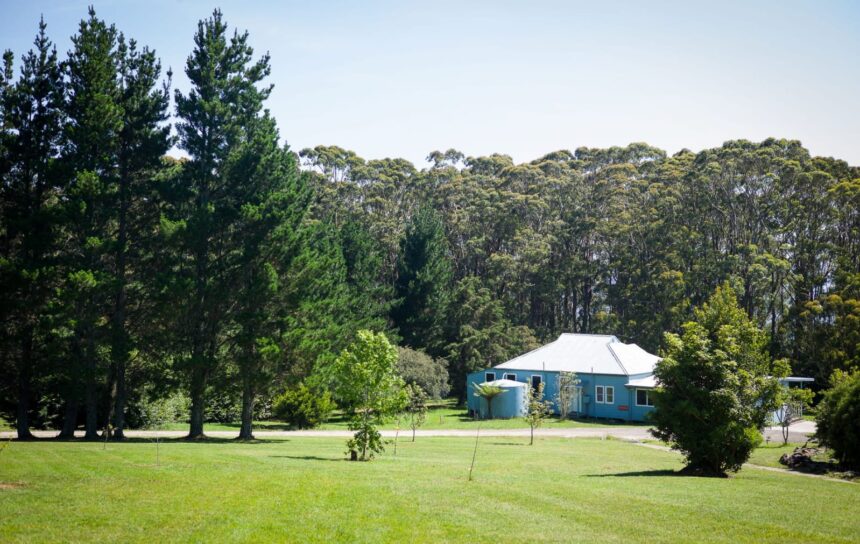
The Triple Care Farm rehabilitation program is a 12-week residential program in Knights Hill, NSW, for young people aged 16 to 24 experiencing substance dependency. It combines counselling, life skills, education, training and recreation in a youth-specific residential setting.
Depending on individual needs, rehabilitation can connect with medically supported withdrawal beforehand and structured aftercare afterwards. Each stage has a different purpose, from managing withdrawal safely to developing skills that can be used after residential treatment.
For a young person considering rehabilitation, knowing what happens during treatment, how the stages connect and what is expected during the application process can make the experience easier to understand.
What Happens During the Triple Care Farm Rehabilitation Program?
The Triple Care Farm rehabilitation program runs for 12 weeks and combines counselling with practical life skills, education, training and recreation. Young people live at the service while participating in treatment and other activities.
Support covers clinical care, mental health, education, employment, and everyday living skills. Case management, vocational and educational support, sport and recreation are also included.
NSW Health describes residential rehabilitation as psychological care and support provided in an alcohol and other drug-free residential setting. Depending on the service, treatment can include individual and group counselling, wellbeing support, education and skills training.
Bringing these areas together means residential treatment can address substance dependency alongside practical concerns that may affect what happens next. A young person can work on recovery while also considering how they will manage everyday responsibilities, education or employment after leaving residential care.
How Does Withdrawal Fit Into Rehabilitation?
Withdrawal management and rehabilitation are separate forms of care. Withdrawal provides short-term medical and psychological support when someone stops or reduces their use of a substance on which they are dependent. Rehabilitation focuses on longer-term treatment and recovery.
Triple Care Farm provides a separate residential withdrawal service at David Martin Place. It offers up to 10 days of withdrawal management with 24/7 medical support, including clinical care and individual and group counselling.
Entering Triple Care Farm does not automatically mean completing every service. Depending on individual needs, a young person may complete withdrawal and aftercare, rehabilitation and aftercare, or withdrawal followed by rehabilitation and aftercare. Withdrawal should therefore not be treated as a compulsory first step for every rehabilitation applicant.
NSW Health advises that withdrawal care should be based on an assessment of individual health and service needs. Some forms of withdrawal can require medical supervision, so anyone considering stopping alcohol or other drugs after regular or dependent use should seek professional advice.
What Skills and Support Are Included in Rehabilitation?
Counselling provides therapeutic support, while life-skills activities focus on areas needed for greater independence. The program also provides vocational and educational assistance for young people considering study, training or employment.
Sport and recreation give participants structured activities outside formal counselling and education. These activities form part of the wider rehabilitation program rather than operating as separate treatment services.
Substance dependency can occur alongside mental health concerns, trauma, unstable housing or disconnection from education, employment and family. These circumstances can influence the type of support a young person needs during treatment.
Addressing these areas within rehabilitation can also help prepare a young person for responsibilities beyond the residential stay. Education, employment, and living skills connect treatment to practical goals that may require attention upon returning to the community.
Individual priorities will differ. One person may be concentrating on education or employment, while another may need support around mental health, housing or daily living. Treatment can focus on areas relevant to the participant rather than assuming everyone will leave with the same goals.
What Happens After the 12-Week Program?
Young people can receive six months of structured aftercare following treatment.
An aftercare worker supports the transition from residential care into the community. Assistance can include community connections, housing, education and employment.
Aftercare has a different purpose from residential rehabilitation. It supports young people as they begin using what they worked on during treatment in their day-to-day circumstances.
That distinction is useful when thinking about the complete treatment pathway. Residential rehabilitation provides a structured environment for working on recovery, whereas aftercare provides support when the young person is again dealing with responsibilities outside that environment.
Where all stages are appropriate, withdrawal, rehabilitation and aftercare create a progression from short-term medical support through residential treatment to ongoing assistance in the community.
Who Can Apply?
Triple Care Farm has defined eligibility requirements for its withdrawal and rehabilitation services.
Applicants must:
- be between 16 and 24 years old
- use drugs, alcohol or multiple substances daily or almost daily
- be physically, mentally and developmentally capable of participating
- voluntarily commit to the program
- be an Australian resident or currently live in Australia.
A family member can assist with an application if the young person gives permission. Applications supported by health, support or justice workers require additional referral documentation.
Eligible applicants can be invited to a video interview. This gives the intake team an opportunity to learn more about the young person’s circumstances and assess whether the service is suitable. Approved applicants are placed on a waiting list until a position becomes available.
A parent, family member or professional can help with the process, but they cannot make the commitment on the young person’s behalf. Voluntary participation means the applicant needs to be personally involved in entering treatment.
What Should You Know Before Applying?
The current program fee is $210 per week. Centrelink payments can be used towards the fee, and payment arrangements can be discussed with the intake team when a young person is unable to pay.
The applicant also has responsibilities during intake. After an application is submitted, the young person must contact the Intake Coordinator within two weeks to discuss the next steps. This applies even when another person has helped submit the application.
Before applying, useful questions include:
- Do I need help managing withdrawal before rehabilitation?
- What would I like to work on during the 12 weeks?
- Do I need support with mental health, housing, education or employment?
- What assistance might I need after residential treatment?
These questions give applicants practical topics to raise during assessment. There is no need to have every stage of recovery planned before beginning the application process.
If withdrawal may be required, seek professional medical advice. NSW Health recommends assessment because withdrawal needs and the appropriate level of medical support vary between individuals.
Conclusion
The Triple Care Farm rehabilitation program provides 12 weeks of residential treatment for young people aged 16 to 24 experiencing substance dependency. It brings together counselling, life skills, education, training, and recreation, with support tailored to individual circumstances.
Withdrawal and aftercare can form part of the treatment pathway when appropriate. Each stage addresses a different need: withdrawal provides short-term medical support, rehabilitation provides structured residential treatment, and aftercare supports the transition back into the community.
Understanding these differences, along with the eligibility requirements and application process, gives young people a clearer picture of what entering treatment involves and what questions to discuss with the intake team or a health professional.