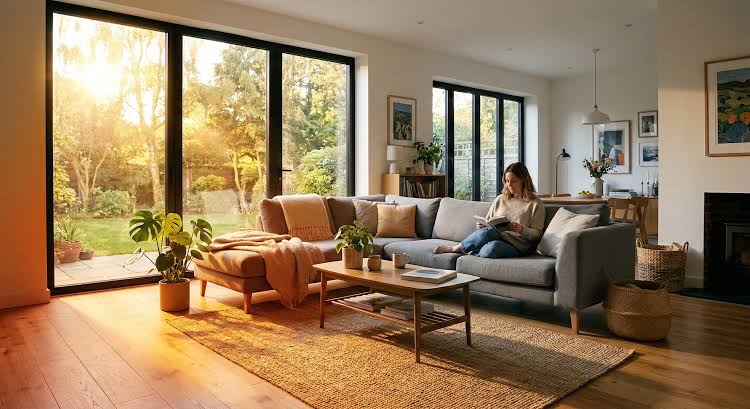
Large south-facing windows can make a home feel bright, open, and inviting, but they can also create noticeable comfort challenges throughout the day. Sunlight entering through large glass areas often adds significant heat indoors, especially during long afternoons and warmer months. Some rooms may feel pleasant in the morning, then gradually become harder to cool as the sun continues pouring in. Homeowners may notice uneven temperatures, warmer seating areas, or air conditioning that seems to run longer without fully balancing the space. An HVAC contractor helps by connecting those comfort changes to airflow, insulation, system performance, and daily solar heat gain.
Managing Sun-Filled Rooms
- Large Windows Can Create Heat Patterns the System Was Not Built Around
Homes with large south-facing windows often develop comfort issues that are not caused by one obvious breakdown. Instead, the sunlight changes how certain rooms gain heat over several hours, and that extra warmth can make one part of the home feel different from the rest. A living room with broad glass exposure may stay warmer than nearby bedrooms, or a family room may become uncomfortable during the same hours every afternoon. Homeowners sometimes turn to Atticman Heating and Air Conditioning, Insulation when they realize the problem is not only the windows themselves but how the entire home responds to that ongoing heat load. An HVAC contractor helps by evaluating whether the existing system was designed to handle those conditions. That matters because even a functioning system may struggle if airflow, return paths, duct layout, and insulation were not planned around rooms that receive heavy, daily sun exposure.
- Airflow Adjustments Help Spread Cooling More Evenly
One of the main ways an HVAC contractor improves comfort in these homes is by studying how cooled air moves through the rooms affected by the windows. A room may have strong sunlight exposure, yet the cooling supply reaching that space may be limited, poorly directed, or out of balance with the rest of the house. If the return airflow is also weak, the room may hold warm air longer and feel stuffy even while the system runs. An HVAC contractor can inspect supply vents, return placement, duct condition, blower performance, and pressure balance to determine whether air is actually circulating as it should. This is important because homes with large windows often need more thoughtful airflow support than homeowners expect. Simply lowering the thermostat may cool other rooms too much while still leaving the sun-facing area warm. Better airflow distribution helps the home feel steadier by ensuring cooled air reaches the right places at the right rate, rather than being lost in less demanding areas.
- Insulation and Heat Transfer Matter as Much as the Equipment
An HVAC contractor also helps by showing that comfort in homes with large south-facing windows depends on more than just the air conditioner. The system may be working constantly, but if nearby walls, ceilings, attic spaces, or duct paths allow heat to build and linger, the room can remain difficult to manage. This is one reason some homes feel cooler at night but struggle every sunny afternoon. The issue may involve solar gain through the windows combined with poor insulation around the room or ductwork that passes through hot spaces before delivering cooled air. An HVAC contractor can help determine whether the room is being affected by multiple overlapping factors rather than a single simple cause. That broader view helps homeowners avoid assuming the system needs replacement when the real issue may include insulation gaps, attic heat influence, or cooling losses before the air even reaches the room. Solving these interconnected problems often leads to greater comfort and less frustration during the hottest hours of the day.
- Daily Room Use Changes the Comfort Demand
Large south-facing windows tend to affect spaces that people use often, such as living rooms, kitchens, dining rooms, offices, or open-concept gathering areas. That makes the comfort issue feel more disruptive because the heat builds in places where the household spends the most time. Furniture placement near windows, afternoon cooking, electronics, and repeated occupancy can all add to the warmth already entering through the glass. An HVAC contractor helps by considering how the room is actually used, not just how it looks on a floor plan. A room that is occupied heavily during daylight hours may need different support than a space that sits mostly empty until evening. This practical understanding can shape decisions about vent adjustments, zoning, thermostat strategy, and whether additional cooling support makes sense. The goal is to improve livability, not only hit a number on the thermostat. When a contractor studies real daily use alongside window exposure, the comfort plan becomes much more useful for the household’s routine.
- Better Control Can Reduce Strain on the Whole House
When one sunny room stays warm, homeowners often respond by lowering the thermostat for the entire home. That can overcool shaded rooms while still leaving the south-facing area behind. Over time, this approach can increase system runtime, increase energy use, and place greater strain on equipment without fully solving the problem. An HVAC contractor helps improve comfort by making cooling more targeted and balanced. That may involve better airflow design, thermostat adjustments, zoning ideas, or identifying where the system is being forced to compensate for one difficult area. This matters because the problem room does not stay isolated. It often influences how the whole house feels and how hard the HVAC system must work each day. When the sunny area receives better support, the rest of the home usually becomes easier to manage as well. The result is not only a cooler room near the windows, but a more stable and efficient indoor environment overall.
Comfortable Homes Need More Than a Strong Thermostat Setting
An HVAC contractor helps improve comfort in homes with large south-facing windows by understanding how sunlight, airflow, insulation, and daily room use interact. These homes often struggle not because the system is completely failing, but because solar heat gain creates a steady challenge that ordinary cooling patterns may not handle evenly. Contractor guidance helps homeowners move beyond constant thermostat changes and toward solutions that support better air movement, stronger balance, and more practical comfort. When the home is evaluated as a whole, rooms with large windows can feel more usable, less overheated, and more connected to the rest of the house throughout the day.