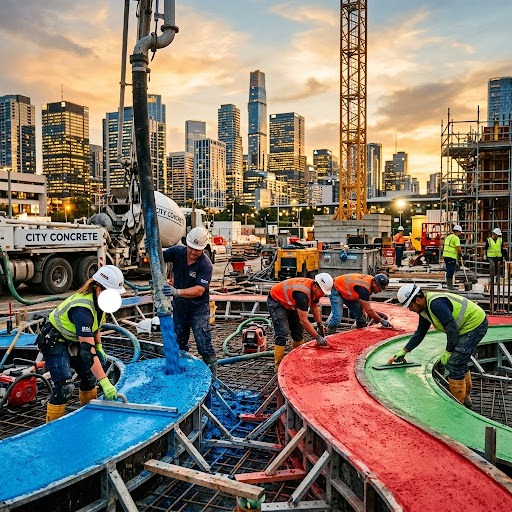
Concrete has a reputation problem. For decades, it’s been seen as cold, grey, and purely functional—something you pour and forget. But that perception is shifting fast, and colorful concrete solutions are leading the charge. From vibrant driveways to rich, textured patios, color is turning one of the world’s oldest building materials into a genuine design statement.
This post explores why colorful concrete solutions have become so sought-after, what makes them worth considering, and how they’re transforming both residential and commercial spaces across the country.
The Problem With Plain Concrete
Standard grey concrete does its job. It’s durable, widely available, and relatively affordable. But “does its job” doesn’t cut it anymore—not when homeowners and business owners are increasingly investing in curb appeal, outdoor living, and environments that reflect personality and purpose.
Plain concrete also fades. It cracks. It stains. Over time, an untreated grey slab starts looking tired, worn, and neglected—regardless of how well it was laid. That visual decline has a real impact on property value and first impressions, especially for commercial spaces where the exterior sets the tone before a single customer walks through the door.
Color changes that equation entirely.
What Makes Colorful Concrete Solutions So Effective?
The magic of colorful concrete lies in what happens during—and after—the mixing and application process. Color can be introduced in several ways: integral pigments mixed directly into the concrete, surface-applied stains and dyes, or hardeners broadcast onto freshly poured slabs. Each method produces a distinct result, and the right choice depends on the look you’re after and how the surface will be used.
Integral coloring produces rich, consistent tones throughout the full depth of the slab. This means surface scratches and chips won’t expose a contrasting grey underneath—the color holds. Acid stains, on the other hand, react chemically with the concrete to create deep, variegated tones that look almost like natural stone. No two stained surfaces look identical, which gives each installation a genuinely unique character.
Then there are decorative overlays and stamped finishes, which layer color with texture. A stamped concrete patio can convincingly replicate the look of slate, brick, cobblestone, or even hardwood—at a fraction of the material cost. Add a colored sealer, and the surface becomes resistant to UV fading, moisture, and heavy foot traffic.
The result? A surface that’s both beautiful and built to last.
Where Colorful Concrete Solutions Are Making the Biggest Impact
Driveways That Make a Statement
A driveway accounts for a significant portion of any property’s visible exterior. Upgrading from plain grey to a rich charcoal, warm terracotta, or custom-stamped finish changes the entire feel of a home’s entrance. It signals care, attention to detail, and a commitment to quality—things that resonate with visitors and prospective buyers alike.
Colored and stamped driveways also hold their value over time. A properly sealed colored concrete driveway can maintain its appearance for 25 years or more with minimal maintenance, making it one of the most cost-effective exterior upgrades available.
Patios and Outdoor Living Spaces
Outdoor entertaining has become a priority for homeowners. Patios, pool surrounds, and backyard living areas are extensions of the home—and they need to look the part. Colorful concrete solutions allow these spaces to flow cohesively with the home’s architecture and landscaping, rather than sitting in stark contrast to it.
A warm sandstone-toned stamped patio, for instance, can make an outdoor dining area feel intentional and welcoming. A cool slate-grey finish around a pool creates a sleek, resort-like atmosphere. The design flexibility is almost limitless.
Commercial Spaces and Retail Environments
For businesses, first impressions carry commercial weight. Retail forecourts, restaurant courtyards, hotel entrances, and office plazas that feature polished or colored concrete signal professionalism and quality. They also stand up to the heavy foot traffic these environments demand—unlike timber, tile, or pavers, which can shift, crack, or require frequent replacement.
Colorful concrete solutions give commercial operators a durable, low-maintenance surface that doesn’t compromise on aesthetics.
Interior Floors With a Designer Edge
Polished and colored concrete floors have moved well beyond industrial warehouses. Interior designers are now specifying them for open-plan living rooms, kitchens, boutique retail stores, and high-end offices. The look is modern, clean, and endlessly customizable—polished concrete can be tinted to virtually any tone and finished to a matte, satin, or high-gloss sheen.
Combined with radiant underfloor heating, polished colored concrete becomes one of the most practical and visually striking flooring options available.
The Long-Term Value of Choosing Color
There’s a practical case to be made beyond aesthetics. Colored and sealed concrete surfaces are significantly easier to maintain than untreated slabs. Sealers lock out moisture, resist oil and chemical spills, and prevent the algae and moss growth that plague unsealed outdoor surfaces. Routine cleaning requires nothing more than a hose or a mop.
Over a 10 to 20-year horizon, the maintenance savings add up. Compared to timber decking, which requires regular sanding and oiling, or natural stone pavers, which need periodic re-sanding and sealing, colored concrete demands far less ongoing attention.
Why More Homeowners and Businesses Are Making the Switch
Trends in architecture and landscape design have created strong momentum behind colorful concrete solutions. The growing appetite for outdoor living, combined with rising expectations around property presentation, has pushed homeowners to look beyond basic materials. At the same time, concrete technology has advanced dramatically—modern pigments are more stable, sealers are more durable, and application techniques have become far more refined than they were even a decade ago.
The result is a product that looks better, lasts longer, and offers more design freedom than most people expect from concrete.
Bringing Color and Concrete Together for Your Property
Every property is different, and the right colorful concrete solution depends on a mix of factors: the existing architecture, the surrounding landscape, the way the space will be used, and the aesthetic you’re working toward. That’s why the process always starts with understanding the specific site and the goals of the project.
Colorful Concrete Solutions brings an exceptional level of craftsmanship and dedicated attention to every project, transforming ordinary surfaces into lasting design features that genuinely elevate the value and character of any property. Whether the goal is a bold statement driveway, a seamlessly integrated patio, or a polished interior floor that catches every eye, the outcome is a surface built to impress—and to endure.
Color has always had the power to transform a space. Applied to concrete, that power becomes permanent.
Frequently Asked Questions
How long does colored concrete last?
With proper sealing and routine maintenance, colored concrete can maintain its appearance for 20 to 30 years. The longevity depends on surface preparation, the quality of pigments and sealers used, and the level of ongoing care.
Does colored concrete fade over time?
Some fading can occur with prolonged UV exposure, particularly with surface-applied dyes. Integral pigments and high-quality UV-resistant sealers significantly reduce this risk. Resealing every few years helps preserve color depth and vibrancy.
Is colored concrete more expensive than plain concrete?
Yes, but the cost difference is offset by lower maintenance requirements, improved durability, and the aesthetic value it adds to a property. Over the life of the surface, colored concrete often works out to be more economical than alternatives that require frequent replacement or upkeep.
Can existing concrete be colored?
In most cases, yes. Concrete stains, dyes, and overlays can be applied to existing slabs, provided the surface is structurally sound and properly prepared. This is a cost-effective way to update tired-looking concrete without full replacement.
What surfaces can colorful concrete solutions be applied to?
Colorful concrete solutions are suitable for driveways, patios, pool surrounds, pathways, garage floors, interior floors, commercial forecourts, and more. Both new pours and existing slabs can be treated, depending on the method used.