Welcoming friends or family into your home is always exciting, but hosting places sudden, heavy demands on your living space. When your household population doubles overnight, systems that run fine during normal routines—like plumbing, climate control, and refrigeration—face commercial-grade stress.
Nothing disrupts a visit faster than a clogged guest toilet at midnight, an ice maker that quits during dinner prep, or an air conditioner failing during a heatwave. Most hosting headaches do not stem from bad luck; they happen because hidden mechanical wear goes unnoticed until extra people stress the system. Taking an hour to complete proactive inspections before visitors arrive ensures your home runs quietly, comfortably, and safely. Here are seven critical maintenance checks every host should perform.
1. Test Your HVAC System and Change the Air Filter
Testing your heating and cooling equipment under a full cycle reveals weak airflow, strange motor noises, or failing thermostats before a crowded house drives up indoor temperatures.
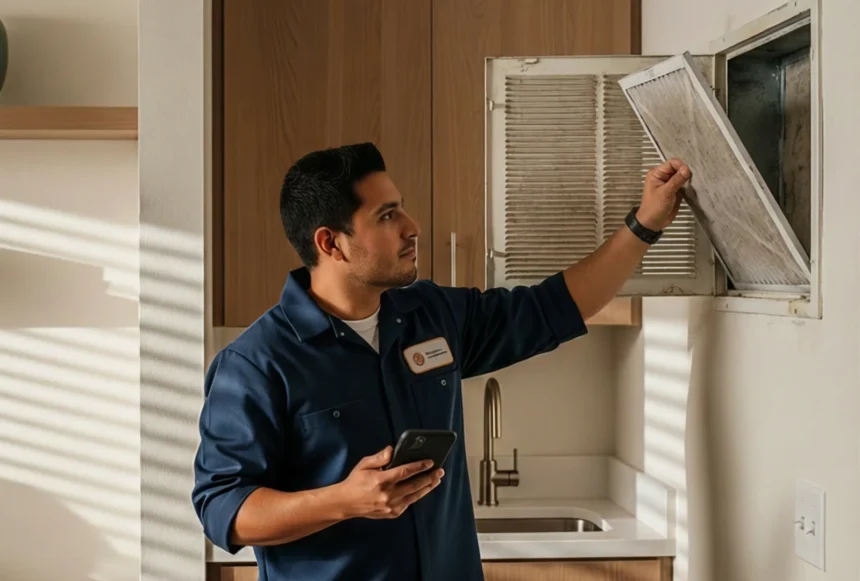
Extra guests and active cooking drastically raise indoor heat. If your HVAC system is already struggling with a clogged filter or low refrigerant, it will quickly fall behind. Replace your air filter with a fresh pleated model to maximize airflow and reduce airborne dust.
Set your thermostat a few degrees cooler (in summer) or warmer (in winter) while running appliances to simulate a realistic hosting load. If your system blows lukewarm air, rattles, or short-cycles, address it promptly. If your cooling system struggles during warmer months in northern Utah, scheduling timely air conditioner repair in Roy, UT guarantees your home stays crisp and comfortable before visitors unpack their bags.
2. Inspect Guest Bathroom Plumbing and Drainage Speed
Running water through every faucet, showerhead, and toilet in your guest bathroom catches sluggish drains and silent tank leaks before visitors experience an embarrassing backup.
Guest bathrooms frequently sit unused for weeks, allowing drain traps to dry out and rubber seals inside toilet tanks to degrade. When visitors take consecutive showers and flush frequently, minor hairline clogs rapidly escalate into full overflows.
Perform thorough guest bathroom plumbing checks several days prior to arrival:
- Fill the sink and tub, pull the stoppers, and verify water exits in a rapid vortex without gurgling.
- Clear hair and soap residue from shower strainers with a plastic drain snake.
- Drop food coloring into the toilet tank; if color seeps into the bowl within 15 minutes without flushing, replace the worn flapper.
- Stock a plunger discreetly near the toilet so guests never have to ask for one in an emergency.
3. Verify Refrigerator Cooling and Clear the Ice Maker
Checking refrigerator temperatures and cleaning the automatic ice maker ensures your kitchen can safely handle bulk groceries and keep party drinks cold.
Hosting requires stocking up on perishable food, large platters, and beverages. Overpacking a refrigerator blocks internal air vents, which can cause temperatures to creep into the danger zone above 40°F. Use an appliance thermometer to confirm that your fresh food compartment maintains refrigerator temperature consistency between 35°F and 38°F, while the freezer sits at a steady 0°F.
Discard old ice cubes that have absorbed stale freezer odors over past months. Wash the ice bin in warm, soapy water, dry it thoroughly, and let the ice maker run fresh cycles. If your unit produces ice slowly, check the water filter on the fridge; a sediment-clogged filter is the most common reason for hollow cubes and weak dispenser flow.
4. Assess Water Heater Temperature and Recovery Capacity
Inspecting your water heater’s burner or heating elements and setting the thermostat to 120°F prevents your guests from enduring icy morning showers.
Few things cause more hosting friction than running out of hot water after only two showers. The sudden surge in water heater capacity demand tests the heating elements and sediment buildup inside your tank. If mineral scale coats the bottom of a conventional tank, the burner must heat through inches of calcified sediment, drastically reducing recovery speed.
Check the thermostat dial on your water heater. The ideal setting is 120°F (49°C)—hot enough to sanitize dishes and provide ample hot water, yet safe enough to prevent accidental scalding. If your tank has not been drained recently, flush a few gallons from the bottom drain valve into a bucket to clear out loose sediment and restore efficient heating.
5. Clear the Dryer Vent and Service Laundry Appliances
Cleaning the dryer exhaust duct and running an empty sanitizing wash cycle prevents lint fires and ensures your washer smells clean for guest linens.
Between prepping guest sheets and washing stacks of towels, your laundry room works overtime. A restricted dryer duct forces the appliance to run twice as long, wasting energy and creating a fire hazard. Pull the dryer out, disconnect the vent hose, and vacuum out accumulated lint from the duct and the exterior hood.
Next, inspect your washing machine. Front-load washers frequently develop mildew around the rubber door gasket, which can transfer musty odors onto fresh towels. Wipe down the seal with a diluted vinegar solution, clear the lower drain filter, and run a self-clean cycle with hot water before washing guest linens.
6. Test Smoke Detectors and Reset GFCI Outlets
Testing every smoke and carbon monoxide detector and verifying ground-fault circuit interrupter (GFCI) outlets protects guest safety and prevents electrical trip hazards.
Guest comfort starts with safety. Press and hold the test button on all smoke alarms and carbon monoxide detectors, particularly those located near guest bedroom hallways. Replace chirping or older batteries immediately.
In guest bathrooms and bedrooms, test electrical outlets. With visitors plugging in high-draw devices like hair dryers, curling irons, and laptops, worn electrical connections can overheat. Push the test and reset buttons on bathroom GFCI receptacles to confirm they cut power instantly when tripped.
7. Audit Entryway Lighting and Eliminate Tripping Hazards
Illuminating outdoor walkways and securing interior rugs ensures that guests unfamiliar with your home’s layout navigate safely in the dark.
Visitors do not possess your mental map of your home. A slight step-down between rooms, an unsecured runner, or a dark exterior porch step can easily cause a painful fall. Walk your property at dusk to assess visibility:
- Replace burned-out exterior floodlights and porch sconces with warm LED bulbs.
- Install soft-glow motion-sensor nightlights in guest hallways, stairwells, and bathrooms.
- Place non-skid rubber pads beneath all area rugs in high-traffic zones.
- Clear exterior walkways and porch stairs of fallen leaves, ice, or garden hoses.
Preparing your home for guests goes far beyond fluffing pillows and stocking the pantry. By methodically checking your heating and cooling performance, ensuring smooth plumbing drainage, verifying appliance temperatures, and testing basic safety systems, you eliminate the friction of unexpected household breakdowns. Taking care of these essential mechanical details in advance lets you focus on what truly matters: relaxing, sharing great conversations, and enjoying every moment with your visitors.