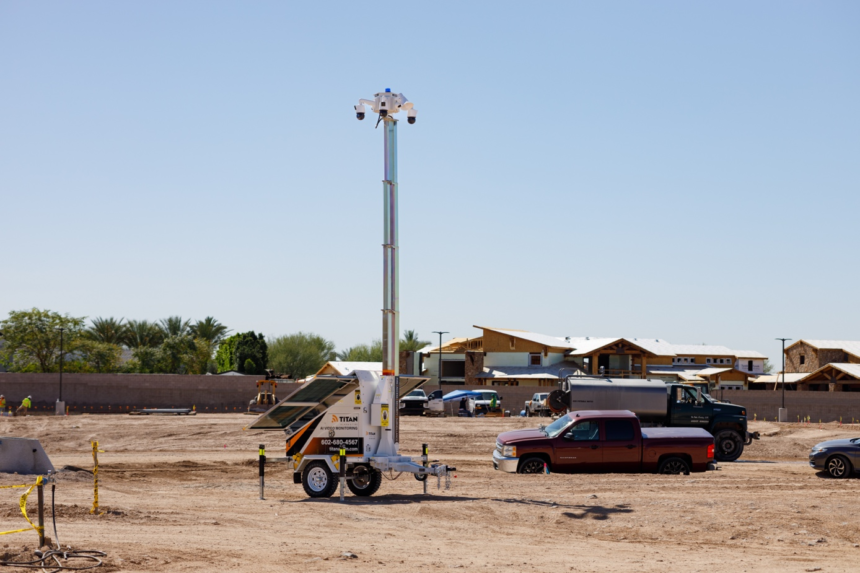
Construction sites, storage yards, and vacant properties share one common vulnerability after hours: nobody is watching. That gap is exactly what a mobile security camera unit is built to close, and among the options available today, the solar surveillance trailer has become the go-to choice for property owners and site managers across Phoenix and the wider Arizona region.
Before renting or buying a solar powered security trailer, though, it helps to understand how these units actually perform in the field, particularly around runtime, camera range, and the situations where they make the most sense.
How Power and Runtime Actually Work
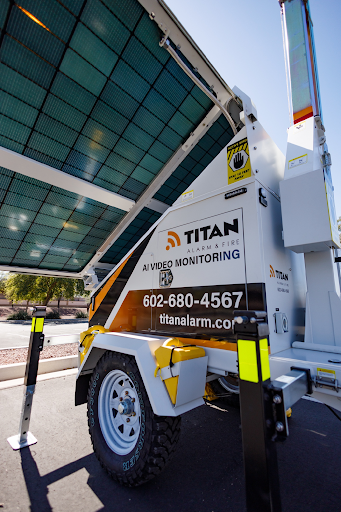
A solar surveillance trailer runs on a bank of deep-cycle batteries charged by rooftop solar panels, usually paired with a charge controller that regulates power flow and prevents overcharging. In a sun-heavy climate like Arizona, this setup is close to ideal. Most units can sustain continuous recording, night vision, and wireless transmission for five to seven days on stored battery power alone, even without direct sunlight, thanks to the sheer number of clear days the desert offers.
Runtime does shift depending on a few variables:
- Panel wattage – Larger arrays (400W and above) recharge batteries faster during shorter winter days.
- Camera count and resolution – A trailer running four 4K cameras with analytics will draw more power than a two-camera setup.
- Overnight lighting – Units equipped with LED floodlights or strobe deterrents consume additional power when triggered.
- Seasonal sun exposure – Summer months in Phoenix typically mean faster recharge cycles, while cloudy winter stretches slow things down slightly.
Well-maintained trailers rarely run out of power entirely, since the batteries are sized to handle several consecutive overcast days as a buffer.
Camera Range and Coverage of a Mobile Surveillance Unit
Range is where a lot of buyers get surprised, in a good way. Modern units mount
pan-tilt-zoom (PTZ) cameras on a telescoping mast, often raised 20 to 25 feet above ground level. From that height, a good PTZ camera can identify a person or vehicle clearly at 150 to 200 feet, and detect motion at distances well beyond that, sometimes past 300 feet depending on lighting and lens quality.
License plate recognition (LPR) cameras, when included, are typically tuned for a narrower but more precise field, capturing readable plates at entry points or drive lanes up to 60 to 80 feet away. Combine that with 360-degree rotation and infrared night vision, and a single trailer can realistically cover a mid-sized lot or job site without needing a second unit.
Wireless connectivity, usually through cellular data (4G/LTE), pushes live footage to a remote monitoring center or mobile app in real time, so range isn’t just about what the camera sees, but also how quickly that footage reaches someone who can act on it.
When a Solar Security Trailer Makes Sense
Not every property needs one, but several scenarios consistently justify the cost:
Active construction sites. Equipment theft and copper wire stripping remain persistent problems, and a visible trailer with recording capability acts as both a deterrent and an evidence source.
Vacant land or buildings between tenants. Squatting, dumping, and vandalism spike when a property sits empty, and a trailer offers coverage without the cost of permanent wiring.
Special events and temporary gatherings. Concerts, fairs, and large outdoor events benefit from added eyes on parking areas and entry points for a limited window of time.
Post-incident monitoring. After a break-in or theft, many businesses bring in temporary surveillance while assessing whether a permanent system is worth the investment.
Seasonal or remote operations. Agricultural sites, solar farms, and utility yards that lack existing power infrastructure are natural fits, since the trailer is entirely self-sufficient.
Frequently Asked Questions
How long does a solar surveillance trailer run without direct sunlight? Most units hold five to seven days of runtime on stored battery power alone, assuming normal recording and transmission activity, before needing meaningful recharge.
How far can the cameras actually see at night? With infrared night vision and a mast height of 20 to 25 feet, a PTZ camera can typically identify people or vehicles up to 150 to 200 feet away, even in full darkness.
Do these trailers need to be plugged in or connected to the grid? No. The entire system, cameras, batteries, and cellular transmission, runs independently off solar power, which is why it works well on sites with no existing electrical infrastructure.
What’s the difference between a solar trailer and a fixed camera system? A solar trailer is mobile and self-powered, making it suited for temporary or changing job sites, while a fixed system is a permanent installation tied to a building’s power and network.
Choosing the Right Provider
Runtime and range specs only matter if the equipment is installed correctly and monitored properly. That’s where working with an established local provider makes a real difference. Titan Alarm & Fire has built a reputation across the Phoenix metro for deploying and monitoring these units for construction firms, property managers, and commercial clients who need reliable coverage without the delay of a permanent installation.
Final Thought
A solar surveillance trailer isn’t a one-size-fits-all product, but understanding its runtime limits and camera range helps set realistic expectations. For temporary, remote, or high-risk sites, it remains one of the most practical security investments available today.