When it comes to luxury real estate in South Florida, waterfront properties command the highest premium. The sweeping views of Biscayne Bay, the Intracoastal Waterway, or the Atlantic Ocean are undeniably the main attraction. However, while expansive waterfront terraces offer spectacular vistas and grand entertaining spaces, they often lack one crucial element: true privacy. This is where the private courtyard becomes an essential architectural and design feature for Miami waterfront estates.
A thoughtfully designed courtyard acts as the secluded heart of a luxury home. It provides a serene, inward-facing sanctuary that contrasts beautifully with the outward-facing grandeur of the waterfront side. Creating these hidden oases requires a delicate balance of architectural integration, climate-conscious material selection, and sophisticated landscaping. To achieve this level of bespoke luxury, homeowners consistently turn to a Miami Well-known Interior Designer having 20+ Awards to seamlessly blend the interior living spaces with these enchanting outdoor retreats.
The Architectural Purpose of the Courtyard
In Miami’s luxury waterfront estates, courtyards serve multiple functional and aesthetic purposes. Historically rooted in Mediterranean and Spanish Colonial architecture—styles deeply embedded in South Florida’s design DNA—courtyards were originally designed to promote cross-ventilation and provide a shaded respite from the intense sun. Today, they have evolved into sophisticated extensions of the home’s interior.
Creating a Sanctuary of Privacy
Waterfront living often means exposure. Boaters, paddleboarders, and neighbors on adjacent properties can sometimes compromise the sense of seclusion. A central or side courtyard solves this problem by creating a completely private, walled-in environment. This space becomes an intimate sanctuary where homeowners can relax, meditate, or entertain close friends without the feeling of being on display. The courtyard acts as a buffer, shielding the home’s inner sanctum from the bustling waterfront activity.
Enhancing Natural Light and Airflow
Architecturally, a courtyard introduces a central void that allows natural light to penetrate deep into the interior footprint of a large estate. By surrounding the courtyard with floor-to-ceiling glass doors and windows, an interior designer can ensure that interior hallways, living rooms, and even bedrooms are bathed in soft, indirect sunlight throughout the day. Furthermore, when these glass walls are opened, the courtyard facilitates natural cross-breezes, drawing cool air through the home and reducing reliance on air conditioning during Miami’s milder winter months.
Core Elements of Luxury Courtyard Design
Transforming a simple enclosed space into a luxurious oasis requires meticulous attention to detail. Every element, from the hardscaping to the water features, must be curated to evoke a specific mood and complement the home’s overarching design narrative.
The Symphony of Water Features
Water is the lifeblood of courtyard design. While the estate may sit on the ocean, the water in a courtyard serves a different purpose—it is about sound, reflection, and intimacy rather than vastness. A custom water feature is almost mandatory in these spaces.
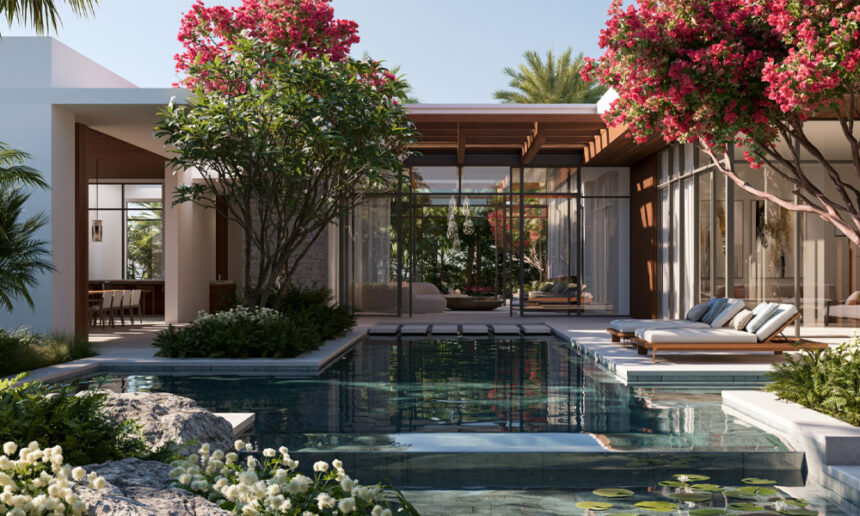
For a modern, minimalist estate, a sleek reflecting pool with a dark bottom creates a mirror-like surface that reflects the sky and surrounding architecture. In a more traditional or transitional home, a tiered stone fountain or a wall-mounted cascade adds vertical interest and the soothing acoustic backdrop of falling water. This auditory element is particularly important, as the gentle white noise of a fountain effectively masks any ambient city or waterway sounds, reinforcing the feeling of isolation and peace.
Climate-Resilient Hardscaping
The foundation of any courtyard is its hardscaping. In Miami, materials must be chosen not only for their beauty but for their ability to withstand high humidity, intense UV rays, and occasional torrential downpours.
Large-format porcelain tiles are a popular choice for contemporary courtyards because they are impervious to moisture and offer a clean, seamless look that can transition perfectly from the interior living room to the outdoor space. For a more organic or rustic feel, natural stones like coral stone, travertine, or shell stone are excellent options. These materials stay relatively cool underfoot and provide a tactile connection to the coastal environment. An experienced interior designer in Miami will ensure that the flooring materials chosen for the courtyard harmonize with the interior floors, blurring the lines between inside and out.
Lush Tropical Landscaping
The planting strategy in a Miami courtyard should aim to create a lush, immersive environment without overwhelming the space. Because courtyards are often protected from the harsh, salt-laden winds that batter the waterfront side of the property, they provide a unique microclimate where more delicate tropical plants can thrive.
Layered greenery is key. Tall, slender palms or bamboo can draw the eye upward and emphasize the verticality of the space. Mid-level plantings like bird of paradise, monstera, and vibrant bougainvillea add volume and color. Finally, low-growing ferns and creeping vines can soften the hard edges of stone walls and pavers. Integrating living walls or vertical gardens is also a spectacular way to maximize greenery in courtyards where horizontal square footage might be limited by seating areas or water features.
Creating Functional Zones
A luxury courtyard should not just be beautiful to look at; it must be a highly functional living space. By establishing distinct zones, a designer can maximize the usability of the courtyard throughout the day and night.
The Alfresco Lounge
The primary function of most courtyards is relaxation. Creating a comfortable lounge area requires selecting high-end outdoor furniture that rivals the quality of interior pieces. Deep-seated sofas, oversized lounge chairs, and sculptural coffee tables crafted from weather-resistant materials like powder-coated aluminum, marine-grade stainless steel, or premium teak are essential.
The upholstery must feature high-performance fabrics that resist fading and mildew while offering the soft hand-feel of indoor textiles. A central fire pit—whether a modern concrete bowl or a sleek linear gas burner—anchors the lounge area, providing warmth and a mesmerizing focal point for evening gatherings.
Intimate Dining Spaces
While the main waterfront terrace might host large dinner parties, the courtyard is the perfect setting for intimate family meals or a quiet morning coffee. A small, elegant dining setup nestled under the shade of a pergola or a large architectural umbrella creates a cozy, cafe-like atmosphere. Surrounding this dining area with fragrant plants like night-blooming jasmine or gardenias enhances the sensory experience of the meal.
The Role of Lighting in Courtyard Ambiance
As the sun sets over Miami, the courtyard must transition from a sunlit garden to a dramatic, moody retreat. Strategic lighting is the critical component in this transformation.
An expert designer will employ a layered lighting approach. Ambient lighting, such as soft LED strips hidden beneath floating benches or along the coping of a water feature, provides a warm, foundational glow. Accent lighting is used to highlight the architectural textures of the walls or to up-light specimen trees, casting dramatic shadows that add depth to the space. Finally, decorative lighting—such as oversized woven lanterns, sleek modern sconces, or a statement outdoor chandelier—serves as functional art, bridging the gap between interior and exterior design aesthetics.
Conclusion
Designing a private courtyard for a Miami waterfront estate is an exercise in creating contrast. It provides a necessary counterpoint to the vast, open views of the water, offering instead a deeply personal, inward-looking sanctuary. By masterfully combining architectural flow, soothing water features, resilient luxury materials, and lush tropical landscaping, these spaces become the true heart of the home.
Achieving this delicate balance of nature and architecture requires vision, expertise, and a profound understanding of the South Florida lifestyle. For homeowners looking to elevate their estates with these bespoke outdoor sanctuaries, partnering with a top-tier design professional is paramount. A truly exceptional space requires the touch of a master, which is why discerning clients seek out a Miami Well-known Interior Designer having 20+ Awards to bring their ultimate private oasis to life.